Seed Phrase Storage: Metal Backups and Threat Models
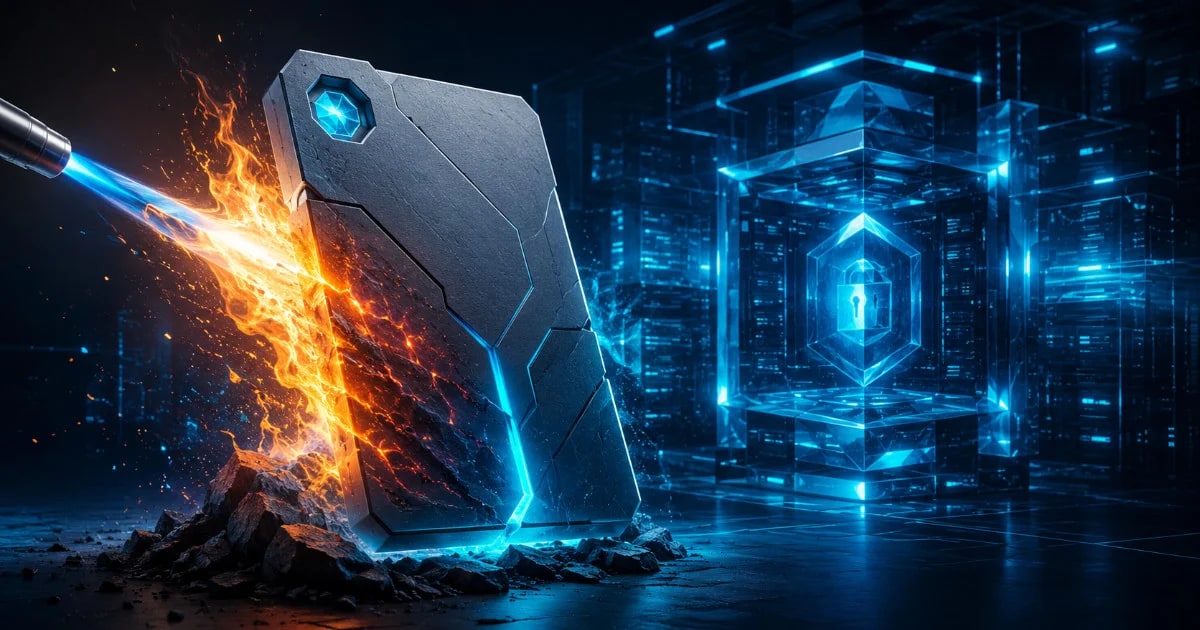
Storing your master recovery phrase on paper or a digital device is an open invitation to capital loss. We analyze real-world physical threat models.
Where to Store Your Seed Phrase
- The primary directive of decentralized finance is total personal custody over your digital wealth. When you take control of your private keys via a hardware wallet, you step outside the fragile framework of fractional-reserve banking and centralized counterparty risk. However, this absolute autonomy comes with an unyielding security condition: your entire financial empire rests completely on the physical safety of your twelve or twenty-four word recovery phrase.
- Let's drop the sugarcoating: if your master backup strategy consists of a piece of paper hidden in a desk drawer, or worse, an encrypted text file on your computer, your security model is broken.
- Digital storage exposes your keys to global malware sweeps, while paper backups can be permanently destroyed by a single broken water pipe or house fire. To truly insulate your capital from catastrophe, you must treat your seed phrase backup as an industrial engineering problem. This guide unpacks real-world physical threat models and delivers a blueprint for deploying indestructible metal backups.
1. The Real Threat Models: Physical vs. Digital Vectors
To design an unassailable storage framework, you must map out a realistic Threat Model. A threat model is simply an objective audit of every environmental and human variable capable of compromising your keys. Active on-chain treasuries face two distinct threat categories:
The Digital Extraction Vector: This includes hot-wallet keyloggers, cloud backup phishing, database leaks, and smartphone screenshots. This vector has a global reach; an attacker in a remote jurisdiction can scrape your keys programmatically without ever stepping foot in your home.
The Physical Destruction and Theft Vector: This covers localized catastrophes like structural house fires, flash floods, collapsed buildings, residential burglaries, and physical extortion. This vector demands a completely alternative defensive approach focused on physical durability and clever geographic concealment.
2. Why Paper Fails: The Environmental Threat Array
- The traditional practice of writing a recovery phrase on a paper card is a relic of early retail crypto adoption that introduces an immediate single point of failure. Paper is completely defensible against digital hackers, but it possesses absolute zero structural resilience against everyday physical disasters.
- Consider the baseline physics of a standard house fire. A typical residential fire routinely reaches temperatures up to 1100 degrees Fahrenheit. Standard wood-pulp paper begins to combust and char at a mere 451 degrees Fahrenheit.
- Even if you pack your paper card inside a generic home document safe, prolonged exposure to high temperatures converts the interior into a highly concentrated oven, reducing your paper keys to unreadable ash. Furthermore, if a home fire is successfully extinguished by emergency teams, the resulting structural flooding and chemical soot will easily dissolve standard ink, wiping out your ledger access permanently.
3. The Structural Matrix: Storage Profiling
To maintain a clean structural overview of how industrial-grade physical media insulates your long-term storage loops from localized destruction, evaluate the parameters organized inside this optimized two-column, three-row layout:
| Backup Media & Threat Mitigation | Operational Safety Advantage |
| Grade 316 Steel / Titanium Plates (Stamped or engraved mechanical slates) | Resists catastrophic house fires up to 2500 degrees Fahrenheit and localized chemical corrosion. |
| Geographically Split Metal Shards (Segmented matrices across separate secure coordinates) | Eliminates single-point physical theft vectors by rendering individual plates unreadable. |
4. Step-by-Step Playbook for Indestructible Storage
Step 1: Choose the Correct Industrial Alloy
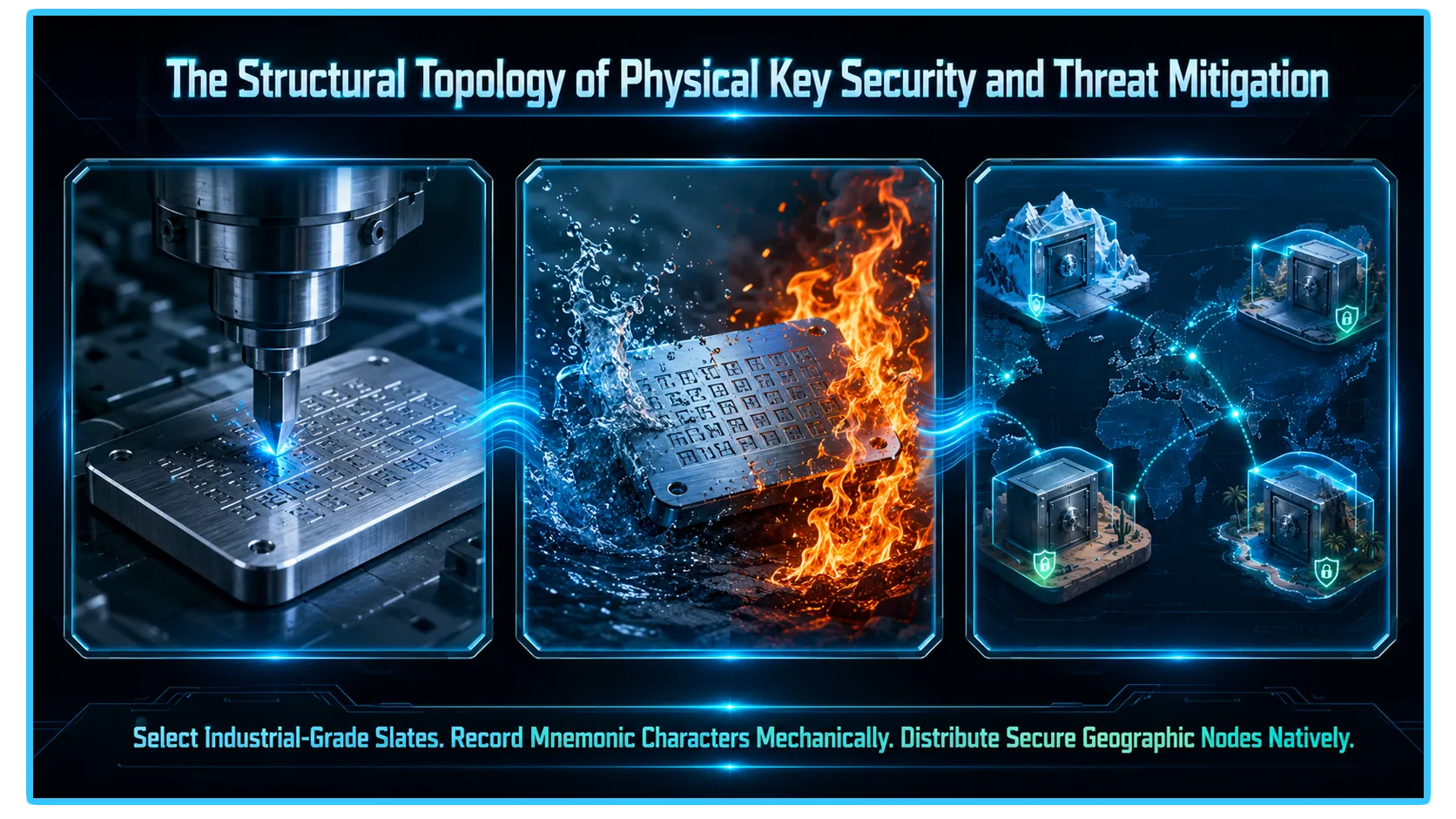
Bypass cheap, novelty commercial backup kits fabricated from basic aluminum. Aluminum has a relatively low melting point and structural integrity threshold, rendering it unreliable during intense structural fires. Opt strictly for Grade 316 Marine-Grade Stainless Steel or Pure Titanium. These industrial-strength alloys are specifically engineered to survive corrosive saltwater environments and withstand crushing physical pressures while remaining structural up to 2500 degrees Fahrenheit.
Step 2: Record the Characters Mechanically
- Avoid metal storage kits that rely on loose, sliding letter tiles locked behind small metal screws. During a major building collapse or extreme thermal expansion event, the frame can easily warp, causing the tiny letter tiles to spill out in a scrambled, unrecoverable mess.
- Instead, utilize a solid, uniform metal plate and record your words using a hardened steel center punch tool or a mechanical stamp kit. Permanently engraving or denting the characters directly into the core metal face ensures the data remains legible even if the plate suffers severe surface charring.
Step 3: Implement Geographic Separation
- Once your metal plates are deeply stamped and validated, do not store them together in your master home bedroom. Divide your backup architecture into a decentralized multi-location network.
- If you are using a standard single seed layout, consider split methods like Shamir Backup or a secure multi-sig configuration. Store individual metal plates in separate secure locations, such as a personal home wall vault, a professional off-site safety deposit box, and a highly secure remote family location. Distributing the physical nodes ensures that a localized burglary or catastrophic property loss at your primary residence will never compromise your underlying multi-generational wealth.
5. Real-Time Telemetry and Infrastructure Security via DEXTools
- Successfully engineering an unassailable physical metal backup matrix protects your private keys from environmental ruin and localized theft. However, securing your entry gates is only half the battle; managing your active capital requires continuous validation of live market conditions.
- If you maintain deep liquidity allocations, yield farming positions, or execute strategic token swaps using your secure keys, checking real-time capital velocity and pool depth is the only way to protect your active positions from sudden market anomalies.
- DEXTools provides the critical analytical data infrastructure needed to perform these diagnostic checks in real-time. By utilizing advanced multi-chain pair trackers, live transaction logs, and look-through wallet telemetry across alternative layer scaling networks, market participants can instantly verify the structural health of any asset pool.
- Cross-referencing your secure hardware infrastructure with authentic blockchain metrics ensures your portfolio parameters remain completely optimized, keeping your digital wealth securely protected from hidden pool contractions or systemic liquidity issues across alternative networks.
You can access DEXTools here and start trading today!
Disclaimer: This article is for informational purposes only and does not constitute investment advice, financial advice, trading advice, or any other kind of advice. DEXTools does not recommend buying, selling, or holding any cryptocurrency or token. Users should conduct their own research and consult with a qualified financial advisor before making any investment decisions. Cryptocurrency investments are volatile and high-risk. DEXTools is not responsible for any losses incurred.