Stablecoin Routing Wars: Why the Best Swap Is Not Always the Deepest Pool
— By Whatsertrade in Tutorials

Explore the intricacies of stablecoin swaps and why routing can influence trading outcomes. Discover the factors that impact your swap efficiency.
Stablecoins are the foundation of crypto trading. Traders use them to enter positions, exit volatility, move capital across chains, and provide liquidity. Because stablecoins are supposed to remain stable, many traders assume stablecoin swaps are simple.
But stablecoin trading can be more complex than it looks.
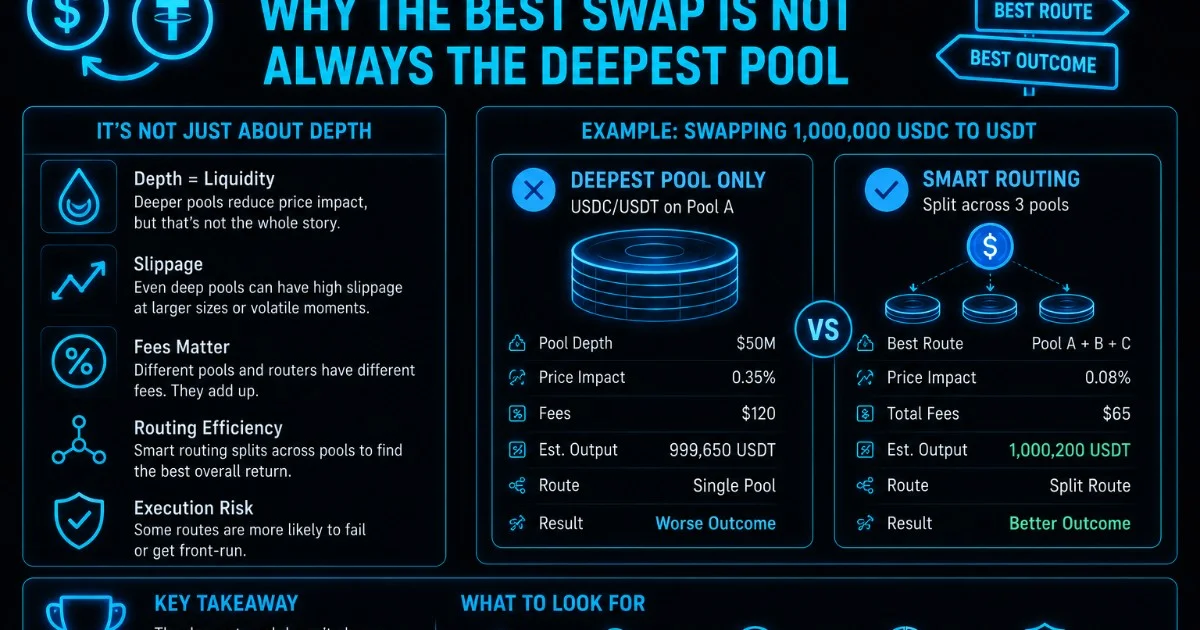
The best swap is not always found in the deepest pool. Routing, fees, slippage, chain liquidity, pool design, and token availability can all affect execution. This creates what can be called the stablecoin routing wars.
Why Stablecoin Routing Matters
Routing is the process of finding the best path for a swap. A trader may want to swap one stablecoin for another, but the best route may not be direct. The trade may move through several pools to get a better final output.
For example, swapping Stablecoin A to Stablecoin B may work better through a third asset if direct liquidity is weak. A good router searches for the best path across available pools.
In fragmented markets, routing becomes critical.
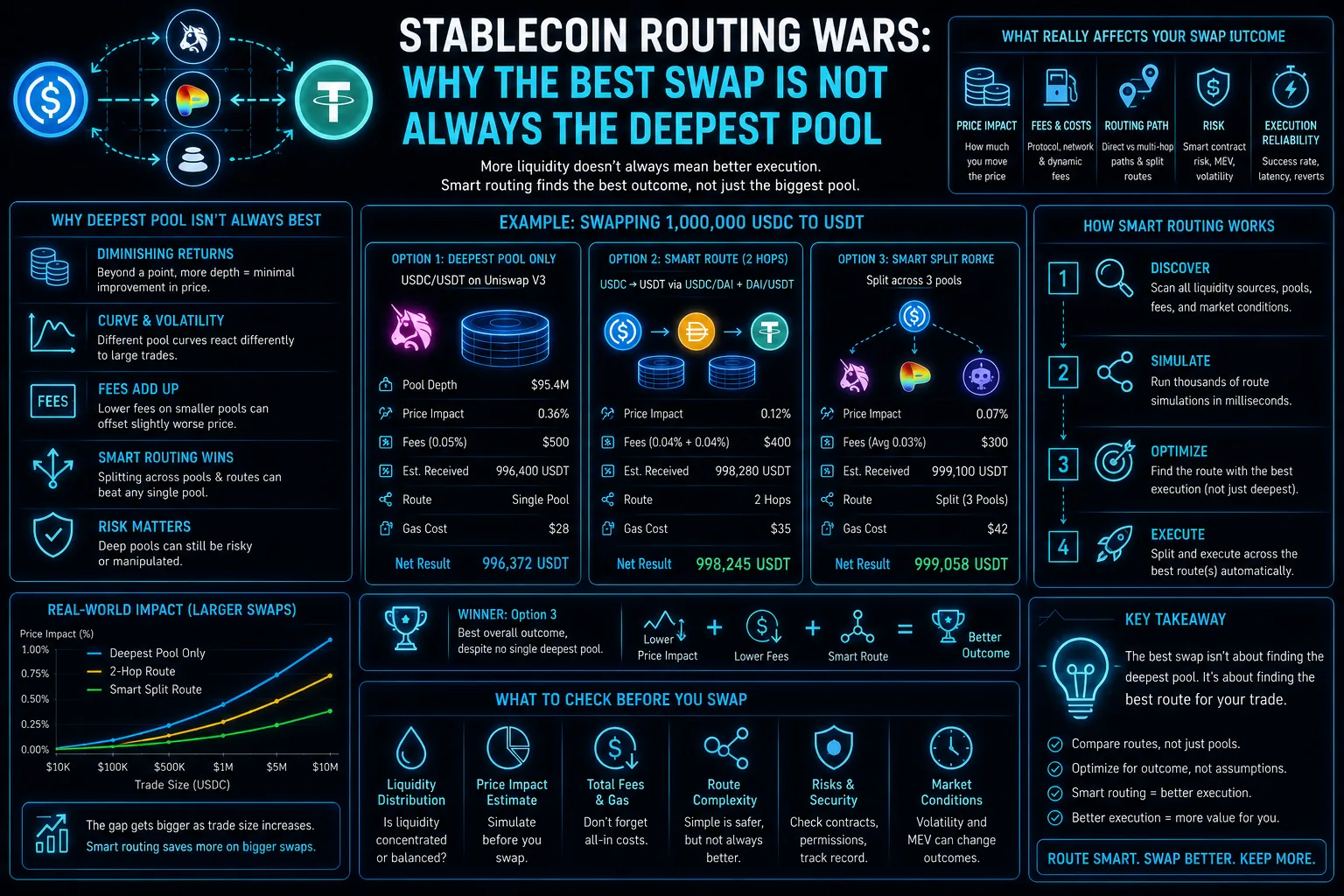
Deep Liquidity Is Important, but Not Everything
A deep pool usually reduces slippage. But pool depth alone does not guarantee the best swap.
A smaller pool may offer better execution if it has lower fees, better balance, or a more efficient route. A larger pool may be imbalanced, expensive, or less useful depending on the trade size.
Traders should not only ask where the most liquidity is. They should ask where the best execution is.
Stablecoin Fragmentation
Stablecoin liquidity is spread across many assets, chains, and protocols. USDT, USDC, DAI, euro stablecoins, decentralized stablecoins, and exchange backed stablecoins all compete for liquidity.
This fragmentation can create inefficiencies.
Problems include:
- Different prices across pools
- Higher slippage on smaller routes
- More complex cross-chain movement
- Thin liquidity in regional stablecoins
- Imbalanced stablecoin pools
- Execution differences between DEXs
As more stablecoins enter the market, routing becomes even more important.
What Traders Should Watch
Stablecoin traders should monitor more than the headline pool size.
Important signals include:
- Swap output
- Slippage
- Pool balance
- Route length
- Fees
- Liquidity depth
- Chain congestion
- Stablecoin depeg risk
- Cross-chain availability
A swap that looks simple can become expensive if routing is poor.
Why DEXs Compete on Routing
DEXs and aggregators compete to offer better execution. The platform that finds the best route can save traders money, especially on larger swaps.
Stablecoin routing is not only a technical feature. It is a competitive advantage.
Better routing can attract more volume, more liquidity, and more active traders.
Final Thoughts
Stablecoin swaps may look simple, but execution quality depends on more than pool depth.
The deepest pool is not always the best route. Traders need to consider slippage, fees, pool balance, chain liquidity, and routing efficiency.
In a fragmented stablecoin market, the best traders watch the path, not just the pair.
How to Use Curve Finance: Stablecoin Swaps, Pools and Slippage Guide Stablecoin Depeg Risk Explained: How Peg Stress Hits Stablecoin Market Cap vs On-Chain Liquidity Guide WETH vs USDC Pair: Which Trading Pool Is Better?