Top NFT Marketplaces Compared: OpenSea and others.
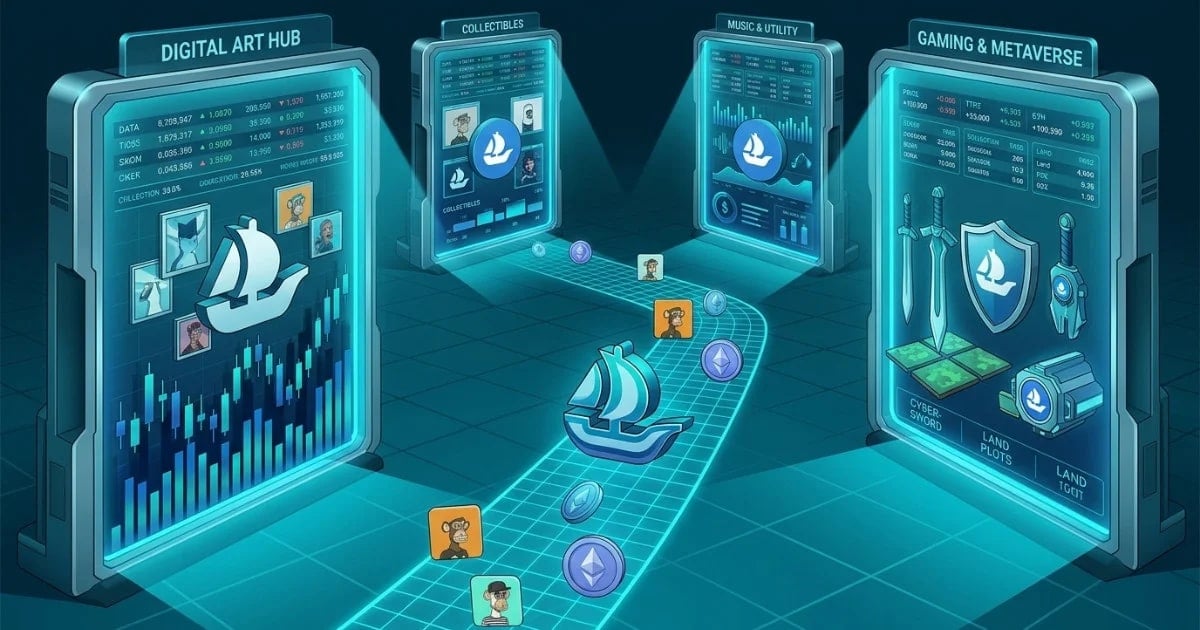
The battle for NFT liquidity has transformed digital galleries into advanced asset exchanges. We break down the fee metrics, pro-grade tools, and structural changes dividing the top marketplaces.
NFT marketplaces have evolved from casual digital art registries into specialized platforms catering to distinct user needs. Early marketplaces focused on simple auction listings and flat fees. Today, the sector divides into platforms for casual multi-chain collectors and those for high-frequency professional traders demanding hyper-speed execution, batch sweeping tools, and decentralized credit options across multiple blockchains.
The Liquidity War among NFT Marketplaces: Aggregators vs. Native Execution Environments
- The non-fungible token (NFT) landscape has evolved from simple digital art registries into a highly financialized digital asset market. In the early days, a single casual marketplace dominated the entire space, relying on simple auction listings and flat service fees. Today, the sector is an active warzone fought across multiple blockchains, dividing participants into two distinct camps: casual retail collectors seeking broad multi-chain exposure, and high-frequency professional traders demanding hyper-speed execution engines, automated batch sweeping tools, and deep decentralized credit options.
- This structural shift has forced major platforms to radically specialize. Choosing the correct marketplace is no longer just about finding a clean interface; it requires a deep technical understanding of underlying protocol trading fees, creator royalty structures, and native blockchain optimizations. This guide breaks down the core architectures, fee parameters, and pro-grade utilities defining the industry's four dominant trading hubs.
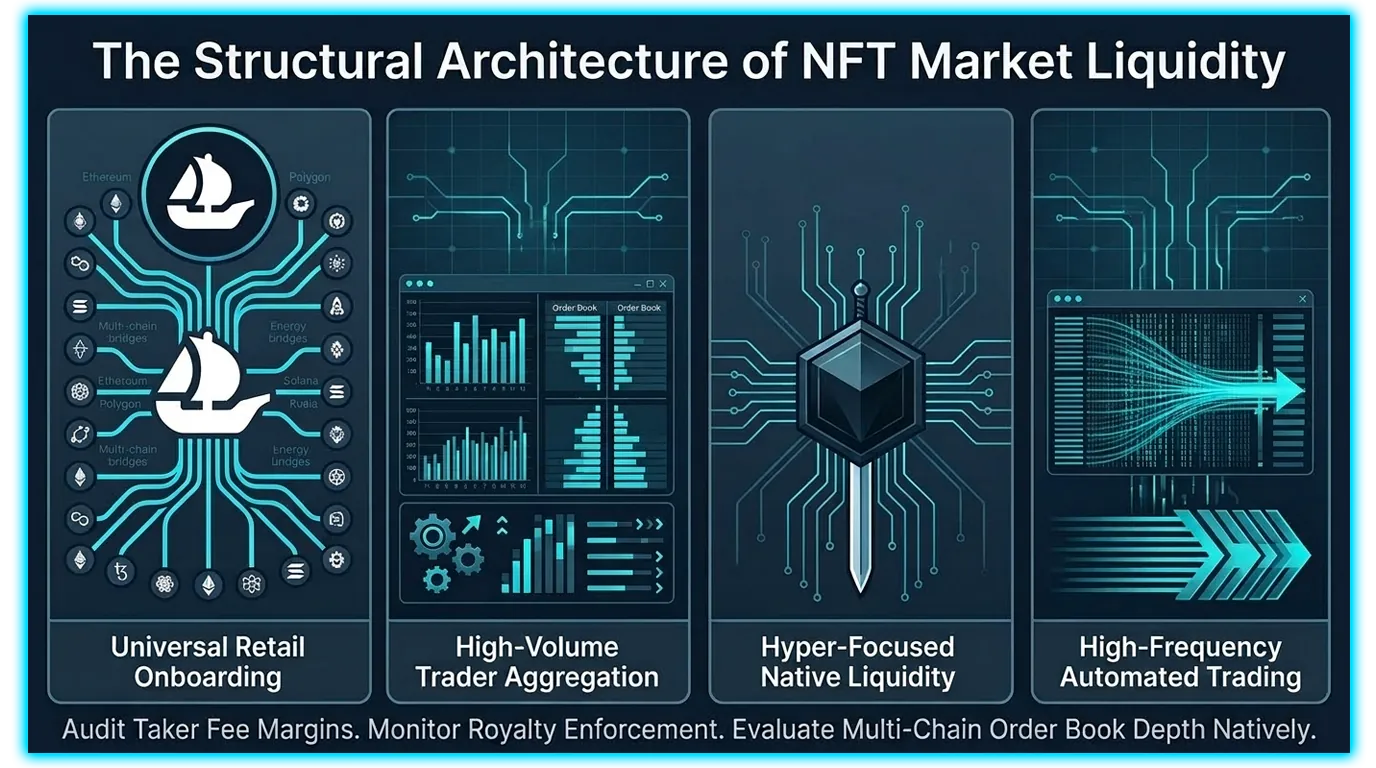
1. OpenSea: The Multi-Chain Giant and Retooled Retail Layer
As the original pioneer of consumer digital collectibles, OpenSea has undergone a massive architectural re-engineering. After facing stiff competition from nimbler, zero-fee developer alternatives, the platform reclaimed massive market ground via its major upgrades and strategic asset distributions.
The Multi-Chain Network: Operating across up to 19 distinct execution layers through its optimized Seaport protocol infrastructure, OpenSea acts as the universal aggregator for retail users, mainstream brands, and cross-chain minting drops.
The Updated Fee Framework: To support its ongoing token incentive models, OpenSea optimized its structural baseline trading fee, pulling standard secondary transaction charges to a competitive 1.0% to 2.5% tier depending on the specific asset class and drop parameters.
Royalty Controls: Creator secondary earnings are dynamic. The platform enforces full royalties where collection metadata mandates on-chain protection parameters, while leaving payouts optional for older legacy collections to protect competitive trading liquidity.
2. Blur: The Ethereum Powerhouse and NFT-Fi Catalyst
Launched explicitly to cater to intermediate and advanced high-volume Ethereum collectors, Blur completely redefined the mechanics of digital asset trading. Rather than operating as a decorative gallery, Blur mimics a high-performance terminal, treating NFT collections like standard liquid order books.
Zero Marketplace Platform Fees: Blur maintains an absolute 0% platform fee model, allowing traders to sweep floors, adjust inventory scales, and reallocate capital entirely free of protocol tax friction.
Advanced Aggregator Tooling: The interface provides real-time portfolio tracking charts that refresh every four seconds. Users can place standing pool bids across entire collection tiers, batch-list hundreds of items simultaneously, and instantly sweep the lowest available floor listings across competing venues.
The Blend Lending Protocol: Blur's crown jewel is Blend, a peer-to-peer, perpetual NFT-Fi lending protocol. Blend allows collectors to secure instant ETH loans against blue-chip digital property or purchase high-value NFTs via "Buy Now, Pay Later" financing plans, creating deep capital flexibility.
3. Magic Eden: The Hyper-Focused Solana Specialist
Magic Eden's journey represents one of the most drastic strategic pivots in modern Web3 history. After spending years scaling into a sprawling, multi-chain aggregator across Bitcoin Ordinals, Ethereum, and Layer-2 networks, the platform executed an absolute structural consolidation. Support for external chains was officially retired, refocusing the marketplace exclusively on Solana.
Consolidated Protocol Fees: Within its native Solana home base, Magic Eden levies a flat 2.0% platform transaction fee on successful secondary sales.
The ME Token Economy: The entire trading loop is tied directly to the native ME ecosystem utility token. Programmed with a continuous revenues-sharing framework, the protocol routes a massive 30% allocation of all marketplace interaction fees straight into automated ME asset buyback programs to support long-term ecosystem health.
The Launchpad Advantage: Magic Eden remains the premier choice for creators through its highly secure Mint Launchpad, providing complete technical onboarding pipelines and automated royalty compliance tools for primary cultural token distributions.
4. Tensor: The Fast-Paced Pro Trading Floor of Solana
If Blur reigns supreme over Ethereum's high-value trading networks, Tensor stands as its undisputed, dominant counterpart within the Solana ecosystem. Commanding a massive 60% to 70% share of daily Solana NFT trading activity, Tensor is engineered specifically for data-driven, high-speed execution.
Asymmetric Fee Processing: Tensor processes trades using a highly competitive maker-taker fee structure. The platform implements a 2.0% taker fee for instant market orders, while maintaining a 0% maker fee for users providing passive liquidity to the bid pools.
Advanced AMM Liquidity Pools: Powered by the TNSR governance framework, Tensor integrates automated market maker (AMM) pricing grids. Traders can deploy automated linear or exponential bonding curves to buy or sell floor assets algorithmically, mimicking traditional decentralized exchange token pools.
High-Frequency Tooling: Leveraging Solana's sub-second block confirmations, Tensor enables professional snipers to execute rapid portfolio sweeps, track real-time trait scarcity distributions, and place immediate, atomic collection-wide bids with zero user-interface delay.
NFT Marketplaces Performance Matrix
| Platform | Core Chain | Trade Fee | Key Pro Feature |
| OpenSea | Multi (19) | 1.0% - 2.5% | Multi-chain aggregation |
| Blur | Ethereum | 0.0% | Blend NFT-Fi lending |
| Magic Eden | Solana | 2.0% | ME token buyback engine |
| Tensor | Solana | 2.0% Taker | AMM bonding curve loops |
Tracking NFT Governance Tokens via DEXTools
- As marketplaces increasingly decentralize their economic frameworks through native governance tokens like BLUR, TNSR, and ME, managing portfolio risk requires absolute clear-text visibility into circulating market assets. Accessing comprehensive decentralized analytics through platforms like DEXTools offers Web3 traders an invaluable cockpit for tracking real-time token performance, analyzing liquidity pool configurations, and auditing code parameters across multiple networks.
- By utilizing integrated modules like the Pair Explorer, the Live New Pairs radar, and the Top Traders or Trade Story diagnostic ledgers, technical analysts can monitor localized volume movements, track institutional distribution patterns via the Big Swap Explorer, and evaluate algorithmic contract trust ratings prior to executing trades, keeping your secure hardware setup safely insulated from malicious venues.
Disclaimer: This article is for informational purposes only and does not constitute investment advice, financial advice, trading advice, or any other kind of advice. DEXTools does not recommend buying, selling, or holding any cryptocurrency or token. Users should conduct their own research and consult with a qualified financial advisor before making any investment decisions. Cryptocurrency investments are volatile and high-risk. DEXTools is not responsible for any losses incurred.
Related Guides
- OpenSea vs Blur: NFT Marketplaces Compared (2026)
- Top 5 NFT Marketplaces in 2026: Where to Buy and Sell Digital Assets
- How to Use OpenSea: Complete NFT Marketplace Tutorial (2026)
- ERC-721 vs ERC-1155 Comparison for Traders
- What Is UPEG? Unipeg Token Explained, From Ethereum Liquidity to the NFT Angle
Frequently Asked Questions
What is an NFT marketplace?
An NFT marketplace is a platform where users can buy, sell and discover non-fungible tokens. These marketplaces connect buyers and sellers and handle the listing and transfer of NFTs onchain.
What should I compare between NFT marketplaces?
Common factors include fees, supported blockchains, available trading tools, liquidity and the range of collections. Comparing these helps you choose a marketplace that fits how you plan to buy or sell.
How do NFT marketplace fees work?
Marketplaces typically charge a fee on sales, and creators may also receive a royalty depending on the platform and collection settings. Fee structures vary, so it is worth checking them before trading.
Do I need a crypto wallet to use an NFT marketplace?
Most NFT marketplaces require connecting a self-custody crypto wallet to buy, sell or hold NFTs. The wallet holds your NFTs and is used to sign transactions on the marketplace.