How to Check Buy and Sell Tax Before Buying a Token (2026)
— By Tony Rabbit in Tutorials
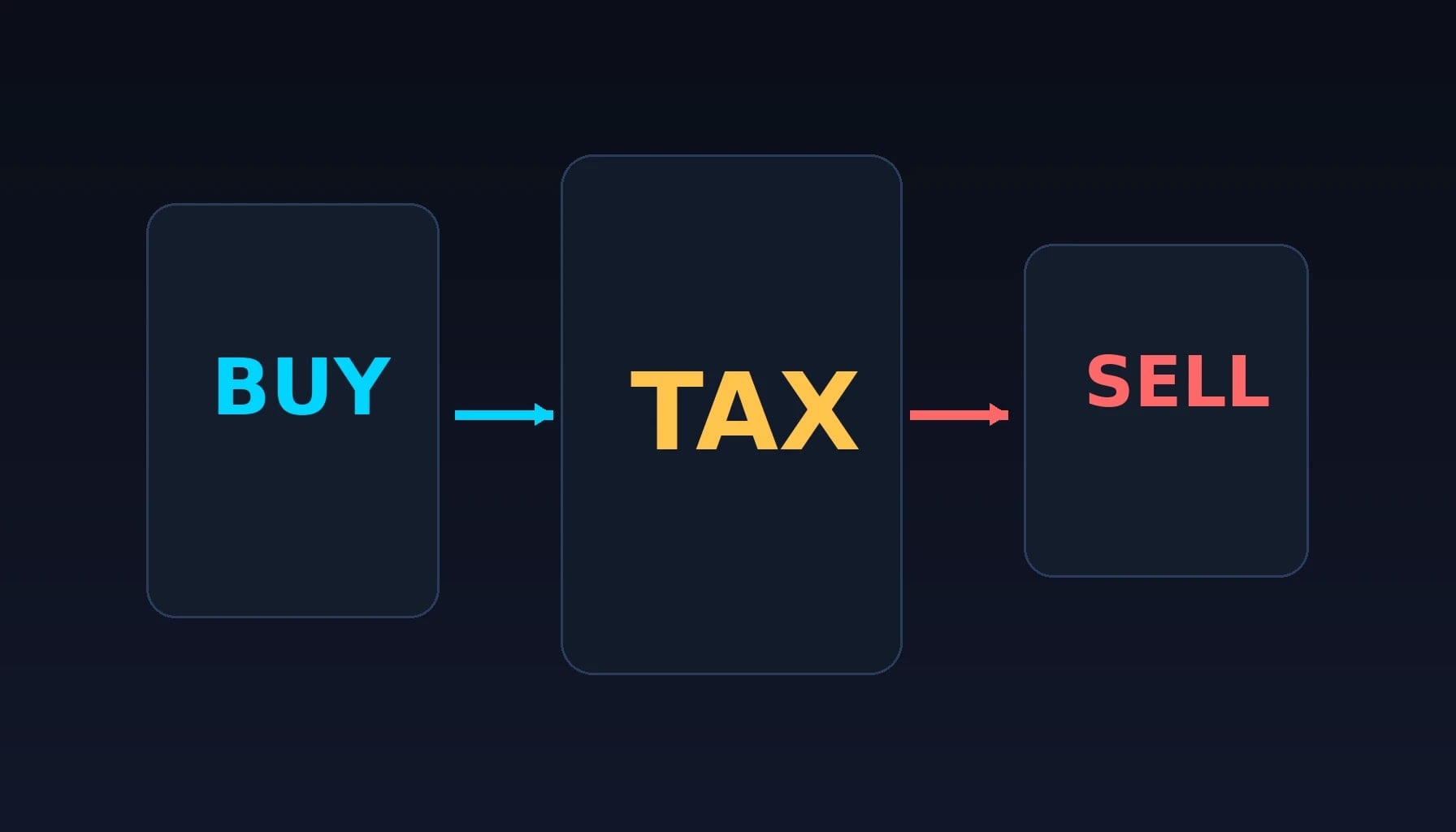
Check buy and sell tax before buying a token using DEXTools, GoPlus, Honeypot.is, and RugCheck to spot honeypots, modifiable tax, and red flags fast.
A token chart can look perfect, the volume can scream momentum, and the pair can show fresh liquidity, yet the actual trade can still hand you a loss the second you press buy. The reason is almost always the same: a hidden buy or sell tax baked directly into the contract. Knowing how to check buy and sell tax before buying a token is the single most important pre-trade safety step in 2026, and it is the one most retail traders still skip.
Token tax is a transfer fee written into the smart contract itself. Every time a wallet buys or sells, a percentage of the trade is rerouted to a developer wallet, a marketing wallet, a treasury, a liquidity pool, or a reflection mechanism. Some tokens charge zero. Some charge 1%. Some charge 99% and turn into honeypots that let you buy but never let you sell. The chart never tells you which one you are about to touch.
This guide walks you through every reliable detector available today, including DEXtools pair audit, GoPlus Security, Honeypot.is, Token Sniffer, RugCheck, BSCheck, and on-chain contract inspection on Etherscan and BscScan. It also covers the Solana SPL Token-2022 transfer fee extension, simulation-based detection through Tenderly and MetaMask, three full real-world walkthroughs, and a clean decision rubric you can use before any swap.
What Is a Buy and Sell Tax on a Token?
A token tax is a built-in transfer fee that reroutes a percentage of every buy or sell to one or more pre-set wallets, usually controlled by the deployer. It is enforced by the smart contract itself, not by the DEX, not by your wallet, and not by the blockchain. A 10% sell tax means you lose 10% of your exit value before slippage is even calculated, and a round-trip buy plus sell at 10% each costs you a real 19% before price action.
The mechanism became standard during the SafeMoon and reflection-token era and survived because it is genuinely useful for funding marketing, liquidity, and treasury operations without forcing a separate token sale. The problem is that the same mechanism is the most common vector for soft rugs, honeypots, and silent value extraction in 2026.
Token tax is a smart contract transfer fee, expressed as a percentage of the trade amount, that is automatically deducted on every buy or sell and routed to a wallet controlled by the project. It is most common on ERC-20 memecoin forks and on Solana SPL Token-2022 contracts that use the transfer fee extension.
Why Token Tax Matters More Than Slippage
Most traders obsess over slippage while ignoring the much larger silent cost of token tax. Slippage on a healthy pair is usually under 1%. Tax can be 5%, 10%, 20%, or higher and apply on both sides of the trade. On a 12% buy and 12% sell, a 50% price gain on the chart is barely break even after fees.
The pain compounds when liquidity is thin. A tax-heavy token with a $40,000 liquidity pool turns every meaningful exit into a price-impact event, the tax skims the top, and the exit slippage skims the rest. The chart you screenshot to show a friend never reflects what your wallet actually received.
There is also the trust dimension. A fixed 5% tax disclosed in the project docs is a different risk profile from a tax that the deployer can change with a single transaction. The second category is where most retail traders get drained without ever understanding what happened, which is why we also recommend reading our guide on using burner wallets for memecoin trades.
A Brief History of Token Tax Mechanisms
The tax-on-transfer model went mainstream in early 2021 with SafeMoon, which used a static 10% tax split between reflections, liquidity, and marketing. The pattern spread to thousands of BNB Chain and Ethereum forks. By late 2021, the model had two recognizable failure modes: deployers raising tax to 99% to trap holders, and contracts with hidden takeFee functions that exempted specific wallets while charging everyone else.
In 2022, the rise of Honeypot.is and Token Sniffer pushed scammers toward more sophisticated patterns: tax hidden behind proxy upgrades, tax triggered only after a holder threshold, and tax encoded inside obfuscated assembly. The cat-and-mouse cycle has continued ever since.
2024 introduced a new variant on Solana: the SPL Token-2022 standard. Token-2022 added a native transfer fee extension that lets any token charge a fee on transfer at the protocol level, without custom contract code. RugCheck and the Solscan token detail pages now surface this fee as a first-class field. By 2026, the same logic that ERC-20 traders learned to scan for is mandatory on Solana too.
How Token Tax Actually Works Inside the Contract
On an ERC-20 contract the tax usually lives inside the _transfer function. The deployer adds a check: if the recipient is the pair (Uniswap pool), apply the sell tax; if the sender is the pair, apply the buy tax. The tax amount is deducted from the transfer and sent to a separate wallet or contract.
The most common state variables are _taxFee, _liquidityFee, _marketingFee, _buyTaxPercent, and _sellTaxPercent. The functions that change them usually carry names like setTaxFeePercent, setBuyTax, setSellTax, or updateFees. If any of those are present and the contract is not renounced, the deployer can change the tax at any time.
A second pattern is the exemption mapping, usually called _isExcludedFromFee. The deployer's wallet and a few friendly wallets are added to this mapping and pay zero tax, while everyone else pays the full rate. This is technically legal but creates an unfair playing field.
The third and most dangerous pattern is the honeypot: the buy logic works normally, but the sell logic contains a hidden condition that causes the transaction to revert. The wallet sees the token balance but cannot dispose of it. Honeypot detectors solve this by simulating both a buy and a sell against a forked state of the chain.
Step-by-Step: How to Check Buy and Sell Tax Before Buying
This is the practical workflow. Run every token through these steps before any swap above a token sniff size. The first three checks take under 30 seconds combined once you build the habit.
DEXtools Pair Audit: The First Stop
DEXtools runs an automated audit on every pair as soon as it indexes the contract. Open any token page, click the Audit tab, and the buy tax, sell tax, honeypot status, ownership renouncement, and proxy status are listed in a single panel. The tax fields are color-coded: green for zero, yellow for under 5%, red for above 10% or modifiable.
The most useful column for pre-trade checks is the Modifiable Tax flag. A token can show 0% tax right now and still carry a Modifiable Tax warning, which means the deployer can raise the tax at any moment. This is the most common silent rug pattern in 2026. The chart looks clean, the audit is green on the numbers, but the modifiable flag is the warning that the trade has hidden tail risk.
DEXtools also surfaces the contract creator's other tokens, which is often the loudest signal. If the same wallet has launched 40 tokens in the last six months, the audit numbers matter less than the deployer history.
GoPlus Security: The Most Complete Token Scanner
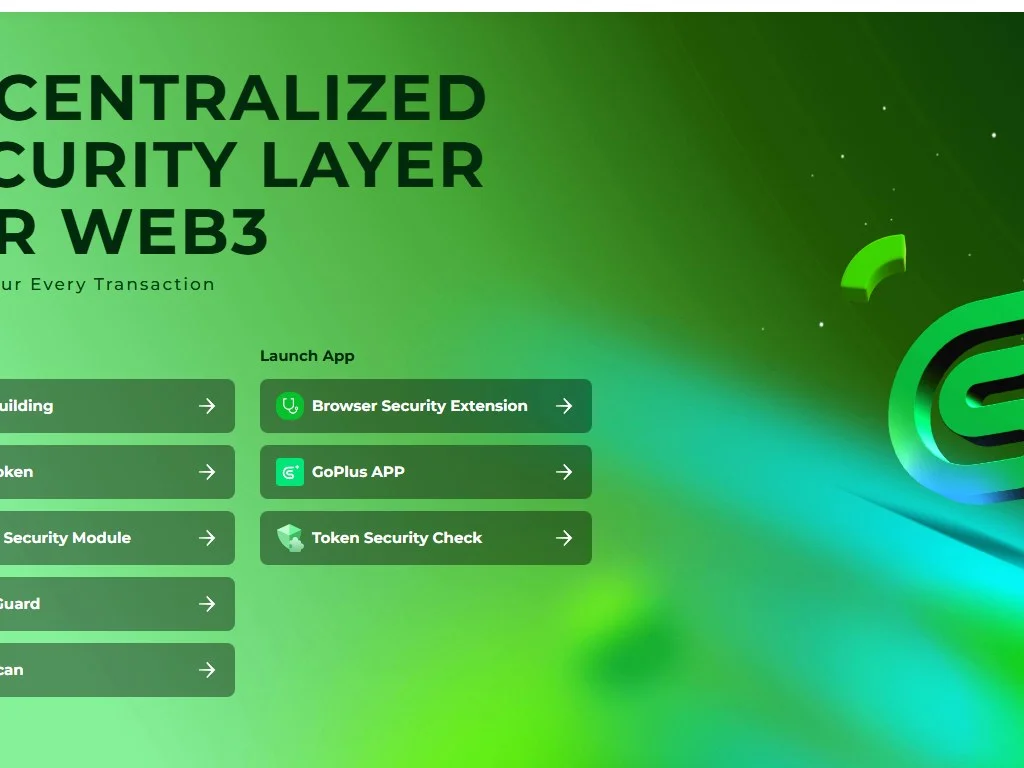
GoPlus Security is the open API behind most modern wallet warnings. Trust Wallet, OKX Wallet, SafePal, and dozens of DEX frontends pull GoPlus data to flag risky tokens in real time. The free web interface at gopluslabs.io/token-security accepts a contract address on Ethereum, BNB Chain, Polygon, Arbitrum, Base, Avalanche, and several others.
GoPlus returns a structured response with fields for buy_tax, sell_tax, is_honeypot, is_proxy, is_mintable, can_take_back_ownership, transfer_pausable, hidden_owner, and several more. The buy and sell tax fields are derived from a real simulation, not from parsing the source, which means they catch tokens that hide tax behind obfuscated logic.
The GoPlus API is what most professional tools use under the hood, including many fake volume detection dashboards. For manual use, the web UI is enough; for automated workflows, the free tier of the API handles 30 requests per minute.
Honeypot.is: Simulation Beats Source Reading
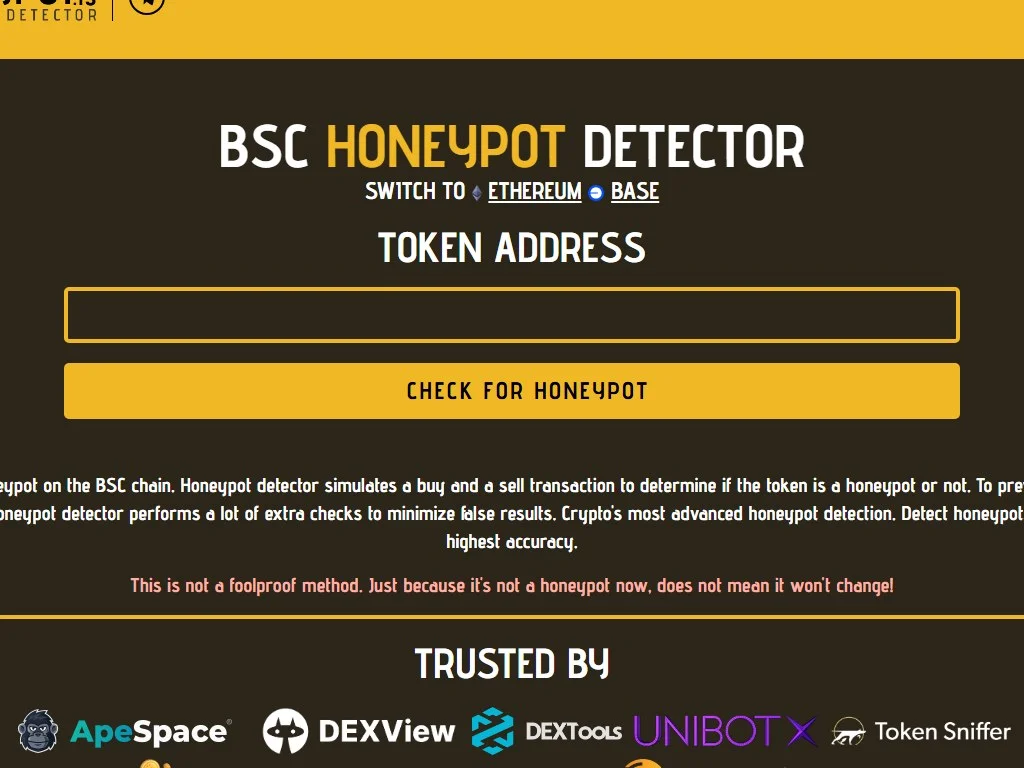
Honeypot.is is the gold standard for catching tokens that look fine in their source code but revert on sell. The tool forks the current state of the chain, opens a fresh wallet, executes a real buy through the most liquid pair, then immediately executes a real sell. It reports the effective buy tax, the effective sell tax, the slippage encountered, and whether the sell completed at all.
The killer feature is that Honeypot.is catches dynamic tax. A contract can charge 5% on the first sell and 95% on the second sell, and source-reading tools will miss it. The Honeypot.is simulation actually performs both transactions and reports the divergence.
It is the closest thing to running the trade with someone else's money, which is exactly what pre-trade checks should be. Honeypot.is currently supports Ethereum, BNB Chain, and Base.
Token Sniffer and RugCheck
Token Sniffer is the long-running scanner for EVM chains. It assigns a score from 0 to 100 based on contract risk, holder distribution, liquidity lock, and tax. The score is a useful triage filter: anything under 70 deserves a second look, anything under 50 is usually unsuitable for size. Token Sniffer is particularly strong at detecting copy-paste honeypot templates and known scammer addresses.
RugCheck.xyz is the Solana equivalent and the only mainstream tool that surfaces SPL Token-2022 transfer fee as a first-class field. RugCheck shows the fee percentage, the maximum fee, the fee withheld balance, the fee config authority, and the withdrawal authority. If the fee config authority is not set to the system program (which means renounced), the fee can be raised.
RugCheck also flags freeze authority risk, which is a Solana-specific equivalent of the EVM blacklist function. A freeze authority can prevent a specific wallet from selling, which is functionally indistinguishable from a 100% sell tax.
Inspecting the Contract on Etherscan and BscScan
When the automated tools disagree or when the token is too new to be indexed, the answer lives in the source code. Open the contract address on Etherscan (Ethereum), BscScan (BNB Chain), Basescan (Base), or the equivalent explorer for the chain. Click the Contract tab. If the contract is verified, the source is browsable.
Use Ctrl+F to search for the following terms in order: _taxFee, takeFee, _buyTax, _sellTax, setTaxFeePercent, setBuyTax, setFees, _isExcludedFromFee, and excludeFromFee. The presence of any setter function on tax means the tax is modifiable. The presence of the exemption mapping means certain wallets pay zero.
Also check the Read Contract tab for the current values of owner, _buyTaxPercent, and _sellTaxPercent. If the owner is not the zero address (0x000...000), the deployer can still call the tax setters. Our companion guide on transaction simulation in crypto covers the same idea from the wallet side.
Comparison: Buy and Sell Tax Detection Tools
SPL Token-2022 Transfer Fee on Solana
Solana's SPL Token-2022 standard, finalized in 2023 and widely adopted by 2026, introduced a native transfer fee extension. Unlike the EVM where tax is custom Solidity logic, the Token-2022 fee is enforced at the program level by the official SPL Token program. This makes it both easier to detect (the fee is a public field on the mint account) and harder to hide.
The relevant fields are transferFeeBasisPoints (the fee in hundredths of a percent), maximumFee (a cap in token units), transferFeeConfigAuthority (the address that can change the fee), and withdrawWithheldAuthority (the address that can collect accumulated fees). Solscan and RugCheck both surface these in plain English.
The check is simple. If the transferFeeConfigAuthority is set to a real address rather than null, the fee is modifiable. The Token-2022 fee also applies to every transfer, not just DEX trades, which means it affects wallet-to-wallet transfers and CEX deposits as well. This is a meaningful difference from EVM tax tokens, where the tax only triggers on DEX-pair transfers.
Token Tax Red Flags You Should Always Avoid
Real-World Walkthrough 1: A Healthy Low-Tax Token
Take a verified ERC-20 launched by a reputable team, with 0% buy tax, 0% sell tax, ownership renounced, and the LP locked for 12 months. Open the pair on DEXtools. The Audit tab shows green across the board. Buy Tax: 0%. Sell Tax: 0%. Modifiable Tax: No. Honeypot: No. Owner: 0x0000000000000000000000000000000000000000.
Cross-check on GoPlus: buy_tax 0, sell_tax 0, is_honeypot 0, can_take_back_ownership 0. Honeypot.is simulation: buy succeeds, sell succeeds, effective tax 0%. Etherscan source inspection: no setTaxFeePercent function present, no _isExcludedFromFee mapping. This is the clean baseline against which every other token should be compared. Trade size can be sized for normal slippage rules rather than tax risk.
Real-World Walkthrough 2: A 5% Tax Token That Is Still Tradable
Consider a memecoin with a transparent 5% buy tax and 5% sell tax, used for marketing and treasury. The DEXtools audit shows Buy Tax: 5%, Sell Tax: 5%, Modifiable Tax: No (because ownership is renounced and the tax setters have no caller). GoPlus confirms the numbers. Honeypot.is simulation shows buy and sell both succeed with effective tax matching disclosure.
This token is tradable, but the math changes. A round trip costs ~9.75% before slippage. Position sizing needs to reflect that. A 30% chart move is a 20% net trade. Stop-loss placement on a 5% tax sell side requires moving the stop wider than usual, because a flush at the bid gets you out at bid minus 5% rather than just bid. The trade is workable, but only with eyes open. The principles around sizing in this scenario overlap heavily with our stop-loss and take-profit guide.
Real-World Walkthrough 3: A Honeypot Trap
The third walkthrough is the one that ruins wallets. A token launches with attractive chart action, a big-name shill account, and a Telegram with 8,000 members. The DEXtools audit shows Buy Tax: 3%, Sell Tax: 3%, but Modifiable Tax: Yes and Owner: active. The numbers look fine. The structure does not.
GoPlus returns is_honeypot: 1 with a flag for hidden ownership through a proxy. Honeypot.is simulation: buy succeeds at 3% effective tax. Sell reverts with the error message "execution reverted: trading paused." Source inspection on Etherscan reveals a pause modifier that the owner can toggle on the sell side only, gated by an obfuscated mapping. The token is a honeypot disguised as a normal low-tax memecoin.
The chart kept rising for 45 minutes after the honeypot trigger was activated, because all the early buys still showed as price action and the only people who could sell were exempted wallets. By the time momentum cooled, every retail bag was frozen at zero exit value. The simulation step prevents this. The chart never does.
Simulation-Based Detection With Tenderly and MetaMask
Tenderly is the professional simulation environment used by audit firms and bot operators. You can fork the current state of any EVM chain, paste in the exact swap transaction you are about to send, and see the simulated result before signing anything. The simulator returns the token balance delta, the gas used, all internal calls, and any revert reasons.
For a tax check, the workflow is: fork mainnet, simulate a buy from your wallet, then simulate a sell of the resulting balance. Compare the WETH received on the sell with the WETH spent on the buy. The difference, minus DEX fees, is the effective round-trip tax. If the sell reverts, the token is a honeypot. If the difference is materially larger than the disclosed tax, the contract has hidden fee logic.
MetaMask added native transaction simulation in 2024 and refined it through 2025. Before signing any swap, MetaMask now displays the expected token balance change. If the displayed delta is smaller than the swap quote suggests, the token is taking a fee the DEX router did not account for. This is the cheapest, fastest tax check available and it requires zero extra clicks.
Decision Rubric: Buy, Reduce Size, or Skip
BSCheck and Chain-Specific Tools
BSCheck specializes in BNB Chain tokens, where the tax-on-transfer pattern remains most common in 2026 due to the low deployment cost. The tool parses the verified contract and flags BSC-specific patterns: PinkSale and DxSale launch templates, the Pancake router exemption, the swapAndLiquify auto-LP function, and the dev wallet routing. BSCheck is less polished than GoPlus but catches BSC-specific edge cases that the cross-chain tools sometimes miss.
On Base, Basescan plus GoPlus is the standard pairing. On Arbitrum, Arbiscan plus Token Sniffer. On Polygon, Polygonscan plus GoPlus. The pattern is always the same: one source-reading tool, one simulation tool, and a final check on the explorer Read Contract tab. For deeper background on how blockchain explorers fit into a broader safety workflow, our piece on avoiding address poisoning scams is a useful companion.
MetaMask Snaps and Wallet-Level Tax Warnings
MetaMask Snaps released in 2023 and matured through 2025 added a layer of pre-sign protection. The most relevant Snap for tax checking is the GoPlus Wallet Snap, which queries GoPlus Security automatically every time you attempt a swap and warns inline if the destination token has tax, honeypot risk, or modifiable ownership. The Wallet Guard Snap and Blockaid integration add similar protection.
These wallet-level warnings are the last line of defense and the easiest to install. For any serious trader of low-cap tokens, enabling a tax-detection Snap turns a manual workflow into a passive one. The Snap will not stop the transaction, but it will display the tax numbers and any honeypot flag before you sign, which is enough to interrupt the autopilot habit.
Sandwich Tax Changes: The Most Underrated Attack
A sandwich tax change is when the deployer raises the tax to 99% immediately before a large sell hits the mempool, drains the value through the tax wallet, then resets the tax to the original number a few blocks later. The victim sees a single sell transaction at 99% loss; the chart shows a brief wick; almost no one notices because the tax goes back to normal.
This attack is the reason that modifiable tax is treated as critical by every modern detector, regardless of the current tax value. A token can show 0% tax for months and still execute a sandwich tax change against a single whale exit. The only protection is to not buy modifiable-tax tokens with size that would attract attention, or to not buy them at all.
Pros and Cons of Tax Tokens
- Funds marketing without separate token sale
- Auto-liquidity adds depth on every trade
- Reflection rewards passive holders
- Discourages high-frequency sniping
- Treasury for long-term operations
- Round-trip friction compounds fast
- Modifiable tax enables silent rugs
- Exemption mappings create insider exit
- Honeypot patterns hide inside tax logic
- Sandwich tax changes drain whales
Best Practices Summary
Build a 60-second pre-trade habit. Open the pair on DEXtools, check the audit tab. Open GoPlus or Token Sniffer in a second tab and confirm. Run Honeypot.is if the token is EVM and untrusted. For Solana, run RugCheck. Inspect the contract source on Etherscan or BscScan if anything looks off. Let MetaMask simulation be your final pre-sign sanity check.
Treat modifiable tax as disqualifying for any size that matters. Treat honeypot flags as absolute. Treat exemption mappings on the deployer wallet as red flags regardless of the current tax number. Cross-check at least two independent tools before any large trade, because each detector has different blind spots. Consider pairing this routine with the principles in our crypto wallet security tips guide.
Above all, do the check before the trade, not after. The cheapest possible test trade still costs gas, and a honeypot can take the entire test position even if the gas is small. Simulation is free. Use it.
Frequently Asked Questions
Q Q Q How do I check buy and sell tax on a token before buying?
Open the token on DEXtools and check the Audit tab, then cross-check on GoPlus Security and Honeypot.is. The audit tab lists buy tax, sell tax, modifiable tax, and honeypot status. Honeypot.is runs a real simulated buy and sell to confirm the numbers are accurate.
Q Q Q What is a normal buy and sell tax for a memecoin?
A common range is 3% to 5% on each side, used for marketing, liquidity, and treasury. Anything above 10% combined adds significant round-trip friction and should be reserved for short-duration trades only.
Q Q Q What is a honeypot token and how do I detect one?
A honeypot is a token where buying works normally but selling reverts, trapping funds. Honeypot.is and GoPlus Security both detect honeypots by simulating a real sell on a forked chain. If the simulated sell fails, the token is a honeypot.
Q Q Q What is modifiable tax and why is it dangerous?
Modifiable tax means the deployer can change the tax rate at any time through a setter function like setTaxFeePercent. A token can show 0% tax today and 99% tax tomorrow, which is the most common silent rug pattern. Always check if ownership is renounced.
Q Q Q Do Solana tokens have buy and sell tax?
Yes. The SPL Token-2022 standard introduced a native transfer fee extension that lets any token charge a percentage fee on every transfer. RugCheck.xyz and Solscan both display the transfer fee directly. Token-2022 fees apply to all transfers, not just DEX trades.
Q Q Q Can I check token tax directly on Etherscan?
Yes if the contract is verified. Search the source for _taxFee, takeFee, setTaxFeePercent, _buyTax, _sellTax, and _isExcludedFromFee. The presence of setter functions means tax is modifiable. The Read Contract tab shows current values and the owner address.
Q Q Q What is the best free tool to check token tax?
GoPlus Security is the most complete free tool and covers 20+ EVM chains. Honeypot.is is the best for confirming sell behavior. DEXtools Audit is best for first-pass triage. For Solana, RugCheck.xyz is the standard. Use at least two tools for any size trade.
Q Q Q Does MetaMask warn me about token tax before swapping?
MetaMask shows a simulated balance change before you sign, which reveals the effective tax indirectly. Installing the GoPlus Wallet Snap or Wallet Guard adds explicit tax and honeypot warnings inline at the swap step.
Q Q Q What does an exemption mapping mean in a tax token?
An exemption mapping like _isExcludedFromFee is a list of wallets that pay zero tax on transfers. If the deployer or team wallets are in this list, they can sell without paying tax while retail holders pay the full rate, which is a clear red flag.
Q Q Q How much tax is too much on a token?
Anything above 10% on either side is a strong avoid for most traders. Combined tax of 10% to 20% requires the trade to outperform broader market by the full friction amount just to break even, which raises the burden of proof to an extreme level.
Q Q Q Can a flash loan be used to dodge token tax?
No. Token tax is enforced inside the contract's transfer function and applies to any transfer regardless of how it is funded. A flash loan does not bypass tax; it just changes who provides the capital. The fee is still deducted on every buy and sell.
Q Q Q Why does DEXtools sometimes show a different tax than GoPlus?
Different detectors use different methodologies. Source parsers read declared values, simulators run real transactions. Tokens with dynamic tax that depends on sell size or holder threshold can return different numbers on each tool. Always use at least two and trust the higher number.
Common Mistakes Traders Make When Checking Tax
The first and most common mistake is checking the tax once and assuming it stays that way. On modifiable-tax contracts, the deployer can raise the tax after you buy, after the token has accumulated holders, or even between your buy and your sell. The tax check needs to be re-run if the token is held for more than a brief window, or the position needs to be small enough that the deployer has no incentive to attack it.
The second mistake is trusting a single detector. Each tool has different blind spots: DEXtools can lag on freshly deployed tokens, GoPlus can miss obfuscated assembly, Honeypot.is does not yet support every chain, and Token Sniffer scoring can be gamed by deployers who know the heuristics. Cross-checking two or three tools is the only reliable approach for any position size that matters.
The third mistake is reading the source code without understanding what to look for. A verified contract can run thousands of lines, and the tax logic can be split across multiple inherited contracts. Searching for the standard function names is the practical shortcut, but it works only if you understand which patterns are dangerous and which are routine. When in doubt, default to the simulation-based tools, which test behavior directly instead of guessing from source.
The fourth mistake is ignoring holder distribution. A 0% tax token can still soft-rug if one wallet holds 60% of supply unlocked. The tax check lives inside a broader pre-trade workflow that covers holder distribution, liquidity lock duration, and deployer history.
How Tax Interacts With DEX Routers and Aggregators
DEX aggregators like 1inch, Matcha, OpenOcean, and Jupiter on Solana route trades across multiple pools to minimize slippage. On a tax token, the aggregator splits add a second-order effect: each hop through a taxed token triggers the tax again. A trade that crosses two taxed tokens to optimize price can end up paying tax twice, which usually wipes out any savings from better routing.
The practical rule is to route taxed tokens through a single pool whenever possible. Most aggregators show the route before you sign; if the route involves multiple hops through the taxed token, switch to a direct swap on Uniswap, Pancake, or Raydium even if the headline price is slightly worse. The realized price after tax is what matters, not the quoted price.
Some aggregators have added native tax-awareness in 2025, where the quote already accounts for the detected tax. 1inch in particular pulls GoPlus data for the destination token and inflates the slippage tolerance accordingly. This still does not protect against modifiable tax, but it does prevent the most common failure mode of a swap reverting because the actual output is below the minOut.
Tax Detection for Sniping and Fast Launches
For traders who snipe new launches, the timing problem is real. A token can deploy and accumulate $200,000 in volume before DEXtools or GoPlus have indexed the contract. The detectors return empty results, and the trader is choosing between waiting and missing the entry or buying blind. Neither is good.
The professional workflow for sniping uses a private fork of the chain via Tenderly or a custom Anvil instance. The sniper bot simulates a buy and a sell against the contract within the same block as the launch, and only fires the real buy if the simulation confirms tax under the threshold and a successful sell. This is essentially Honeypot.is logic executed locally with zero latency. For more on related fast-execution mechanics, our guide on market makers in crypto is a useful adjacent read.
Retail snipers without this infrastructure are better off skipping the first five minutes. The cost of a honeypot is the full position. Letting the first wave trade, then running the standard tax check once detectors index, is much higher expected value than trying to be first.
Regulatory Context and Disclosure Expectations
In 2026, several jurisdictions have started treating undisclosed token tax as consumer fraud. The EU's MiCA framework requires transfer fees to be disclosed in the whitepaper. The UK FCA has warned about modifiable tax and treated specific honeypots as theft. US state regulators have followed similar paths.
The pressure has pushed the legitimate end of the market toward clear disclosure. A token that publishes its tax structure with a clear statement that ownership is renounced is now the baseline for serious projects. Tokens that hide the tax correlate with the high-risk end, which makes the disclosure itself a useful filter before running the technical checks. For the broader regulatory backdrop, see our coverage of tokenization and real-world assets.
Conclusion
Checking buy and sell tax before buying a token is no longer optional in 2026. The tools are free, the workflow is under a minute, and the alternative is exposure to the most common rug pattern in modern memecoin trading. DEXtools, GoPlus, Honeypot.is, Token Sniffer, RugCheck, BscScan, and MetaMask simulation together cover every scenario from a clean low-cap launch to a sandwich-tax honeypot trap.
The decision rubric is simple: skip anything with modifiable tax or honeypot flags, reduce size for fixed-tax tokens above 5% combined, and treat 0% renounced tokens as the only candidates for normal sizing. Pair this with disciplined slippage settings, sensible stop-loss placement, and basic wallet hygiene, and the percentage of trades that end in surprise losses drops dramatically.
Make the check a reflex, not a decision. Open DEXtools, scan GoPlus, run Honeypot.is, sign the swap. Sixty seconds. Every time. The next honeypot you avoid pays for the habit a thousand times over.
Disclaimer: This article is for educational purposes only and does not constitute investment, tax, legal, or financial advice. Token tax settings, contract code, and detection tool accuracy can change rapidly. Always verify on multiple independent tools before trading.
Related Guides
- How to Check Liquidity Lock Before Buying a Token: Unlock Risk and Locker Verification (2026)
- How to Check if a Token Can Be Sold (2026)
- How to Read Liquidity Pool Data Before Buying a Token (2026)
- How to Verify Token Safety Before Buying: A Pre-Buy Crypto Checklist
- Exit Liquidity Mapping: Who Might Sell Into You Before You Buy?
- How to Use MoonPay to Buy and Sell Crypto