Validator Node vs ETH Staking: Which Path in 2026?

Validator node vs ETH staking compared: weigh the costs, uptime demands, and responsibility of each path so you can choose the right route in 2026.
Choosing between running an Ethereum validator node and using a simpler staking route is the single biggest yield decision an ETH holder will make in 2026. The math has shifted, the menu has expanded, and the post-Pectra hard fork changed what "32 ETH" even means. This is no longer a binary choice between solo staking and Lido. There are at least six legitimate paths, each with different capital requirements, fee structures, slashing exposure, tax treatment, and operational complexity.
This guide is a decision framework, not a beginner introduction. It assumes you already know what a validator does and why Ethereum needs them. What you need now is a clear comparison of solo validators, liquid staking tokens, centralized exchange custody, Rocket Pool minipools, distributed validator technology (DVT), and EigenLayer restaking, plus the criteria to pick the right one for your capital and skill profile.
The Pectra upgrade raised the maximum effective balance (MaxEB) from 32 ETH to 2,048 ETH through EIP-7251, which means a single validator can now compound up to 2,048 ETH instead of forcing you to spin up 64 separate keys. That single change rewrote the economics of solo staking for whales. Restaking via EigenLayer has matured into a real yield stack (base staking yield plus 1 to 5 percent extra from actively validated services), and DVT operators like Obol and SSV now let small groups co-run a validator without trusting one machine. We will walk through all of it, with numbers.
Validator Node vs ETH Staking: The 60-Second Answer
A validator node is the on-chain proof-of-stake actor that proposes and attests blocks on Ethereum. ETH staking is the broader category of locking ETH to earn protocol rewards, which can be done by operating a validator yourself or by delegating to someone who does. Running a validator gives you 100 percent of consensus rewards plus execution layer tips and MEV, but demands 24 by 7 uptime, hardware, and technical skill. Pooled and liquid staking gives you fractional access to the same rewards minus a 10 to 35 percent fee.
The difference between running a validator node and ETH staking is custody and effort. A solo validator runs Ethereum consensus software on hardware you own, requires 32 ETH minimum (up to 2,048 ETH post-Pectra), and keeps the full base reward of around 3 percent APR. ETH staking through liquid protocols, exchanges, or pools accepts any amount, runs on someone else's infrastructure, and charges a 10 to 35 percent commission on rewards.
What Changed in 2026: Pectra, MaxEB and the New Staking Map
The Pectra upgrade, which combined Prague (execution layer) and Electra (consensus layer) changes, went live in 2025 and is now fully reflected in validator behavior. The headline change is EIP-7251, which raised the maximum effective balance per validator from 32 ETH to 2,048 ETH. Before Pectra, if you wanted to stake 320 ETH you had to operate 10 separate validator keys, each capped at a 32 ETH effective balance. Anything above 32 was "stuck" until you withdrew and re-staked. After Pectra, a single key can hold and earn on up to 2,048 ETH.
For solo stakers and institutions, this means fewer keys to manage, less complexity, lower hardware overhead per ETH staked, and simpler validator exit logistics. The activation queue, which was a real bottleneck in 2024, has been reshaped because a 1,000 ETH staker now adds 1 validator instead of 32. EIP-7002 also enabled execution layer triggerable withdrawals, so you can now exit a validator using only your withdrawal credential without needing the consensus client keys, which matters for cold storage setups and institutional custodians.
On the alternative routes side, two things matured. Distributed validator technology moved from testnet to production across Obol and SSV, letting a cluster of 4 to 7 nodes share validator duty so no single machine going offline causes a penalty. And restaking through EigenLayer crossed past the "experimental" phase, with billions of ETH (and liquid staked ETH) deployed across actively validated services (AVSs) like EigenDA, AltLayer, and various oracles.
The Six Paths: Full Menu of ETH Staking Options in 2026
Forget the old solo vs Lido framing. Here is the full menu you should consider, ordered roughly from most sovereign to most custodial.
You run consensus and execution clients on your own hardware. 32 ETH minimum, up to 2,048 ETH per key post-Pectra. Maximum sovereignty, maximum effort.
Run a validator with 3 to 6 other operators using Obol or SSV. Slashing risk diluted, single point of failure removed, 32 ETH still required.
Provide 8 ETH plus RPL collateral, protocol provides 24 ETH. Earn commission on the matched 24 ETH plus RPL rewards. Run the node yourself.
Deposit any amount with Lido (stETH), Rocket Pool (rETH), Coinbase (cbETH), Frax (frxETH), Mantle (mETH), Swell (swETH). Receive a tradeable receipt token.
Click "stake" inside Coinbase, Binance, Kraken or similar. Highest fees (25 to 35 percent), maximum convenience, custodial risk and regulatory exposure.
Take an LST or native staked ETH and re-pledge it to validate additional services. Stack 1 to 5 percent extra APR with extra slashing and smart contract risk.
Path 1: Solo Validator (The Sovereign Path)
Running a solo validator means you operate two pieces of software on your own hardware: an execution client (Geth, Nethermind, Besu, or Reth) and a consensus client (Prysm, Lighthouse, Teku, Nimbus, or Lodestar). The execution client processes EVM transactions and maintains the state. The consensus client handles attestations, block proposals, and the proof-of-stake mechanism. Both must stay synced and online.
Hardware and connection requirements in 2026
The minimum viable validator node in 2026 needs roughly the following: a modern multi-core CPU (Intel Core i5 12th gen or AMD Ryzen 5 5600 class minimum, the i7 / Ryzen 7 tier is more comfortable), 32 GB of RAM (16 GB still works but headroom is tight as state grows), a 2 TB NVMe SSD (do not use SATA, do not use HDD, the IOPS hit will cause missed attestations), gigabit symmetric internet, an uninterruptible power supply, and either a stable home setup or a dedicated VPS.
You also want a static IP or properly configured dynamic DNS, a router that supports UPnP or manual port forwarding (default 30303 for execution P2P and 9000 for consensus P2P), and monitoring (Grafana plus Prometheus is the standard combo, with optional alerts via Telegram or Beaconcha.in mobile push).
Slashing: the worst case scenario
Slashing is the protocol-level penalty for malicious or dangerously buggy validator behavior. The two main offenses are double-signing (proposing or attesting to two conflicting blocks at the same slot) and surround voting (creating attestations that contradict your earlier votes). A slashing event removes a minimum of 1 ETH from your stake, forces an exit, and applies a correlation penalty that grows with how many validators are slashed in the same window. In the worst case, a coordinated slashing event can cost a validator close to its full balance.
The realistic risk for a careful solo operator is not malicious behavior, it is running the same validator keys on two machines simultaneously (for example, spinning up a "backup" without properly removing the original). The single most important rule of solo staking is: never run the same keys on two clients at the same time. Use slashing protection databases (every modern consensus client ships with one), and if you migrate hardware, follow the doppelganger detection flow that your client provides.
Solo validator yield breakdown
Net validator income in 2026 has three components: consensus layer rewards (currently around 2.7 to 3.0 percent APR base, depending on total ETH staked), execution layer priority fees (variable, roughly 0.3 to 0.7 percent annualized), and MEV (variable, often 0.2 to 0.6 percent annualized when using MEV-Boost with a competitive relay). Total realized APR for a healthy solo validator typically lands in the 3.2 to 4.2 percent range. There are no protocol fees skimmed from this number.
Path 2: Distributed Validator Technology (Obol, SSV)
DVT splits a single validator key across multiple operators using threshold cryptography. With Obol's Charon middleware or the SSV Network, a validator key is shared across 4, 5, 6, or 7 nodes, and a configurable threshold (for example, 3 of 4) must agree before the validator signs anything. The upshot: any single node can go offline, get hacked, or be physically destroyed, and the validator keeps functioning.
DVT is particularly attractive in three scenarios: home solo stakers who want a reliability boost without trusting one machine, small groups of friends or DAOs that want to pool a 32 ETH stake without ceding control to any one person, and professional operators who want fault tolerance for institutional clients. The trade-off is added complexity, an extra software layer, and slightly higher latency, which can marginally affect attestation effectiveness.
A traditional solo validator has a single point of failure. A DVT cluster does not. If one operator's home internet drops for an hour, the remaining cluster members continue signing, the validator keeps earning, and nothing is slashed. This is the closest thing to "high availability" that proof-of-stake offers without trusting a custodian.
Path 3: Rocket Pool Minipools (The Hybrid)
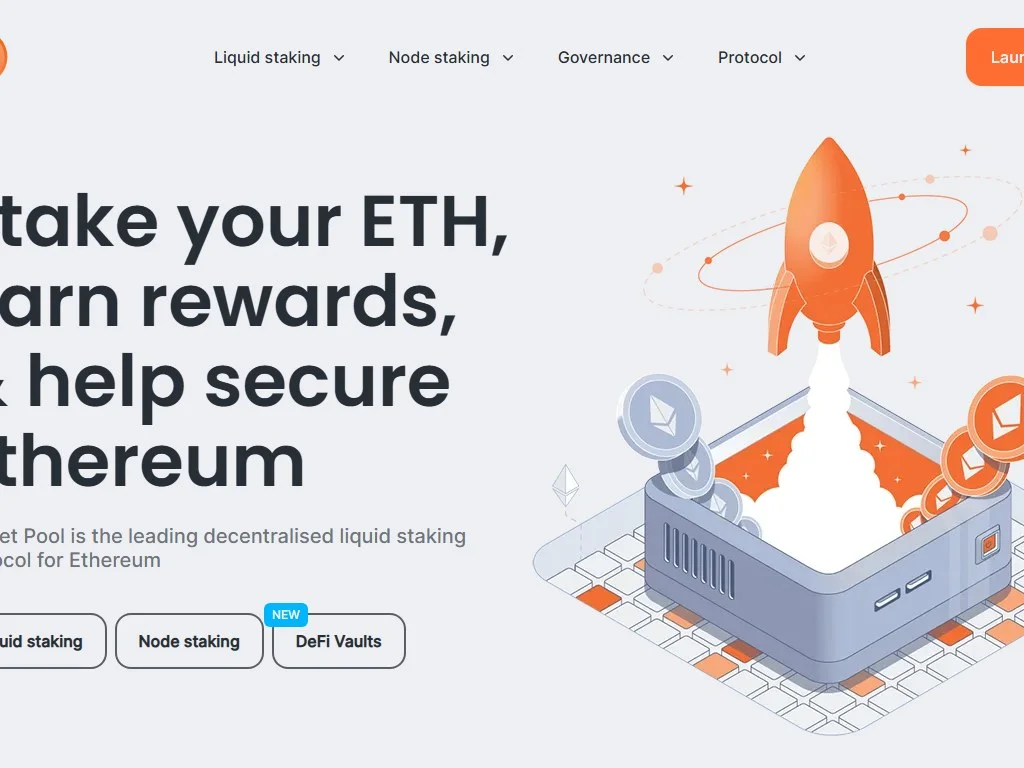
Rocket Pool sits between solo staking and pure liquid staking. You run a node, but instead of providing 32 ETH yourself, you bond 8 ETH (the LEB8 minipool variant) plus a small RPL collateral, and the protocol matches you with 24 ETH from rETH depositors. You operate the validator and earn the full base rewards on your 8 ETH, plus a commission on the rewards generated by the matched 24 ETH, plus RPL inflation rewards proportional to your collateral.
The capital efficiency here is significant. With 8 ETH (around one quarter of a normal solo stake), you operate a full validator and earn an effective APR that is typically higher than pure solo staking thanks to the commission spread. The trade-offs are a 24 by 7 operation requirement (the rETH depositors are trusting you to stay online), RPL collateral exposure (RPL price volatility affects your effective yield), and the additional complexity of the Rocket Pool smartnode stack on top of your standard clients. Our deep dive into Rocket Pool and rETH covers the architecture in detail.
Path 4: Liquid Staking Tokens (LSTs)
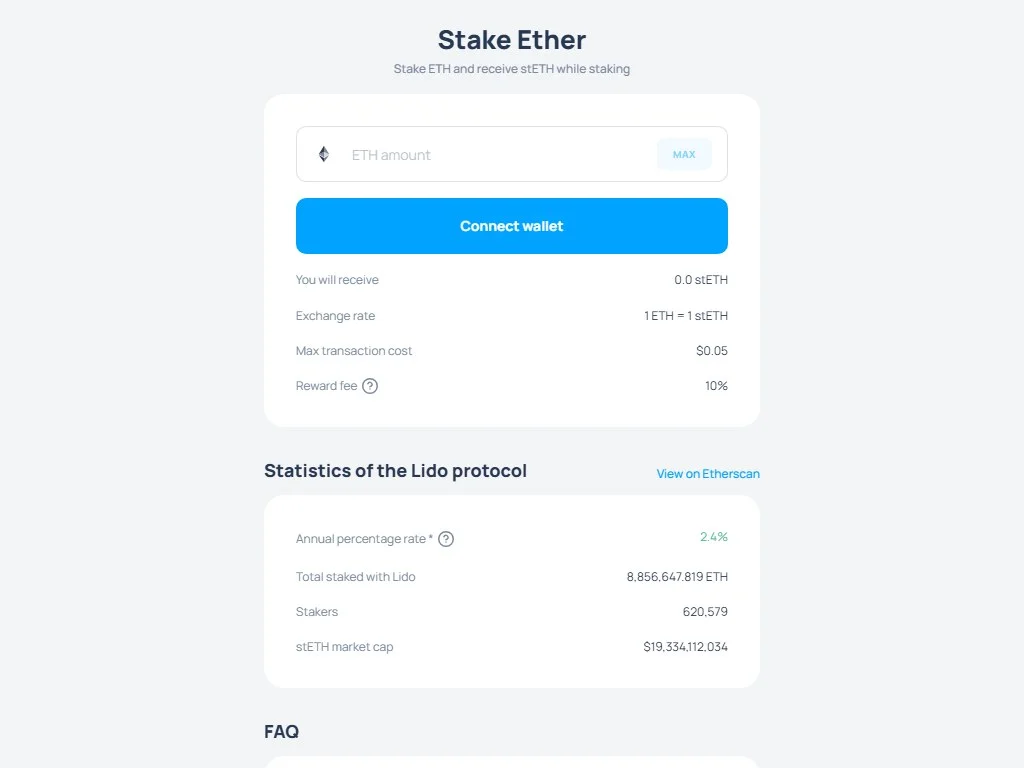
Liquid staking is the dominant ETH staking path by total value locked. You deposit ETH with a protocol, the protocol stakes it via professional node operators, and you receive a tokenized receipt that accrues value as rewards compound. The receipt token (stETH, rETH, cbETH, swETH, mETH, frxETH, and others) is freely transferable and usable as DeFi collateral, so your ETH is staked but not illiquid.
The major liquid staking tokens compared
The rebasing vs value-accruing distinction matters more than people realize. stETH is rebasing, meaning your wallet balance increases daily as rewards accrue. The ETH-to-stETH ratio stays at 1:1 nominally, and you simply hold more tokens over time. rETH, cbETH, swETH, and mETH are value-accruing: your balance never changes, but each token is worth more ETH over time as rewards compound. For most DeFi protocols, value-accruing is easier to integrate (no rebase logic to handle), which is why newer LSTs and most restaking platforms standardized on this model.
Lido centralization concerns
Lido has historically controlled close to one third of all staked ETH, which raises legitimate concerns about validator set diversity. If any single staking entity crosses 33 percent, it gains the ability to delay finality. If it crosses 50 percent, it can censor transactions at the consensus layer. If it crosses 66 percent, it can finalize whatever it wants. The Ethereum community has pushed back hard, Lido itself has committed to a self-imposed limit through DAO governance, and ongoing discussion about validator queue caps and protocol-level limits has shifted some inflows toward alternative LSTs (rETH, swETH, mETH) and DVT solutions.
Path 5: Centralized Exchange (CEX) Staking
The path of least resistance. You hold ETH on Coinbase, Binance, Kraken, or another major exchange, click a button labeled "stake" or "earn," and a percentage of the consensus rewards starts hitting your account. Behind the scenes, the exchange runs validators on your behalf (or partners with a third party who does) and takes a fee, usually in the 25 to 35 percent range of gross rewards.
When you stake on a CEX, the exchange holds both the underlying ETH and the validator keys. If the exchange is hacked, frozen, sanctioned, or files for bankruptcy, your staked ETH is part of the bankruptcy estate. "Not your keys, not your coins" applies to staked balances as forcefully as to spot balances. Review our crypto wallet security guide before deciding how much to keep custodied.
Regulatory risk is also non-trivial. In 2023, Kraken settled with the SEC over its US staking-as-a-service program. Coinbase staking has faced ongoing scrutiny. In the EU and other jurisdictions, MiCA-style frameworks treat exchange staking as a regulated investment service. The convenience is real, but you are paying for it twice: in fees, and in concentrated custodial and regulatory risk.
Path 6: Restaking via EigenLayer
Restaking is the 2026 wildcard. EigenLayer lets you take an already-staked position (either native ETH staked through a validator with withdrawal credentials pointing at EigenLayer, or a liquid staking token like stETH or rETH) and re-pledge it as economic security for additional services called actively validated services (AVSs). Those AVSs include data availability layers like EigenDA, oracle networks, shared sequencers, bridges, and various rollup infrastructure.
In exchange for re-pledging your stake (and accepting the additional slashing conditions that each AVS defines), you earn additional rewards on top of your base ETH staking yield. Net extra APR has typically ranged from 1 to 5 percent, depending on which AVSs you delegate to and how mature their reward emissions are. Restakers usually do not run AVSs themselves; instead, they delegate to professional operators who run them on the restaker's behalf, much like the LST model.
Restaking risk stack
Restaking stacks risks the same way it stacks yield. Each AVS introduces an independent slashing condition, so the more AVSs you delegate to, the more independent ways your stake can be partially slashed. Smart contract risk in the EigenLayer protocol itself is non-trivial, and the AVS operator you delegate to introduces operator risk. The "free money" framing you sometimes see is wrong: restaking pays extra yield because it carries extra risk, full stop. Treat restaking yield like a leveraged bet on the security and competence of the AVS ecosystem, not a free lunch.
The Full Comparison Table
Here is the side-by-side view you can use to filter options at a glance.
The Decision Framework: How to Pick Your Path
Picking the right staking path is a function of five variables: capital available, time and technical comfort, risk tolerance, liquidity needs, and tax situation. Walk through them in order.
Below 8 ETH: liquid staking or restaking (no other choice). Between 8 and 32 ETH: Rocket Pool minipool becomes an option if you want to operate. 32 ETH or more: all paths open. 1,000 ETH or more: solo validators with MaxEB consolidation become highly attractive (fewer keys to manage, full reward retention, MEV upside).
Comfortable with Linux, SSH, monitoring dashboards, and overnight pages when something breaks: solo, DVT, or Rocket Pool are realistic. Allergic to terminal windows: LST or CEX. The middle ground (DappNode, Avado, Stereum installer images) makes solo staking dramatically more accessible than it was in 2022, but it is still not "click and forget."
Lowest risk profile: solo validator with conservative MEV-Boost relay selection. Higher risk: LSTs (smart contract risk + protocol concentration risk). Highest risk: restaking (stacked slashing + smart contract + AVS risk). CEX staking trades protocol risk for custodial and regulatory risk, which is qualitatively different but not necessarily lower.
Need to be able to exit within a day: only LSTs deliver this reliably (sell on a DEX). Solo validators face the exit queue, which has varied from minutes to days depending on network conditions. Restaking adds a 7 to 14 day undelegation window on top of the standard withdrawal cycle. Plan accordingly.
In the US, IRS Revenue Ruling 2023-14 treats staking rewards as ordinary income at fair market value at the moment you gain dominion and control. Solo validators recognize income roughly at each withdrawal sweep. LST holders may have rebase income (stETH) or only crystallize income on disposal (rETH and value-accruing tokens). The tax treatment can swing your effective net APR by several percent. Talk to a crypto-aware accountant before committing serious capital.
Step-by-Step: Setting Up a Solo Validator in 2026
If after running the decision framework you have landed on solo staking, here is the high-level setup flow. This is not a substitute for the official Ethereum.org staking documentation, but it shows you what the path looks like end to end.
- Provision the hardware. Build or buy a machine with a modern CPU, 32 GB RAM, 2 TB NVMe SSD, gigabit network, and a UPS. Install Ubuntu Server 24.04 LTS or similar.
- Harden the OS. Disable root SSH, key-only authentication, UFW firewall with only the required ports open, automatic security updates, and a fail2ban configuration.
- Install an execution client. Geth, Nethermind, Besu, or Reth. Diversity matters at the network level, so check current client distribution at clientdiversity.org and pick a minority client if possible.
- Install a consensus client. Lighthouse, Teku, Prysm, Nimbus, or Lodestar. Same diversity advice applies.
- Configure the JWT secret. The execution and consensus clients communicate through the Engine API using a shared JWT. Generate the secret once and point both clients at it.
- Wait for sync. Initial sync via checkpoint sync (consensus) and snap sync (execution) typically completes in a few hours on modern hardware.
- Generate keys. Use the official staking-deposit-cli (or Wagyu Key Gen GUI) on an air-gapped machine to generate validator keys and a withdrawal credential. Back up the mnemonic in multiple physical locations.
- Deposit 32 ETH per key. Use the official launchpad. Post-Pectra you can also deposit larger amounts to a single key if you set the correct withdrawal credential type.
- Import keys, enable MEV-Boost. Import the keystores into your validator client and run MEV-Boost with one or more relays (Flashbots, Agnostic, Ultra Sound Money, BloXroute, depending on your censorship preferences).
- Set up monitoring. Grafana with the Ethereum Metrics Exporter dashboard, Beaconcha.in mobile alerts, plus a watchdog script that pages you on missed attestations or sync issues.
Common Mistakes That Cost ETH
Across every staking path, the same five mistakes burn through stakers' yield. Avoid them.
The fastest way to get slashed. Never spin up a "backup" with the same keystores. Use slashing protection import/export properly.
IOPS will collapse during sync and high-load epochs, causing missed attestations. NVMe is non-negotiable in 2026.
Running a supermajority client increases correlated slashing risk during a bug. Pick a minority execution and consensus client when possible.
Yield chasing into a new LST without checking audits, TVL maturity, and operator set is how people lose principal. Stick to established issuers.
Delegating to a dozen AVSs for an extra 4 percent APR exposes you to a dozen independent slashing conditions. Pick a small set you actually understand.
Year-end surprises happen when stakers do not track reward accrual basis. Use a crypto tax tool from day one.
Solo Staking vs Liquid Staking: A Real Numbers Example
Imagine you hold 64 ETH and want to decide between two solo validators and 64 ETH worth of stETH. At a 3 percent base APR plus 0.5 percent average execution tips and 0.4 percent average MEV, your solo setup generates approximately 64 * 0.039 = 2.496 ETH per year gross. Subtract hardware amortization (call it $50 per month or about 0.3 ETH per year at moderate prices) and electricity (negligible) and you net roughly 2.2 ETH annually, fully self-custodied.
With 64 ETH staked through Lido (stETH), at a 3 percent base APR minus the 10 percent fee plus the MEV share, your effective APR is approximately 2.7 percent. That generates 64 * 0.027 = 1.73 ETH per year, with zero operational overhead and the ability to instantly sell or use stETH as collateral. The solo route earns roughly 0.47 ETH more per year (around $1,500 at $3,200 ETH), in exchange for permanent on-call duty and slashing exposure. Whether that delta is worth it depends entirely on your circumstances and how you value your time.
Pros and Cons: Solo Validator vs Pooled Staking
- Full base reward + execution tips + MEV retained
- Self-custody, no smart contract or custodial risk
- Direct participation in Ethereum decentralization
- Censorship resistance through relay choice
- MaxEB 2,048 ETH compounding post-Pectra
- 32 ETH minimum capital barrier
- 24 by 7 uptime responsibility
- Slashing risk for operator mistakes
- Hardware cost, electricity, maintenance time
- Illiquid: exit queue can stretch under network stress
- Any amount, from 0.001 ETH up
- Liquid receipt token usable as DeFi collateral
- Zero operational responsibility
- Instant exit via DEX sale
- Composable with lending, perps, restaking
- 10 to 35 percent fee on rewards
- Smart contract risk (or custodial risk for CEX)
- Centralization concerns (especially Lido share)
- Regulatory exposure for centralized issuers
- Depeg risk for LSTs in stress scenarios
Tools to Track Your Staking Position
Whichever path you pick, you need observability. These are the categories of tools worth using.
- Beaconcha.in: the standard block explorer for the consensus layer. Track your validator's attestation effectiveness, proposal history, and balance.
- Rated.network: reputation and performance metrics for node operators and pools, useful when picking an LST or a Rocket Pool node to delegate to.
- DefiLlama: TVL and yield tracking across LSTs and restaking protocols. Compare net APRs and protocol risk.
- DEXTools: monitor LST liquidity, peg health (is stETH trading at 0.998 or 1.001 ETH?), and on-chain trading flow for staked tokens. Useful before any large size LST swap.
- Grafana + Prometheus: if you operate your own node, the Ethereum Metrics Exporter dashboard is the de facto standard.
- Tax tools: Koinly, CoinTracker, and Accointing all handle staking reward classification, including the Rev. Ruling 2023-14 treatment for US filers.
How DEXTools Helps Stakers
The DEXTools app is built for the part of staking that lives on DEXes: tracking LST liquidity and peg health, monitoring restaking-related governance tokens (EIGEN, RPL, SWELL), and spotting depeg moments where buying staked ETH on a DEX is cheaper than minting fresh stake. Before any large stETH or rETH conversion, glance at the pool depth and recent swap volume on DEXTools, you may save more on slippage than you would earn in weeks of staking yield.
Track Ethereum and ETH-paired tokens on DEXTools here. For wider context, our ETH market analysis and how to sell ETH effectively guides round out the picture. If you are weighing gas costs against staking yield, the gas price gwei guide is worth a read.
Frequently Asked Questions
Q Q Q Is running an Ethereum validator node profitable in 2026?
Yes for most setups. A healthy solo validator nets between 3.2 and 4.2 percent APR (base rewards plus tips plus MEV) with no protocol fees taken out. After hardware amortization and electricity, the net yield typically lands above what any liquid staking token offers. Profitability is highly dependent on uptime, MEV-Boost configuration, and avoiding slashing events.
Q Q Q Did Pectra change the 32 ETH minimum for validators?
No. The minimum to activate a new validator is still 32 ETH. What Pectra changed is the maximum effective balance per validator, which went from 32 ETH to 2,048 ETH through EIP-7251. A single validator can now compound and earn on up to 2,048 ETH instead of being capped at 32, which dramatically reduces key management overhead for larger stakers.
Q Q Q What is the difference between stETH and rETH?
stETH (Lido) is a rebasing token: your balance grows daily as rewards accrue, and 1 stETH stays nominally equal to 1 ETH. rETH (Rocket Pool) is value-accruing: your balance never changes, but each rETH becomes worth more ETH over time. rETH is generally easier to use in DeFi protocols that do not handle rebases gracefully, while stETH has deeper liquidity across virtually every major DEX.
Q Q Q How risky is restaking via EigenLayer?
Restaking stacks risk on top of base staking risk. Each actively validated service (AVS) you delegate to defines its own slashing conditions, so the more AVSs you opt into, the more independent ways your stake can be partially slashed. You also take on smart contract risk in EigenLayer itself and operator risk in whoever runs the AVS on your behalf. The extra 1 to 5 percent APR is real, but it is risk-adjusted yield, not free money.
Q Q Q Can I stake ETH without 32 ETH?
Yes. Liquid staking tokens like stETH, rETH, cbETH, swETH, mETH, and frxETH accept any amount, often starting at 0.001 ETH or less. Centralized exchanges accept any spot balance you already hold. Rocket Pool minipools let you operate a node with 8 ETH plus RPL collateral if you want a more sovereign hybrid option. Solo staking and DVT clusters still require 32 ETH to activate a new validator.
Q Q Q What happens if my validator goes offline?
Offline validators miss attestations and incur small inactivity penalties roughly equal to what they would have earned during that period. A short outage of an hour costs almost nothing. A multi-day outage during a non-finalizing event (inactivity leak) can erode balance more aggressively. Slashing only happens for malicious behavior (double-signing or surround voting), not for being offline.
Q Q Q Is Lido too centralized to use safely?
Lido has historically commanded close to one third of all staked ETH, which is uncomfortably close to the 33 percent finality threshold. Lido itself, through DAO governance, has committed to slowing growth, and the community has shifted some staking volume to alternative LSTs. Using Lido is not unsafe at the individual level, but if you care about Ethereum decentralization, diversifying into rETH, swETH, or solo and DVT options is a defensible choice.
Q Q Q How are ETH staking rewards taxed in the US?
IRS Revenue Ruling 2023-14 holds that staking rewards are ordinary income at fair market value at the moment you gain dominion and control over them. For solo validators, that is generally at each withdrawal sweep. For rebasing tokens like stETH, the moment of rebase is income. For value-accruing tokens like rETH, many practitioners take the position that income is only recognized on disposal. The area is still evolving, so use a crypto-aware accountant.
Q Q Q What is the safest way to stake ETH?
From a purely protocol-trust perspective, a properly operated solo validator with conservative MEV-Boost relay selection has the lowest counterparty risk. From a "I do not want to think about it" perspective, a major LST like rETH or stETH held in self-custody offers a strong balance of low operational risk and on-chain transparency. CEX staking minimizes technical effort but maximizes custodial and regulatory risk.
Q Q Q Can I switch between staking paths later?
Yes, but switching has friction. Moving from LST to solo means exiting the LST (a DEX sale or a redemption queue) and then waiting for the validator activation queue. Moving from solo to LST means a validator exit (sweep + queue), then a stake into the LST. Restaking adds undelegation periods of 7 to 14 days. Plan switches around your liquidity needs and current network conditions.
Q Q Q Does MEV-Boost matter for solo validators?
Yes, materially. MEV-Boost lets your validator sell its block-building rights to a competitive market of builders who include high-value transactions (arbitrage, liquidations, sandwich bundles when permitted). Running MEV-Boost typically adds 0.2 to 0.6 percent to your annualized APR. You can configure which relays you connect to, which lets you opt out of relays that censor transactions, balancing yield against ethical and censorship considerations.
Q Q Q What is DVT and should I use it?
Distributed validator technology splits a single validator key across multiple operator nodes using threshold cryptography (Obol's Charon, SSV Network). The validator only signs when a configured quorum (for example 3 of 4) of operators agree. The benefit is fault tolerance: any one node can go down and the validator keeps earning. DVT is worth using if you want solo-staker sovereignty without single-machine fragility, or if you want to co-run a validator with trusted peers without giving any one of them full control.
Conclusion: There Is No Universally Best Path
The best ETH staking path in 2026 depends on numbers you have and someone else does not: your capital, your time, your appetite for slashing risk, your need for liquidity, and your tax situation. The honest framing is not "validator vs staking" but "which combination of paths fits your stack." Many serious holders run one solo validator (or a DVT cluster) with a portion of their stack and hold an LST with the rest for liquidity and DeFi composability. Some layer restaking on top of the LST portion for extra yield, accepting the additional risk.
Whatever you choose, do not treat staking as set-and-forget. The Ethereum consensus layer is still evolving (Verkle trees, more efficient PBS designs, and further validator economics tweaks are all on the roadmap), and the relative attractiveness of each path will shift as a result. Monitor your position, keep an eye on validator queue dynamics, watch for LST depegs, and revisit your decision at least once a year. The 2 to 3 percent yield differential between the best and worst choice compounds meaningfully over time.
If you only take one thing from this guide: solo staking is more accessible than ever post-Pectra, liquid staking is more capital-efficient than ever, and restaking is more lucrative and more dangerous than ever. Pick the path that matches your skills and risk profile, not the one that sounds most impressive.
If you want to dig deeper into specific paths, our Rocket Pool and rETH guide covers the minipool architecture, and our Ethereum complete beginner guide covers the underlying consensus mechanics. For broader DeFi context, the DeFi guide and how cryptocurrencies work guide are good companions.
Monitor LST liquidity, rETH and stETH peg health, and restaking-related governance tokens directly on the DEXTools Ethereum dashboard before any large staking move.
Disclaimer: This article is for informational purposes only and does not constitute investment, financial, legal, or tax advice. Cryptocurrency staking involves smart contract, slashing, custodial, regulatory, and tax risks that may result in partial or total loss of staked assets. DEXTools does not recommend any specific staking provider, validator operator, or restaking strategy. Always conduct your own research, verify smart contract addresses, and consult a qualified financial and tax advisor before staking material amounts of ETH.
Related Guides
- Validator Slashing Explained: Risks of Solo Staking
- How Many ETH (Ethereum) Do You Need to Be a Validator?
- What Is Ethereum Staking? How It Works, Rewards and Risks (2026)
- ETH vs ETH2 Explained in 2026: Upgrades, Staking and Fees
- How to Use Lido Finance: Stake ETH, Receive stETH and Manage Risks (2026)