Que es un airdrop crypto: como encontrar y reclamar (2026)
— By Tony Rabbit in Tutorials
Airdrops crypto explicados: tipos, como calificar, estrategias.
Crypto airdrops are one of the most exciting ways to earn free tokens in the blockchain space. Projects distribute tokens directly to wallet addresses as a marketing strategy, a reward for early users, or a way to decentralize governance. Some of the biggest airdrops in history have turned small on-chain activities into thousands of dollars worth of tokens overnight.
But not every airdrop is legitimate. Scammers have flooded the space with fake airdrops designed to steal funds from unsuspecting users. Knowing how to find real airdrops, qualify for them, and claim safely is essential knowledge for anyone navigating crypto in 2026.
This guide covers everything you need to know about crypto airdrops: the different types, how to qualify, the biggest airdrops in history, farming strategies, how to spot scams, and how to protect yourself throughout the process.

What Is a Crypto Airdrop?
A crypto airdrop is a distribution of free tokens or coins sent directly to users' crypto wallets. Projects use airdrops to build awareness, reward loyal users, bootstrap a community, or distribute governance tokens to decentralize their protocol.
Biggest Crypto Airdrops in History
Unlike an ICO or token sale where you pay for tokens, airdrops are free. The "cost" is usually your time, attention, or prior on-chain activity. Some airdrops require you to complete simple tasks. Others reward you just for having used a protocol before a specific date, known as a snapshot.
Airdrops happen on every major blockchain network, including Ethereum, Solana, Arbitrum, Optimism, Base, zkSync, and many others. The tokens you receive can be governance tokens, utility tokens, or meme tokens, and they can range from a few cents to thousands of dollars in value.
Types of Crypto Airdrops
Not all airdrops work the same way. Understanding the different types helps you position yourself to qualify for as many as possible.
🔑 Key Point
Understanding this concept is fundamental to navigating the crypto ecosystem. Take your time with each section before moving on.
1. Standard Airdrops
Standard airdrops distribute tokens to anyone who signs up or registers a wallet address. These are the simplest type: you provide your wallet address, sometimes verify your email, and receive tokens when the distribution happens. Standard airdrops are common among new projects trying to build initial awareness. The token amounts are usually small because thousands of people participate.
2. Bounty Airdrops
Bounty airdrops require you to complete specific tasks in exchange for tokens. Common tasks include following the project on social media, retweeting announcements, joining a Discord or Telegram group, writing blog posts, creating videos, or referring new users. The more tasks you complete, the more tokens you receive. Bounty airdrops help projects generate marketing buzz and grow their community before or during a token launch.
3. Holder Airdrops
Holder airdrops (also called exclusive airdrops) reward users who already hold a specific token or NFT. The project takes a snapshot of the blockchain at a certain block height and distributes new tokens proportionally to holders. You do not need to sign up or register. If you held the qualifying asset at the time of the snapshot, you are eligible. This type rewards existing community members and loyal investors.
4. Retroactive Airdrops
Retroactive airdrops are the most valuable and highly anticipated type. They reward users who interacted with a protocol before it launched a token. Projects look at historical on-chain data and reward early adopters based on how much they used the platform, how many transactions they made, how much volume they contributed, or how long they have been active.
Retroactive airdrops have produced some of the biggest payouts in crypto history. Uniswap, ENS, Arbitrum, Optimism, Jito, and Jupiter all conducted massive retroactive airdrops. The key to qualifying is using promising protocols before they announce a token, which requires staying active across new platforms and DeFi protocols.
5. Testnet Airdrops
Testnet airdrops reward users who interact with a blockchain or protocol while it is still in its testing phase. By using the testnet version of a protocol (which uses fake tokens with no real value), you help the team find bugs and stress-test their systems. When the project launches on mainnet and introduces a real token, testnet participants often receive an airdrop as a thank-you for their contribution.

Testnet airdrops are popular because they cost nothing but time. You use free testnet tokens to interact with the protocol, and if the project does a token launch, early testers are frequently rewarded.
How to Qualify for Crypto Airdrops
Qualifying for airdrops depends on the type, but there are universal strategies that increase your chances across the board.
Use protocols early and often. The biggest airdrops reward early users. Whenever a new DeFi protocol, bridge, DEX, or lending platform launches, try it out. Make swaps, provide liquidity, bridge assets, and interact with governance. Use tools like DEXTools to discover new protocols and tokens as they emerge.
Maintain consistent on-chain activity. Many retroactive airdrops use criteria that reward users who were active across multiple months, not just a single interaction. Spreading your activity over time looks more organic and typically results in higher allocations.
Hold governance tokens and NFTs. Some airdrops specifically target holders of popular governance tokens like UNI, ARB, OP, or ENS. Holding blue-chip NFTs from established collections can also qualify you for holder airdrops from partner projects.
Participate in testnets. Follow crypto news and social media for announcements about testnet launches. Projects that open testnets to the public often reward testers when they go live. Complete all available testnet tasks thoroughly.
Join communities. Discord servers, Telegram groups, and governance forums are where airdrop hints and early information surface first. Being an active community member can qualify you for bounty and community-based airdrops.
Use a dedicated wallet. Create a separate wallet for airdrop hunting using a tool like MetaMask. This keeps your main holdings isolated and reduces risk if you interact with a malicious contract. Check our MetaMask setup guide to get started.
🔑 Key Point
This is where most people stop reading. If you made it this far, you understand more than 90% of crypto users. The next step is to actually try it with a small amount.
Biggest Crypto Airdrops in History
Some airdrops have distributed billions of dollars in value. These are the most notable ones and the lessons they teach about qualifying for future drops.
Uniswap (UNI) - September 2020
The Uniswap airdrop remains the gold standard. Every wallet that had ever made a swap on Uniswap V1 or V2 before September 1, 2020, received 400 UNI tokens. At the time of distribution, that was worth around $1,200. At UNI's all-time high, those 400 tokens were worth over $16,000. The total airdrop distributed roughly $6.4 billion in value at peak prices. This single event popularized the concept of retroactive airdrops and inspired dozens of projects to follow the same model.
Ethereum Name Service (ENS) - November 2021
ENS airdropped governance tokens to every wallet that had registered or held an ENS domain name. The formula rewarded users based on how long they held their domain and how many days remained on their registration. Some long-term ENS holders received tens of thousands of dollars. The airdrop totaled over $2 billion in value and rewarded users who had simply registered .eth domain names for their wallets.
Arbitrum (ARB) - March 2023
Arbitrum's airdrop was one of the most anticipated in crypto history. The project distributed ARB tokens to users based on a points system that considered factors like transaction count, transaction value, time of activity, and interaction with different protocols on Arbitrum. Qualifying wallets received anywhere from a few hundred to over 10,000 ARB tokens. The airdrop distributed over $2.6 billion in total value.
Jito (JTO) - December 2023
Jito, a liquid staking protocol on Solana, airdropped JTO tokens to users who had staked SOL through their platform. The airdrop rewarded early stakers generously, with some users receiving thousands of dollars. This airdrop highlighted the value of participating in Solana ecosystem protocols and liquid staking specifically.
Jupiter (JUP) - January 2024
Jupiter, the leading DEX aggregator on Solana, conducted a massive airdrop to users who had swapped tokens through their platform. The distribution rewarded active traders based on volume and frequency. Jupiter's airdrop reinforced the pattern: use major protocols early and consistently, and you position yourself for substantial rewards.
Other Notable Airdrops
Other significant airdrops include Optimism (OP), dYdX (DYDX), Aptos (APT), Blur, 1inch, and Celestia (TIA). Each one rewarded early users or specific on-chain behaviors. The pattern is consistent: protocols that gain significant traction eventually launch tokens and reward the people who helped them grow.

How to Find Upcoming Airdrops
Finding airdrops before they happen is where the real value lies. Once an airdrop is announced, it is too late to qualify if criteria are based on historical activity. Here are the best ways to discover upcoming opportunities using the right airdrop tools.
DeBank
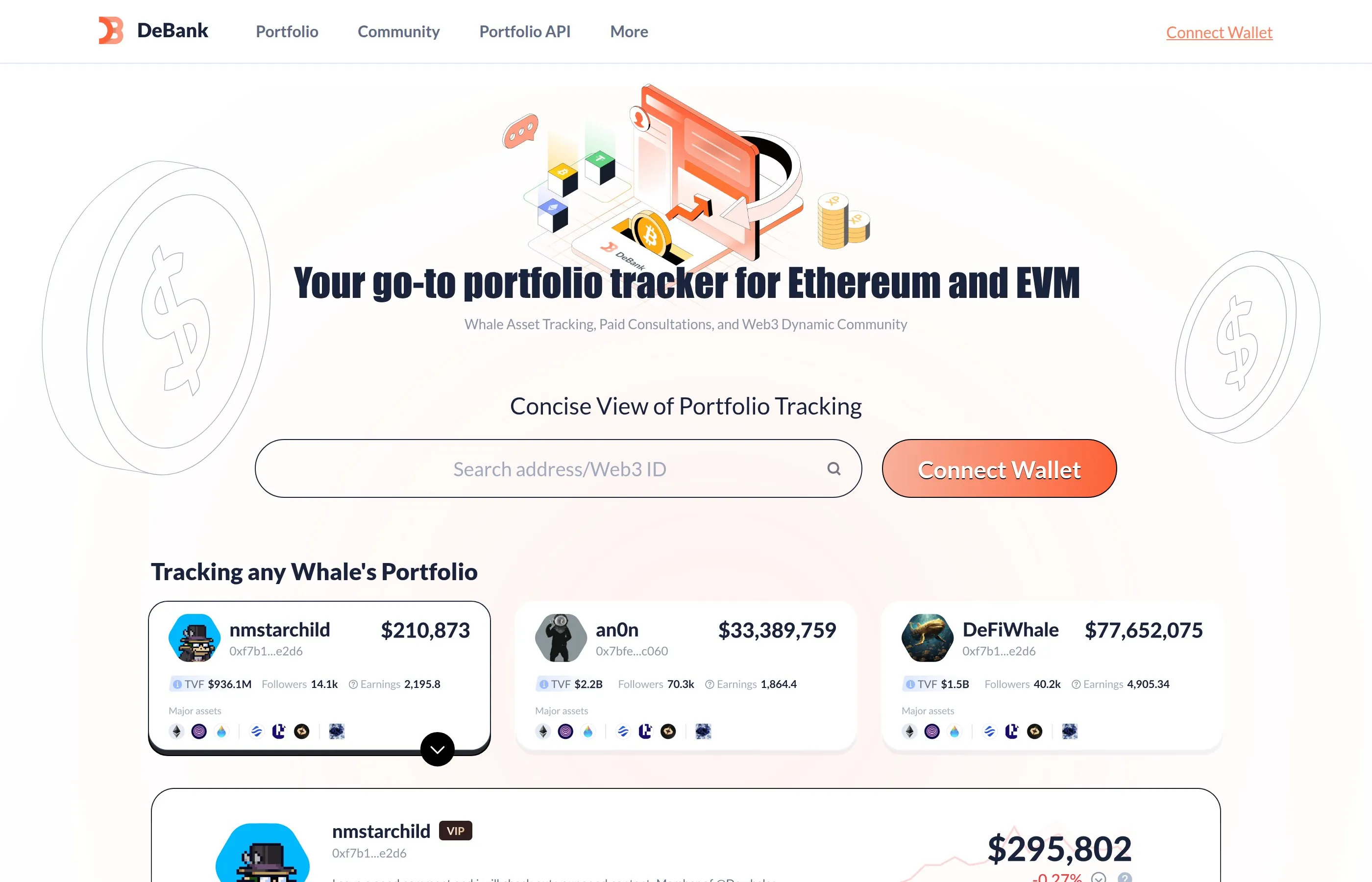
DeBank is a portfolio tracker and social platform that shows your on-chain activity across multiple chains. It is useful for airdrop hunting because it shows which protocols you have interacted with and helps you identify gaps in your activity. DeBank also has a social feed where users share airdrop strategies and upcoming opportunities. Monitoring active wallets of known airdrop farmers on DeBank can give you clues about which protocols might be preparing a token launch.
LayerZero
LayerZero is an omnichain interoperability protocol that connects different blockchains. Using LayerZero-powered bridges and applications (like Stargate Finance) has historically been a smart airdrop farming strategy. Cross-chain bridging activity is a common qualifier for airdrops, and LayerZero's ecosystem continues to expand with new integrations.
zkSync
zkSync is an Ethereum Layer 2 scaling solution using zero-knowledge rollup technology. Its ecosystem has grown rapidly, with numerous DeFi protocols, NFT platforms, and dApps launching on the network. Interacting with protocols on zkSync, bridging funds to the network, and maintaining consistent activity are strategies that airdrop hunters use to position for potential future distributions from ecosystem projects.
Other Discovery Methods
Follow airdrop aggregator websites that track confirmed and speculated upcoming airdrops. Twitter (X) accounts dedicated to airdrop alerts post daily updates. Crypto Discord communities share early information. GitHub activity on open-source projects can reveal upcoming token launches. Use an airdrop checker tool to verify your eligibility for known drops and stay ahead of deadlines.
Step-by-Step Guide: How to Claim a Crypto Airdrop
When you qualify for an airdrop, the claiming process matters. Rushing through it or clicking the wrong link can lead to lost funds. Follow these steps carefully.
Step 1: Verify the airdrop is real. Only use official project channels to confirm an airdrop is happening. Check the project's official website, verified Twitter/X account, and Discord announcements. Never trust DMs, random emails, or promoted posts claiming you have unclaimed tokens.
Step 2: Visit the official claim page. Navigate to the claim page by typing the URL directly or using a link from the project's verified social media. Bookmark official airdrop claim pages when they are first announced. Double-check the URL character by character. Phishing sites often use URLs that look almost identical to the real one.
Step 3: Connect your wallet. Connect the wallet you used to interact with the protocol. Make sure you are on the correct network. If the airdrop is on Arbitrum, your wallet should be connected to the Arbitrum network. If it is on Solana, use a Solana-compatible wallet.
Step 4: Check your allocation. The claim page will show how many tokens you are eligible to receive. Some airdrops also show the criteria breakdown so you can see exactly why you qualified and how your allocation was calculated.
Step 5: Review the transaction. Before confirming the claim transaction, review the details in your wallet. The transaction should only require you to pay a small gas fee. It should not ask you to approve unlimited token spending, send tokens from your wallet, or interact with suspicious contract addresses.
Step 6: Claim your tokens. Confirm the transaction and wait for it to process. Once confirmed, the airdrop tokens will appear in your wallet. You may need to manually add the token contract address to your wallet to see the balance.
Step 7: Decide what to do with your tokens. You can hold the tokens, sell them on a DEX, stake them for governance participation, or provide liquidity. Consider the tax implications of your decision, as airdrop tokens are taxable in most jurisdictions the moment you receive them.
Airdrop Farming Strategies for 2026
Airdrop farming is the practice of systematically positioning yourself to qualify for as many airdrops as possible. It has become a significant activity in crypto, with some farmers earning six figures annually. Here are proven strategies for 2026.
Multi-Chain Activity
Do not limit yourself to one blockchain. Spread your activity across Ethereum, Solana, Arbitrum, Optimism, Base, zkSync, Scroll, Linea, and emerging chains. Use bridges to move assets between chains. Bridge activity is one of the most common qualifiers for airdrops because it demonstrates genuine multi-chain usage.
Protocol Diversification
Within each chain, interact with multiple types of protocols. Swap tokens on DEXs, provide liquidity, lend and borrow on lending platforms, mint NFTs, register domains, vote in governance proposals, and use perpetual DEXs. The wider your on-chain footprint, the more airdrops you are likely to qualify for.
Consistent Monthly Activity
Many airdrops use time-based criteria. They check whether you were active across multiple distinct months, not just on a single day. Set a monthly schedule to interact with target protocols. Even small transactions count. A $10 swap each month on a protocol is better than a single $500 swap for airdrop qualification purposes.
Volume and Transaction Count
Both transaction count and total volume matter. Some airdrops have tier systems where higher volume and more transactions earn larger allocations. Aim for at least 10 to 50 transactions on protocols you are farming, with meaningful volume where possible.
Testnet Participation
Always participate in testnets when they open. Testnet interactions cost nothing (you use free test tokens) and can qualify you for mainnet airdrops. Complete all available testnet tasks, including transactions, governance votes, and bug reports.
Governance Participation
If a protocol has a governance system, participate in it. Vote on proposals, delegate your voting power, or create proposals if you are eligible. Governance activity signals genuine community involvement and is weighted heavily in airdrop criteria.
How to Detect Scam Airdrops
For every legitimate airdrop, there are dozens of scams. Scam airdrops are one of the most common attack vectors in crypto. Knowing how to spot them protects your funds and your wallet. Read our full crypto security guide for broader protection strategies.
Red Flags to Watch For
Unsolicited tokens in your wallet. If random tokens appear in your wallet that you did not claim, do not interact with them. Scammers send worthless tokens to thousands of wallets. When you try to swap or transfer these tokens, the smart contract drains your wallet. The safest response is to ignore them completely.
Requests to connect your wallet to unknown sites. Legitimate airdrops use official claim pages. If someone sends you a link to claim an airdrop on a site you have never heard of, it is almost certainly a scam. Always verify claim page URLs through official channels.
Requests to "approve" or "sign" suspicious transactions. A real airdrop claim requires a small gas fee. It should never ask you to approve token spending, sign a message that looks unusual, or send any of your existing tokens. If a claim page asks you to approve a token or send funds, close the site immediately.
Seed phrase requests. No legitimate airdrop will ever ask for your seed phrase, private key, or recovery phrase. Anyone asking for these is trying to steal your entire wallet. Never enter your seed phrase on any website, period.
Too-good-to-be-true promises. If an airdrop claims to be worth an unrealistic amount (like $10,000 in free tokens for following a Twitter account), it is a scam. Legitimate airdrops do not guarantee specific dollar values before distribution.
Fake social media accounts. Scammers create Twitter/X accounts that look nearly identical to official project accounts. They change one letter in the handle or use special Unicode characters. Always verify the account by checking follower count, account age, and cross-referencing with the project's official website.
How to Protect Yourself
Use a separate "burner" wallet for interacting with new and unverified airdrops. This wallet should contain only the small amount of tokens needed for gas fees. Even if the wallet is compromised, your main holdings stay safe. Store your primary funds in a hardware cold wallet that never connects to random websites.
After claiming any airdrop, revoke token approvals that were granted during the claim process. Tools like Revoke.cash let you see and revoke all active approvals on your wallet. Leftover approvals are a security risk because they allow smart contracts to spend your tokens even after the claim is complete.
Tax Implications of Crypto Airdrops
Airdrops are not tax-free in most countries. Understanding the tax implications helps you avoid surprises when tax season arrives. For a detailed breakdown by country, check our complete crypto tax guide.
When Are Airdrops Taxed?
In the United States, the IRS treats airdrop tokens as ordinary income at the time you receive them (or gain "dominion and control" over them). The taxable amount is the fair market value of the tokens at the time of receipt. If you receive 1,000 tokens worth $0.50 each, you owe income tax on $500 regardless of whether you sell the tokens.
If you later sell the tokens at a higher price, you owe capital gains tax on the profit. If the price drops and you sell at a loss, you can claim a capital loss. The cost basis for airdrop tokens is the fair market value at the time you received them.
Record Keeping
Keep detailed records of every airdrop you claim. Record the date, number of tokens received, token price at the time of receipt, and the transaction hash. This documentation is essential for accurate tax reporting. Many crypto tax software tools can automatically import this data from your wallet transactions.
International Considerations
Tax treatment varies significantly by country. In some jurisdictions, airdrops are not taxed until you sell. In others, they are taxed as income upon receipt. Some countries have de minimis thresholds below which small airdrops may not be taxable. Consult a tax professional familiar with cryptocurrency in your jurisdiction to ensure compliance.
Security Best Practices for Airdrop Hunters
Airdrop hunting involves interacting with many protocols, websites, and smart contracts. Each interaction is a potential attack vector. Following strong security practices is non-negotiable.
Use a Dedicated Airdrop Wallet
Never use your main wallet (the one holding your savings or significant holdings) for airdrop hunting. Create a dedicated wallet in MetaMask or another wallet app specifically for airdrop activities. Transfer only the funds you need for gas fees and interactions. This way, even in a worst-case scenario where a malicious contract exploits your wallet, your main portfolio remains untouched.
Revoke Approvals Regularly
Every time you interact with a DeFi protocol, you likely grant a token approval allowing the protocol's smart contract to spend your tokens. These approvals persist indefinitely unless you revoke them. After finishing your interactions with a protocol, use Revoke.cash or a similar tool to remove unnecessary approvals. Make this a weekly habit if you are actively farming airdrops.
Store Long-Term Holdings in Cold Storage
Any tokens you plan to hold long-term should be moved to a cold wallet that stays offline. Hardware wallets like Ledger and Trezor keep your private keys isolated from the internet. Even if your computer is compromised, tokens on a hardware wallet remain safe.
Verify Everything
Before connecting your wallet to any claim page, verify the URL through multiple official sources. Check the project's official Twitter/X, Discord, and website. Compare the contract address of the airdrop token with what is listed on official block explorers. Never rush. Scammers create urgency by claiming tokens will expire or allocations will decrease.
Pros and Cons of Crypto Airdrops
Pros
Free tokens with real value. The most obvious benefit. Airdrops can be worth hundreds or thousands of dollars for minimal effort. Historical airdrops from Uniswap, Arbitrum, and others have made early users significant money.
Discovery of new projects. Airdrop hunting forces you to explore new protocols, chains, and DeFi applications. This broadens your knowledge of the ecosystem and helps you find genuinely useful tools and platforms.
Community participation. Airdrops reward active community members. By participating in governance, testnets, and protocol usage, you contribute to the health and decentralization of the projects you use.
Low barrier to entry. Anyone with a wallet and internet connection can participate. You do not need large amounts of capital. Even small interactions can qualify you for retroactive airdrops.
Cons
Time-intensive. Systematic airdrop farming requires significant time. Interacting with dozens of protocols monthly, tracking activity, and managing multiple wallets is a part-time job at minimum.
No guarantees. You can spend months farming a protocol that never launches a token, or launches one but excludes your activity from eligibility. The uncertainty is inherent to the strategy.
Security risks. Interacting with many protocols increases your exposure to smart contract bugs, phishing sites, and malicious contracts. The more sites you connect your wallet to, the larger your attack surface.
Gas costs. On Ethereum mainnet, gas fees for airdrop farming can add up quickly. While Layer 2 networks have much lower fees, multi-chain farming still incurs costs that may not be recovered if airdrops do not materialize.
Tax complexity. Every airdrop creates a taxable event in most jurisdictions. Managing tax records for dozens of airdrops across multiple chains adds administrative burden and potential liability.
Video Explainer
Watch this video for a visual walkthrough of the concepts covered above.
Frequently Asked Questions
What is a crypto airdrop in simple terms?
A crypto airdrop is when a blockchain project distributes free tokens to users' wallets. It is similar to a company giving away free product samples to build awareness and attract customers. You receive tokens without paying for them, usually because you completed certain tasks or used a protocol before a specific date.
Are crypto airdrops safe?
Legitimate airdrops from established projects are safe. However, many scam airdrops exist that try to trick you into revealing your seed phrase, approving malicious smart contracts, or visiting phishing websites. Always verify airdrops through official project channels and use a safety checker tool before interacting with any claim page.
How do I find upcoming crypto airdrops?
Monitor airdrop aggregator websites, follow crypto accounts on Twitter/X that track upcoming drops, join Discord communities focused on airdrop hunting, and use platforms like DeBank to track on-chain activity. The best strategy is to use promising protocols before they announce a token, as retroactive airdrops reward historical usage. Check out our top airdrop tools for 2026 for specific platforms.
Do I need to pay to receive an airdrop?
No. Legitimate airdrops do not charge a fee to receive tokens. You may need to pay a small gas fee to claim the tokens (this is a standard blockchain transaction cost, not a payment to the project). Any airdrop that asks you to send cryptocurrency to an address in order to receive tokens is a scam.
How much are airdrops usually worth?
Values vary enormously. Small bounty airdrops might be worth $5 to $50. Major retroactive airdrops from popular protocols can be worth $500 to $10,000 or more per wallet. The Uniswap airdrop was worth over $16,000 per qualifying wallet at peak token prices. Most airdrops fall somewhere between $50 and $500 in value.
Can I farm airdrops with multiple wallets?
Technically yes, but projects have become increasingly sophisticated at detecting multi-wallet farming (called Sybil attacks). Many airdrops now use Sybil detection algorithms that flag wallets with similar activity patterns, identical funding sources, or coordinated transactions. Wallets identified as Sybil accounts are often disqualified entirely. The risk-to-reward ratio of multi-wallet farming has decreased significantly.
Are airdrops taxable?
In most countries, yes. In the United States, airdrops are treated as ordinary income taxed at the fair market value when received. Other countries have varying treatments. Some tax on receipt, others on sale. Keep detailed records and consult our crypto tax guide for jurisdiction-specific information.
What is a retroactive airdrop?
A retroactive airdrop rewards users who interacted with a protocol before it launched a token. The project looks at historical blockchain data and distributes tokens based on past activity. The key point is that users did not know an airdrop was coming when they used the protocol. This rewards genuine early users rather than people gaming the system after an announcement.
How do I protect myself from scam airdrops?
Use a dedicated wallet separate from your main holdings. Never share your seed phrase with anyone. Verify all claim pages through official project channels. Do not interact with random tokens that appear in your wallet. Revoke token approvals after claiming. Use a hardware wallet for storing valuable assets. Read our full security guide for comprehensive protection strategies.
What is the difference between an airdrop and an ICO?
An airdrop distributes free tokens to users at no cost. An ICO (Initial Coin Offering) is a fundraising event where you pay money to buy newly issued tokens. Airdrops are marketing and community-building tools. ICOs are investment vehicles. The tokens you receive from an airdrop may be identical in function to tokens sold in an ICO, but you did not pay for them directly.
Can I still get airdrops if I only have a small amount of crypto?
Yes. Many airdrops do not have minimum balance requirements. Testnet airdrops require no real funds at all. Standard and bounty airdrops usually just need a wallet address. For retroactive airdrops, even small transactions count. The key is consistent activity over time rather than large transaction amounts.
What wallets should I use for airdrops?
MetaMask is the most widely used wallet for EVM-compatible airdrops (Ethereum, Arbitrum, Optimism, Base, zkSync). For Solana airdrops, Phantom or Solflare are standard choices. Always use a dedicated wallet for airdrop farming rather than your main wallet. For long-term storage of claimed tokens, transfer to a hardware wallet.
How long do I have to claim an airdrop?
Claim windows vary by project. Some airdrops have no expiration and can be claimed indefinitely. Others set deadlines ranging from 30 days to 12 months. Always claim eligible airdrops as soon as possible to avoid missing the window. Unclaimed tokens are usually returned to the project treasury or burned after the deadline.
What is Sybil detection in airdrops?
Sybil detection is the process projects use to identify users operating multiple wallets to unfairly claim more airdrop tokens. Detection methods include analyzing wallet funding patterns, transaction timing, shared IP addresses, on-chain behavioral fingerprinting, and graph analysis of wallet interactions. Wallets flagged as Sybils are typically excluded from the airdrop entirely.
Do all crypto projects do airdrops?
No. Airdrops are common but not universal. Projects that already sold tokens through an ICO or other sale may not do airdrops. Some projects distribute tokens only through mining, staking, or liquidity mining. The projects most likely to airdrop are those that are venture-backed, have no existing token, and are building strong user bases before launching a governance token.