What Is an Event Log? Crypto Events Explained (2026)
— By Whatsertrade in Tutorials
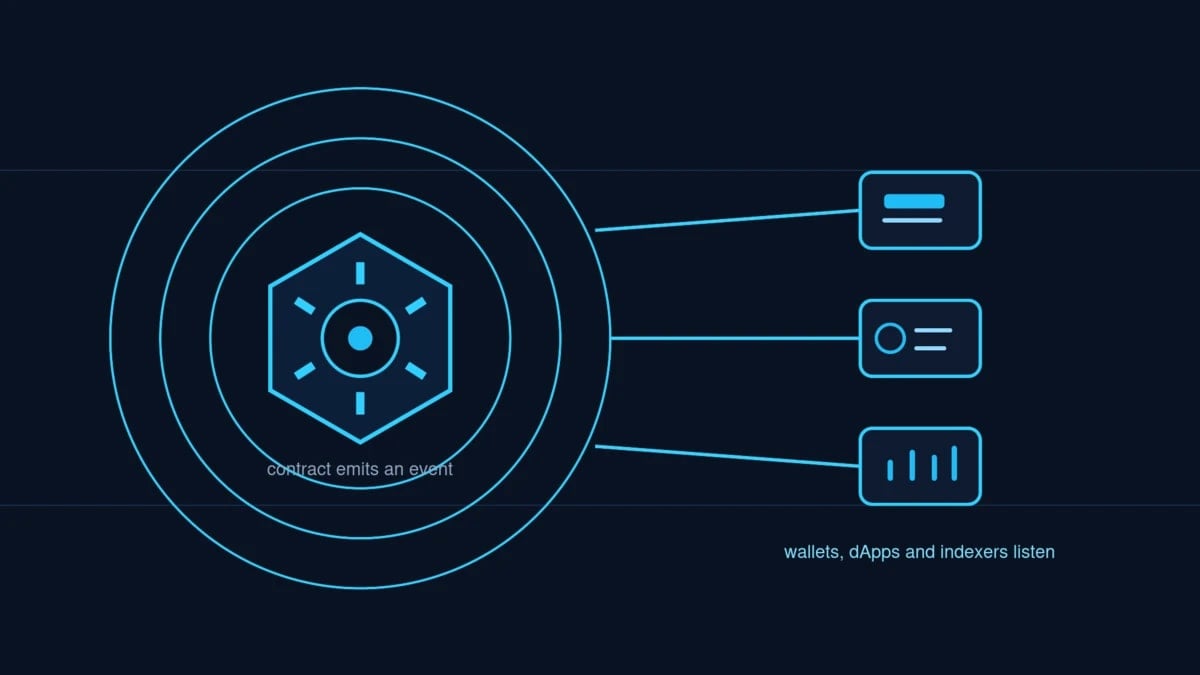
An event log is a record a smart contract emits to announce what happened. How topics and data work, the Transfer event, and how to read logs.
Intent check: This is the plain-English guide to event logs, the records smart contracts emit to announce what happened. If you want the basics of what a contract is first, read What Is a Smart Contract.
Every time you get a notification that tokens arrived, or a dApp instantly reflects a trade you just made, something behind the scenes is listening to the blockchain. What it is listening to are event logs, the little announcements that smart contracts publish whenever something notable happens. They are one of the most important and least understood parts of how the on-chain world talks to the apps you use.
This guide explains what an event log is, why contracts emit events, how a log is structured into topics and data, the classic Transfer event example, why logs matter so much, and how to read them on a block explorer.
What Is an Event Log?
An event log is a record that a smart contract emits during a transaction to announce that something happened. When a contract does something worth broadcasting, like a token moving or a trade executing, it can emit an event, and that event is written into the transaction's log as a permanent, on-chain record.
Logs are stored on-chain in a cheaper way than normal contract storage, which makes them an efficient way to publish a history of what a contract has done. Crucially, though, they exist for the outside world to read, not for contracts themselves, a limitation we will come back to.
Why Contracts Emit Events
A blockchain is not great at pushing notifications. Apps, wallets, and data services need an efficient way to learn that something changed without re-reading the entire chain. Events solve this. By emitting a log, a contract leaves a clear, searchable breadcrumb that off-chain software can watch for and react to instantly. It is the on-chain equivalent of a public announcement board.
Topics and Data: The Structure of a Log
Every log has two parts, and understanding the split makes logs far easier to read:
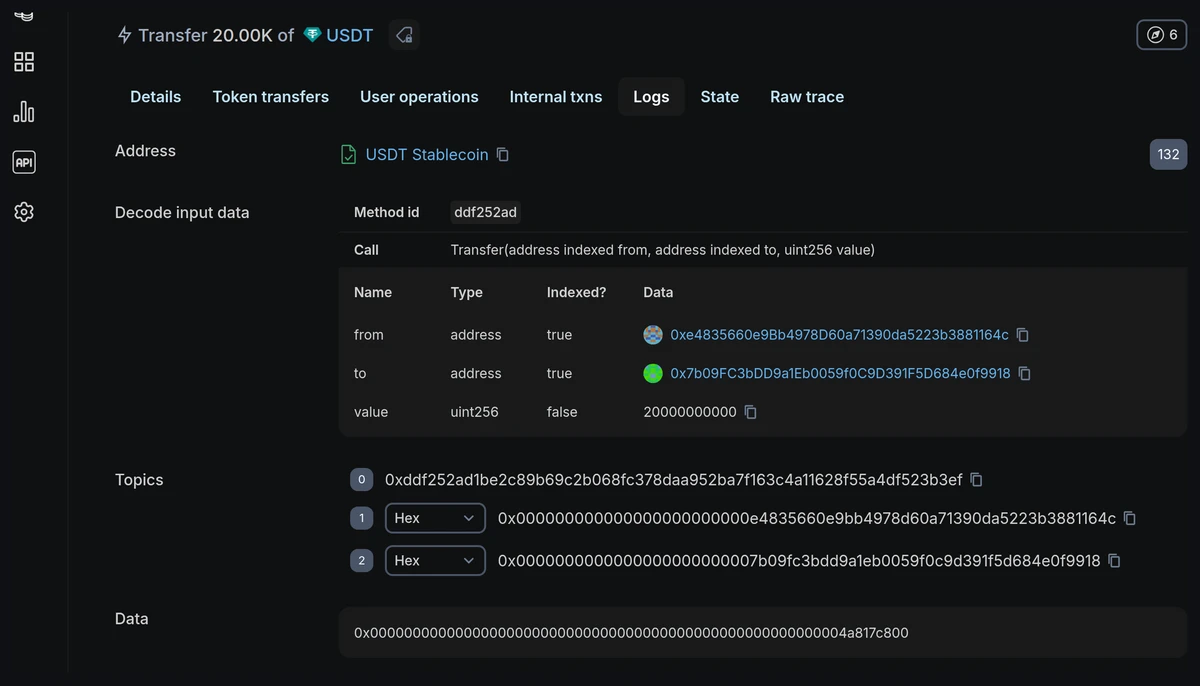
- Topics. These are the indexed, searchable fields. The first topic is a fingerprint of the event itself, a hash of the event's signature, and the following topics are key values, like the sender and receiver, that you might want to filter by. There is a small, fixed number of topics per log.
- Data. This is the rest of the information, the non-indexed values, packed together. It is not individually searchable, but it carries the details, like an amount.
So topics are the labels you can search on, and data is the payload you read once you have found the log you want.
The Transfer Event Example
The most common log on any chain is the token Transfer event. Every time an ERC-20 token moves, the contract emits a Transfer log. Its topics identify that it is a Transfer, and who sent and received the tokens, while its data holds the amount that moved.
This single event is the backbone of the whole ecosystem. It is how your wallet knows your token balances changed, how explorers build token transfer histories, and how portfolio trackers stay up to date. Almost everything you see about token movements is built from Transfer logs.
Why Event Logs Matter
- Wallets rely on them. Your token balances and history are assembled largely from logs, not from re-reading contract storage.
- dApps react to them. Interfaces update the moment they see the relevant event, which is why a swap or purchase appears almost instantly.
- Indexers are built on them. The data services and dashboards that power on-chain analytics work by collecting and organising logs.
How to Read Logs on an Explorer
You can inspect the logs of any transaction yourself. Open a transaction on a block explorer and find its Logs tab. When the contract's code is available, the explorer decodes each log into a readable event name with its parameters, so a raw Transfer log becomes a clear line showing who sent what to whom. This pairs naturally with reading the transaction's other details, covered in What Is a Transaction, and if explorers are new, start with What Is a Blockchain Explorer.
One Key Limitation
Logs are strictly a one-way broadcast to the outside world. A smart contract cannot read its own logs or any other contract's logs. They are designed purely for off-chain consumers to observe, which is exactly why they are so cheap and efficient. If a contract needs to act on some information later, it must keep that in its storage, not in a log.
Key Takeaways
- An event log is a record a smart contract emits during a transaction to announce that something happened.
- Contracts emit events so off-chain apps, wallets, and indexers can efficiently learn what changed.
- Each log has topics, the indexed searchable fields, and data, the non-indexed payload.
- The ERC-20 Transfer event is the most common log and underpins token balances and histories everywhere.
- You can read decoded logs under the Logs tab on an explorer, but contracts cannot read logs themselves.
Event logs are how the blockchain speaks to the software around it. Quiet, cheap, and permanent, they turn silent on-chain actions into announcements that wallets and apps can hear and react to in an instant. The next time your balance updates the moment a trade lands, you will know what happened: a contract emitted a log, and something was listening.
This article is educational and is not financial advice.