What Is an Internal Transaction? Crypto Guide (2026)
— By Whatsertrade in Tutorials
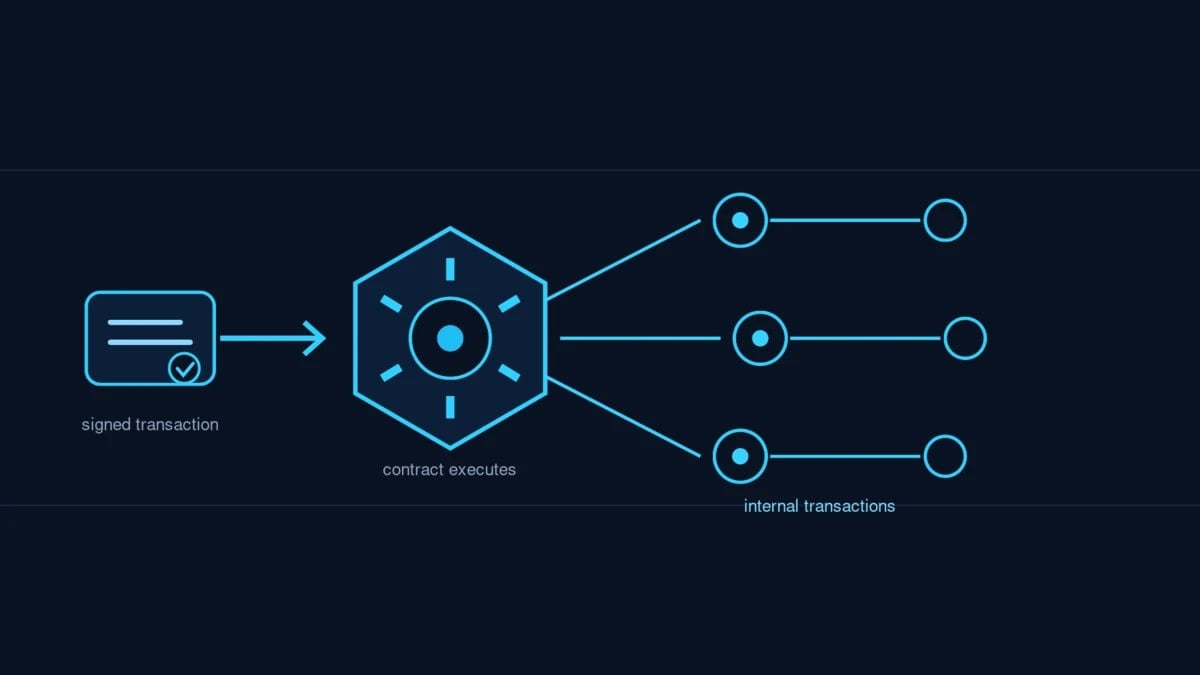
An internal transaction is a value move a smart contract makes inside a transaction. Why it has no signature or hash, and how to find it on an explorer.
Intent check: This is the plain-English guide to internal transactions, the value moves a contract makes that never show up as normal transactions. For the basics of a transaction first, read What Is a Transaction.
Here is a puzzle that trips up almost everyone at some point. You do a swap on a DEX, ETH lands in your wallet, but when you check your address there is no incoming transaction for it. Did you imagine it? No. The ETH arrived through an internal transaction, a move made by a smart contract rather than by a person, and those do not appear in your normal transaction list. Once you understand them, a lot of confusing on-chain moments suddenly make sense.
This guide explains what an internal transaction is, how it differs from a regular one, why it is not technically a real transaction at all, a common example, and how to find internal transactions on a block explorer.
What Is an Internal Transaction?
An internal transaction is a value transfer or contract call that happens inside the execution of a regular transaction, triggered by a smart contract rather than initiated directly by a user's wallet. When a contract runs, it can move funds and call other contracts as part of its logic. Those internal moves are what we call internal transactions.
The important twist is that an internal transaction is not a standalone transaction on the blockchain. It has no signature of its own and no separate on-chain hash. It only exists as a step within the parent transaction that a user actually signed and paid for.
Internal vs Regular Transaction
Why It Is Not a "Real" Transaction
On the blockchain itself, only the transactions that users sign are recorded as first-class entries. The internal moves a contract makes while executing are part of that one signed transaction's effects, not separate records. So where do they come from on an explorer? Explorers reconstruct them by tracing the execution of the parent transaction, step by step, and surfacing every value transfer and call the contract made along the way. In other words, internal transactions are derived by watching what the code did, not read from a list stored on-chain.
A Common Example
Think about a token swap. You sign one transaction that calls a DEX contract. Inside that single transaction, the contract does several things: it pulls in your token, routes the trade, and sends the output, say ETH, back to your address. That ETH arriving to you is an internal transaction. Because you did not receive it via a transaction you or anyone signed directly to you, it will not appear in the regular transaction history of your address. It shows up only in the internal activity.
Rule of thumb: if a smart contract sent you the native coin, it almost certainly arrived as an internal transaction. That is why your balance changed even though no normal incoming transaction is listed.
How to See Internal Transactions on an Explorer
Most block explorers have a dedicated section for them. On an address page or a transaction page, look for an Internal txns tab. There you will find the value moves that contracts made, complete with the from and to addresses and amounts, all tied back to the parent transaction that caused them. If explorers are new to you, start with What Is a Blockchain Explorer, and to go deeper on reading flows see How to Read On-Chain Data.
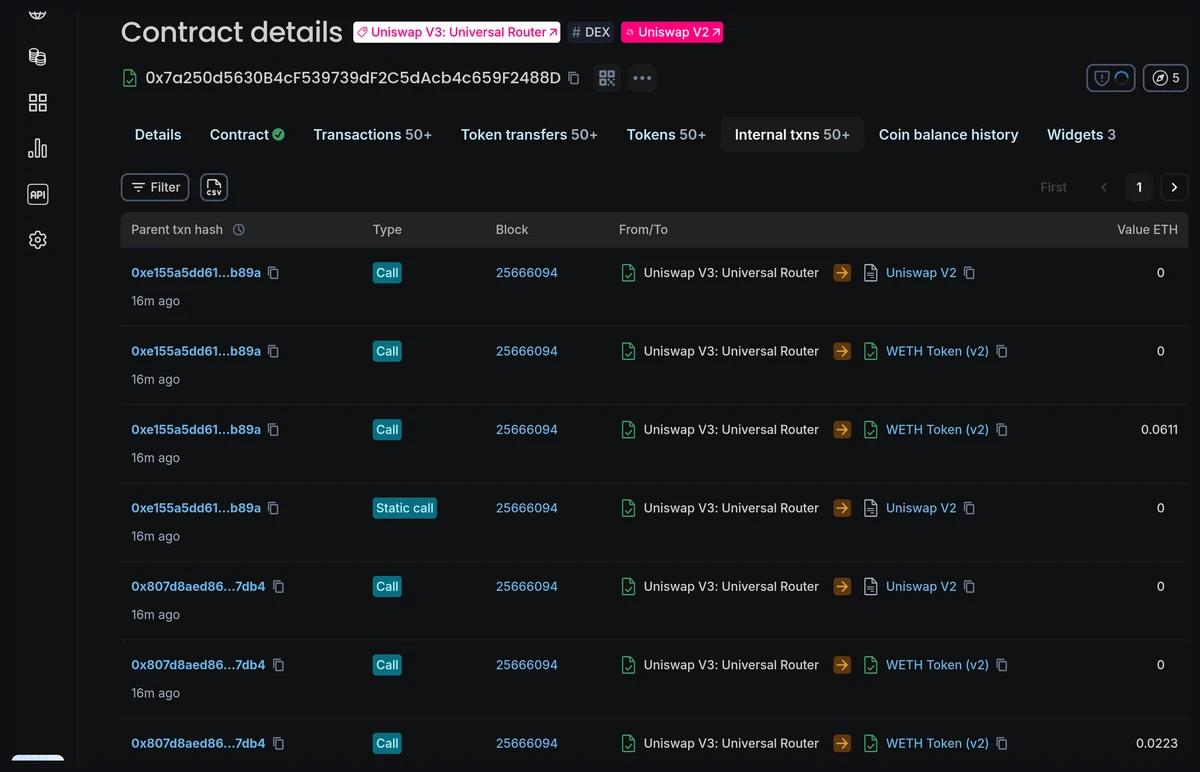
Why They Matter
- They explain mystery balance changes. If funds appeared or left without a normal transaction, the internal activity is where the answer is.
- They reveal what a contract really did. Following the internal moves shows the full path your funds took through a smart contract.
- They are already paid for. You do not pay extra gas for internal transactions. Their cost is part of the single parent transaction you signed.
Key Takeaways
- An internal transaction is a value move or call made by a smart contract inside a regular transaction.
- It has no signature and no separate hash, and it does not pay gas on its own.
- It is not stored as a standalone transaction. Explorers reconstruct it by tracing the parent transaction.
- If a contract sent you the native coin, it arrived as an internal transaction, which is why it is missing from your normal history.
- You can find them under an Internal txns tab on a block explorer.
Internal transactions are the hidden plumbing of smart contract activity. They are the reason a swap can quietly deliver ETH to your wallet with no incoming transaction in sight, and the reason a single click can move funds through several contracts at once. Learn to check the internal activity, and those confusing moments where money appears from nowhere turn into a clear, traceable story.
This article is educational and is not financial advice.