What Is Chainstack: Managed Blockchain Nodes, Dedicated RPC and Web3 Infrastructure (2026)
— By Tony Rabbit in Tutorials
What is Chainstack? Learn how this Web3 infrastructure provider handles managed nodes, dedicated RPC, archive data and enterprise blockchain operations in 2026.
Intent check: If you want a provider comparison, read Top 5 Crypto RPC Providers in 2026. This article is specifically about what Chainstack is and why teams use it.
Chainstack is a blockchain infrastructure provider for teams that want production-grade node access without owning the full operational headache of self-hosting everything. In practice, it sits in the part of the stack where uptime, chain coverage, dedicated performance and operational simplicity start mattering more than hobby-level setup.
That gives the keyword durable value. Builders, infra leads and founders keep searching branded terms like Chainstack because they are not just asking what an RPC is. They are trying to understand which provider solves node reliability, scale and deployment headaches well enough for real products.
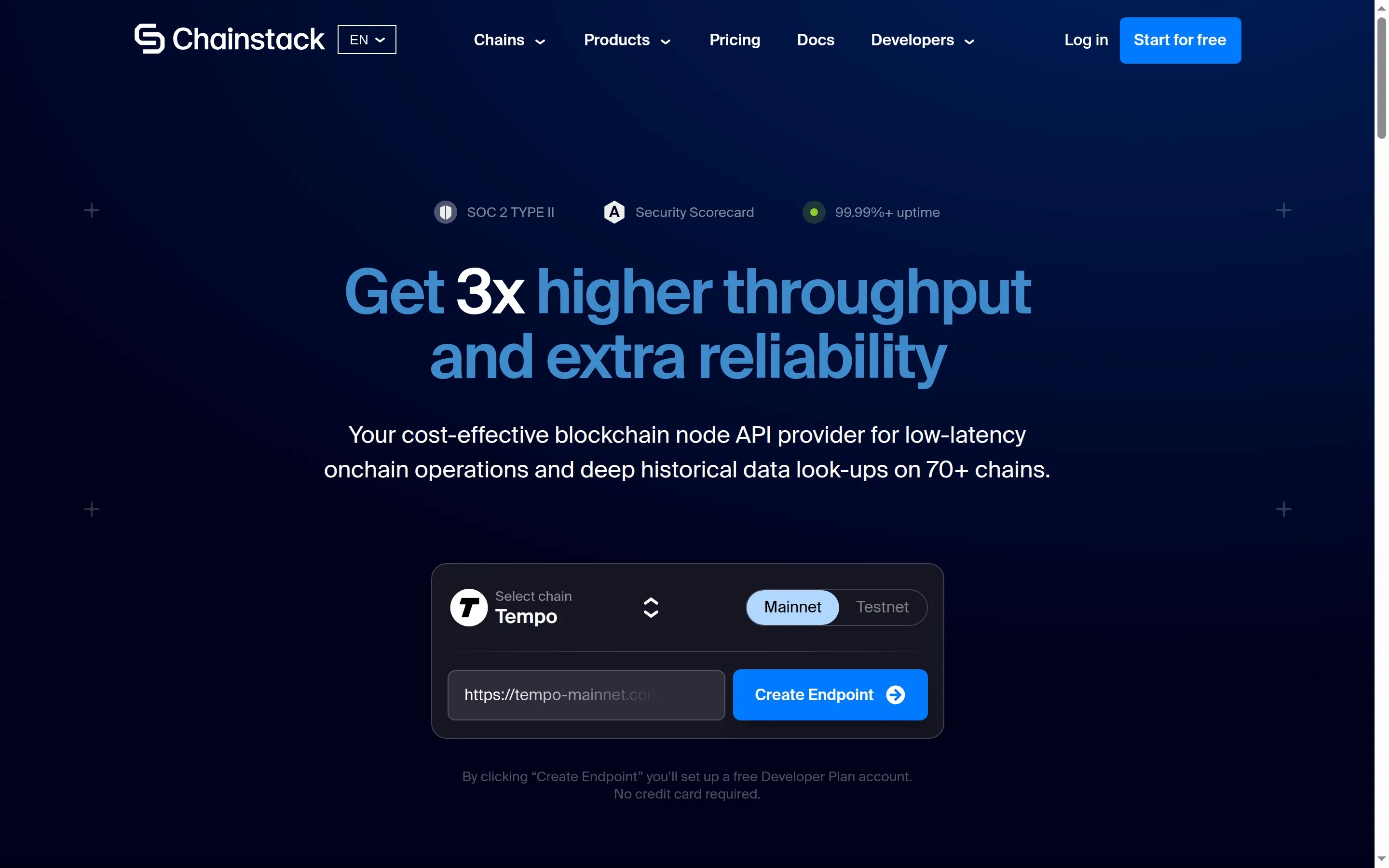
What Chainstack does in plain English
The cleanest way to think about Chainstack is as outsourced blockchain plumbing for serious apps. Instead of spinning up and maintaining every node stack on your own infra, you rent a provider that handles the heavy lifting and gives you a cleaner control surface.
Chainstack currently positions itself around geo-balanced RPC, unlimited-call access tiers, dedicated infrastructure, archive data and self-hosted node workflows. That matters because it signals the product is not only about simple public endpoint access. It is about operational flexibility too.
Why teams look at Chainstack
Teams usually evaluate Chainstack when they are scaling past experimentation. They care about chain support, predictable performance, dedicated options, and the ability to choose between managed and more controlled deployment models without reinventing node operations from scratch.
How Chainstack fits into a Web3 stack
Chainstack sits closest to the node and RPC layer, but the product story matters more when you read it as a reliability and deployment question instead of a simple API question.
How this article avoids internal overlap
Internally, the biggest overlap risk is with our generic pieces on RPC providers, nodes and RPC endpoints. Those pages explain the category.
This page is narrower on purpose. It answers the branded query: what Chainstack is, what operational problem it solves, and why a team might prefer it over doing everything alone.
Who Chainstack is for, and where it can feel like overkill
Chainstack makes the most sense for teams building products with real uptime expectations: wallets, dashboards, bots, analytics services and apps that cannot afford flaky node access.
It can feel like overkill for very light experimentation or one-off personal scripts. The value rises when operational reliability matters more than squeezing every cost down at the earliest stage.
Final take
Chainstack is worth understanding because it represents the part of Web3 that becomes important as soon as a project moves from demo mode to infrastructure discipline. The product is not “magic node access.” It is a managed way to reduce infra pain while keeping serious deployment options on the table.
How to evaluate Chainstack in a real production stack
The best way to evaluate Chainstack is not to ask whether it has an endpoint for your chain. Almost every serious provider can answer that. The useful question is whether your product needs the specific operational posture Chainstack sells: geo-balanced access, archive support, dedicated infrastructure, or a cleaner bridge between managed and self-hosted environments. A wallet dashboard, analytics app or trading workflow may value those things very differently.
That is why a good evaluation starts with workload shape. If your team cares about deep historical reads, regional performance, dedicated reliability or a migration path toward more control later, Chainstack becomes easier to justify. If the app is still light and the traffic is tiny, the product can feel more mature than the immediate need. The provider itself is not the whole story. Fit is.
Common mistakes when researching Chainstack
The first mistake is comparing providers only by headline price and chain count. That misses what usually breaks first in production: data depth, performance consistency, operational simplicity and whether the deployment model matches the product. A cheaper endpoint is not cheaper if the engineering team loses time working around it.
The second mistake is assuming self-hosting and managed infrastructure are opposites forever. In practice, many teams evolve. They may start managed, later add dedicated capacity, and only self-host the pieces that really justify it. Chainstack is easier to understand when you treat it as part of that maturity path instead of as a yes-or-no replacement for internal infrastructure.
FAQ
Related Guides
- What Is QuickNode: Managed RPC Infrastructure, APIs and Blockchain Access (2026)
- What Is NOWNodes: Shared RPC, Dedicated Nodes and WebSocket Access (2026)
- What Is QuickNode: RPC Infrastructure, Elastic APIs and Web3 Build Workflows (2026)
- What Is Ankr (ANKR): Web3 Infrastructure, RPCs and Liquid Staking Guide (2026)
- What Is a Crypto RPC Node: Complete Blockchain Infrastructure Guide (2026)
Frequently Asked Questions
What does Chainstack do?
Chainstack is a Web3 infrastructure provider that offers managed blockchain nodes and RPC access so teams can connect applications to networks without running their own nodes. It typically supports shared and dedicated node options across multiple chains.
What is the difference between shared and dedicated RPC nodes?
Shared RPC nodes serve many users from common infrastructure, which is cost effective but can be subject to rate limits. Dedicated nodes give a single user more consistent performance and capacity at higher cost.
What is an archive node and why would I need one?
An archive node stores the full historical state of a blockchain, allowing queries about past balances and contract states at any block. Applications doing analytics or deep historical lookups often require archive access rather than a standard full node.
Why use a managed node provider instead of running your own node?
Running your own node requires hardware, syncing time, and ongoing maintenance, which can be demanding at scale. A managed provider handles uptime, scaling, and upgrades so teams can focus on their application.