What Is ERC-404? The Semi-Fungible Token Standard (2026)
— By Tony Rabbit in Tutorials
Explore ERC-404, an experimental token standard blending ERC-20 and ERC-721 for semi-fungible tokens. Learn its mechanics, benefits, and risks.
The world of blockchain tokens is constantly evolving, with developers pushing the boundaries of what's possible on networks like Ethereum. While ERC-20 tokens have long dominated fungible assets and ERC-721 tokens define the unique world of NFTs, a new, experimental standard has emerged to bridge the gap: ERC-404. This innovative approach aims to combine the best of both worlds, creating what are known as semi-fungible tokens.
As we look ahead to 2026 and beyond, understanding novel token standards like ERC-404 becomes increasingly important for anyone navigating the decentralized finance (DeFi) landscape. This guide will break down what ERC-404 is, how it works, its potential benefits, and the crucial caveats you need to be aware of.
What Exactly Is the ERC-404 Token Standard?
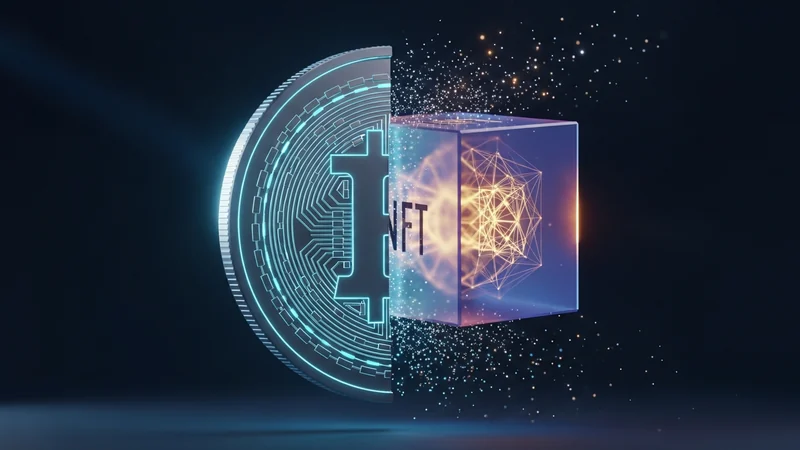
At its core, ERC-404 is an experimental, unofficial token standard designed to create 'semi-fungible' tokens. This means it allows a single token to exhibit characteristics of both a fungible ERC-20 token and a non-fungible ERC-721 token. It achieves this by introducing native fractionalization and a unique linking mechanism between the fungible and non-fungible components.
Think of it as a hybrid. You can own a piece of an NFT, trade it like a regular token, and yet, when you accumulate enough pieces, a full, unique NFT materializes in your wallet. This innovative design aims to solve some of the long-standing challenges associated with NFT liquidity and accessibility.
The Core Mechanic: Mint, Burn, and Re-mint
The ingenuity of ERC-404 lies in its dynamic minting and burning mechanism. This system intricately links the fungible and non-fungible aspects of the token, ensuring that ownership of a full unit of the fungible token corresponds to ownership of a unique NFT.
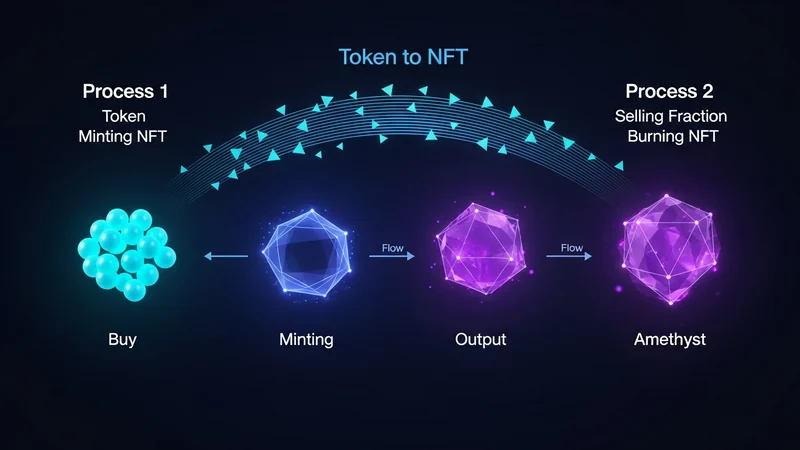
- Holding a full token: When you hold a complete, undivided unit of an ERC-404 token, the standard automatically mints a linked ERC-721 NFT to your wallet. This NFT represents the unique, non-fungible aspect of your holding.
- Selling a fraction: If you decide to sell even a fraction of your ERC-404 token, the associated NFT is automatically burned from your wallet. This ensures that only holders of full units possess the linked NFT.
- Accumulating a full token again: Should you later accumulate a full unit of the ERC-404 token once more, a new ERC-721 NFT is minted to your wallet. It's important to note that this new NFT might not be the exact same one you previously held, as the system often draws from a pool or mints a new, unique identifier.
This continuous dance of minting and burning is what gives ERC-404 its semi-fungible nature, allowing for both divisible ownership and unique asset representation.
Benefits of the ERC-404 Standard
The novel mechanics of ERC-404 bring several compelling advantages, particularly for the NFT ecosystem. These benefits address some of the persistent challenges that have limited the broader adoption and utility of non-fungible tokens.
Enhanced Liquidity for NFTs
One of the most significant promises of ERC-404 is the potential for instant liquidity for NFTs. Traditional NFTs are often illiquid, requiring specific marketplaces and often lengthy discovery processes to find a buyer. ERC-404 changes this by allowing the underlying fungible components to trade on standard Automated Market Makers (AMMs).
This means you can buy or sell fractions of an NFT, or the full fungible unit, with the same ease and speed as trading any other ERC-20 token on platforms tracked by DEXTools. This drastically reduces the friction associated with NFT transactions and opens up new avenues for price discovery.
Native Fractional Ownership
Fractional ownership of NFTs has been a concept explored through various third-party protocols, but ERC-404 brings this capability natively to the token standard itself. Instead of relying on a separate wrapping or vaulting mechanism, the standard intrinsically supports the division of an NFT's value.
This makes high-value NFTs more accessible to a wider range of investors, as they can participate in the ownership of a blue-chip collection without needing to purchase an entire piece. It democratizes access and allows for more granular investment strategies.
New Possibilities for DeFi Integration
By making NFTs tradable on AMMs and providing native fractionalization, ERC-404 opens up a wealth of new possibilities for DeFi integration. Imagine using fractions of an NFT as collateral in lending protocols, participating in yield farming with semi-fungible assets, or creating sophisticated derivatives based on NFT collections.
These capabilities could bridge the gap between the art and collectibles market and the financial infrastructure of DeFi, unlocking significant capital efficiency and innovative financial products.
Caveats and Risks Associated with ERC-404
While the potential of ERC-404 is exciting, it's crucial to approach this experimental standard with a clear understanding of its limitations and risks. As an unofficial and evolving standard, it carries certain considerations that users and developers must acknowledge.
Unofficial and Experimental Status
Perhaps the most important caveat is that ERC-404 is not an official Ethereum ERC. This means it has not been finalized via the rigorous Ethereum Improvement Proposal (EIP) process. It is a community-driven, experimental standard. This unofficial status implies a few things:
- There's no guarantee of long-term support or adoption by the broader Ethereum ecosystem.
- It may not be as thoroughly audited or battle-tested as official standards like ERC-20 or ERC-721.
- Future changes or incompatibilities with other protocols are a possibility.
Users engaging with ERC-404 projects should understand they are participating in an innovative but unproven area of blockchain development.
High Gas Costs
The dynamic minting and burning mechanism that defines ERC-404's functionality comes at a cost: gas. Because an NFT is minted to your wallet when you acquire a full token, and burned when you sell a fraction, these operations are constantly occurring on the blockchain.
Each mint and burn transaction consumes gas, which can lead to significantly higher transaction fees compared to trading a simple ERC-20 token or even a static ERC-721. This can impact profitability, especially for frequent traders or in periods of high network congestion.
Varying Implementations and Contract Risk
Since ERC-404 is not an official standard, there isn't a single, universally accepted reference implementation. This means that different projects building on the ERC-404 concept may have varying smart contract implementations. These variations can introduce subtle differences in how the tokens behave, and crucially, can increase contract risk.
Projects might have different security considerations, bug potentials, or even introduce malicious backdoors. It is paramount to thoroughly research any ERC-404 project, review its smart contract audits (if available), and understand its specific implementation before engaging.
ERC-404 vs. Traditional Token Standards
To better understand ERC-404, it's helpful to compare it directly with the established ERC-20 and ERC-721 standards. This comparison highlights where ERC-404 diverges and what unique properties it brings to the table.
As the table illustrates, ERC-404 attempts to capture the best attributes of both worlds while introducing its own set of trade-offs, particularly concerning gas efficiency and official recognition.
The Future of Semi-Fungible Tokens
The emergence of ERC-404, with Pandora being a prominent early project, signals a clear demand for more flexible and liquid NFT solutions. While it remains an experimental standard, its innovative approach to blending fungibility and non-fungibility has captured significant attention and sparked debate within the crypto community.
Looking ahead, the success and evolution of ERC-404, or similar semi-fungible token standards, will depend on several factors: community adoption, developer support, security audits, and whether a more formalized EIP process might eventually embrace such a hybrid model. The ability to bring instant liquidity and fractional ownership to NFTs natively could unlock trillions in value, transforming how we perceive and interact with digital assets.
For those interested in tracking the performance and trading activity of ERC-404 projects, DEXTools provides a comprehensive platform for real-time data, charts, and analytics. As this sector evolves, staying informed with reliable tools will be key to navigating its opportunities and challenges.
Ultimately, ERC-404 represents a bold step forward in token design, pushing the boundaries of what's possible on the Ethereum blockchain. While caution and due diligence are always advised for experimental technologies, its potential to reshape the NFT landscape is undeniable.
Frequently Asked Questions
What is the primary purpose of ERC-404?
ERC-404 aims to create 'semi-fungible' tokens by blending the characteristics of ERC-20 (fungible) and ERC-721 (non-fungible) tokens, bringing native fractionalization and instant liquidity to NFTs.
How does ERC-404 handle NFT ownership?
When you hold a full unit of an ERC-404 token, a linked NFT is minted to your wallet. If you sell a fraction, the NFT is burned. If you accumulate a full unit again, a new NFT is minted.
Is ERC-404 an official Ethereum standard?
No, ERC-404 is an experimental, unofficial token standard. It has not been finalized through the Ethereum Improvement Proposal (EIP) process.
What are the main benefits of ERC-404?
Key benefits include enhanced liquidity for NFTs by allowing them to trade on AMMs, native fractional ownership, making high-value NFTs more accessible, and new possibilities for integration within DeFi protocols.
What are the risks associated with ERC-404?
Risks include its unofficial and experimental status, potentially higher gas costs due to constant minting and burning, and increased contract risk due to varying implementations across projects.