What Is PEPE? Origins, Tokenomics and Risks (2026)
— By AliceOnChain in Tutorials
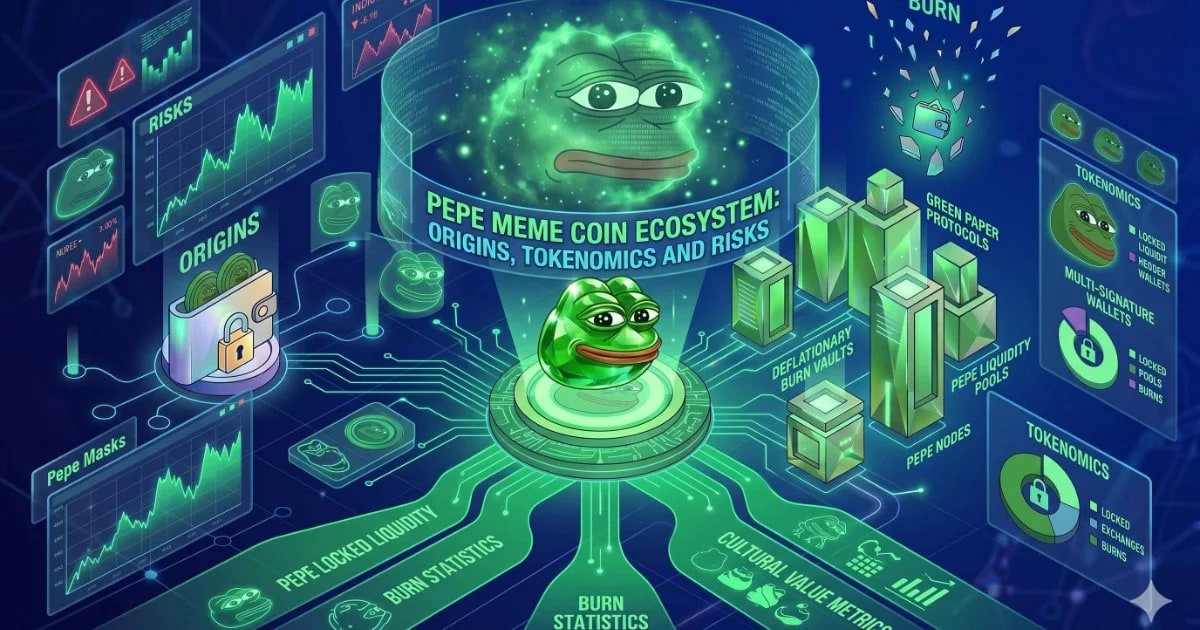
What is PEPE? A deep dive into the meme coin's origins, tokenomics and locked liquidity, plus the real risks of trading high-volatility meme assets.
What is PEPE? Origins, Tokenomics and Risks
The digital asset market has a new protagonist, and it's not a utility token backed by complex technology or institutional finance. It's the PEPE meme coin ecosystem, a digital environment that leverages the sheer power of internet culture and decentralized community sentiment. Emerging in April 2023, this project captured the market’s collective imagination, rocketing to a multi-billion dollar market capitalization faster than nearly any other asset in history. For professional traders analyzing trends on DEXTools, this movement is a case study in raw, community-driven liquidity. It is not just another speculative trend; it has established itself as a primary asset class within the volatile DeFi landscape. To trade it successfully, one must understand its origin, its deflationary tokenomics, and the unique, high-yield risks it presents.
Origins: A Digital Icon Reborn
Unlike some assets, the project has no technical whitepaper and no utility roadmap. Its foundation is entirely cultural. It is directly inspired by the universally recognized "Pepe the Frog" meme, originally created by Matt Furie in his 2005 comic book, Boy's Club.
The coin is a tribute, a piece of digital art designed to capitalize on the meme’s explosive, non-partisan popularity across platforms like Twitter, Telegram, and Discord. The creators launched the initiative silently, with a simple message: "the most memeable meme coin in existence." This lack of corporate interference is exactly what fueled its initial success. The community didn't care about a "development fund" or a "marketing roadmap"; they cared that they could own a piece of the internet's most iconic figure. For an analyst on DEXTools, this story is a reminder that in the PEPE meme coin ecosystem, community perception is sometimes more valuable than established technology.
Tokenomics: Simplicity and Scarcity
The core strength of the project lies in its simple, deflationary mechanics. It launched with a staggering total supply of 420.69 trillion tokens, a playful nod to cannabis culture. However, the true story is in how those tokens are managed.
The Initial Liquidity: Completely Decentralized.
When the project launched, 93.1% of the total supply was immediately committed to the project’s Uniswap liquidity pool. This pool was then "paired" with ETH, and the creators performed the most critical step in decentralized security: they burned the LP tokens. By destroying the liquidity provider tokens, they irrevocably locked that massive liquidity, preventing any form of a "rug pull"-the devastating scenario where developers withdraw all paired assets. On DEXTools, you will see a perfect DEXT Score and "Locked" liquidity metrics for the core pairs, a direct result of this decisive action. The remaining 6.9% of the supply was held in a specialized, multi-signature wallet for future exchange listings and bridges.
The Deflationary Burn Mechanism.
Unlike many coins that constantly mint new supply, this project has a fixed limit with an embedded burn mechanism. A portion of transaction fees (specifically for the Ethereum mainnet version) is automatically directed to a "dead wallet." This means that as more people trade within the PEPE meme coin ecosystem, the circulating supply actively decreases. This deflationary feature, combined with its cultural significance, is the primary driver for its price appreciation. Analysts using DEXTools watch this burn rate closely. As supply shrinks, the impact of large buy orders is magnified, creating the conditions for the massive volatility this asset is famous for.
Risks: High Reward, High Volatility
While the project's launch was secure and its tokenomics are favorable, trading it involves substantial, multifaceted risk. These are the critical areas every professional must respect:
Fundamental Volatility. The asset has no intrinsic value. Its price is determined 100% by community sentiment and speculative trading. This makes it incredibly volatile. A 50% price drop or increase can happen within hours based on a single tweet or whale transaction. Traditional fundamental analysis does not apply; you are trading community energy, not technology. For this reason, using DEXTools' Price Alerts and setting multiple stop-losses is non-negotiable.
Whale Dominance. A large percentage of the total supply is held by early adopters, or "whales." On DEXTools, we use the Holders analysis tab to track these wallets. If a few large holders decide to sell simultaneously, it can trigger a market-wide correction. Because the coin has lower overall liquidity than macro-cap assets like BTC, large sell orders have a disproportionate impact on the chart.
Counterparty Scams and Imitators. The success of the brand spawned thousands of "imitation" projects. Traders must be extremely careful to only interact with the verified contract. Scammers create fake coins with the same name, or "honeypots"-coins you can buy but cannot sell due to a malicious contract function. When you search for the project on DEXTools, always verify the official contract address on a trusted explorer before trading, and always check the DEXT Score for an immediate security overview.
The Role of DEXTools in Meme Trading
DEXTools provides the exact tools required to navigate a high-stakes environment like the PEPE meme coin ecosystem. Our platform offers real-time decentralized market data that other sites can't match.
The Big Swaps Explorer allows traders to spot in real-time when whales are entering or exiting positions, providing early indicators of a sentiment shift. The HODLers analysis helps visualize wallet concentration. Finally, the DEXT Score is the ultimate decentralized safety check. It aggregates security audits and contract verification status, giving traders an immediate, quantified risk assessment of any DeFi pair. For an asset like this, on-chain data is the difference between catching a breakout and becoming exit liquidity.
Conclusion: Respect the Meme, Manage the Risk
This movement has demonstrated that in the age of decentralized finance, cultural relevance can be a primary asset class. By combining the universal appeal of an iconic meme with secure, deflationary tokenomics, the PEPE meme coin ecosystem created a historical market movement. However, its lack of utility means it carries immense risk. It is a tool for professional DeFi speculators who understand market psychology and liquidity mechanics. For anyone looking to trade it, the mantra is simple: utilize the professional analytics provided by DEXTools to verify data, track whales, and monitor liquidity, and always manage your risk aggressively.
- How to Bridge Crypto Between Chains: Complete Cross-Chain Tutorial 2026
- How to Use 1inch: Complete DEX Aggregator Swap Tutorial (2026)
- How to Use OKX Web3 Wallet: Multi-Chain DeFi Hub Guide (2026)
Disclaimer: This article is for informational purposes only and does not constitute investment advice, financial advice, trading advice, or any other kind of advice. DEXTools does not recommend buying, selling, or holding any cryptocurrency or token. Users should conduct their own research and consult with a qualified financial advisor before making any investment decisions. Cryptocurrency investments are volatile and high-risk. DEXTools is not responsible for any losses incurred.
Related Guides
- BONK Solana memecoin ecosystem: Origins & Risks
- PEPE to USD: Pepe Price Today | Live Converter
- How to Evaluate Tokenomics: Supply, Emissions and Unlock Risk Guide (2026)
- What Is Tokenomics: Complete Guide to Token Economics (2026)
- What is FLOKI memecoin? Tokenomics and Roadmap Explained
Frequently Asked Questions
What is PEPE in crypto?
PEPE is a meme coin inspired by a popular internet meme and is traded as a highly speculative asset. Like most meme tokens, its value is driven largely by community interest and sentiment rather than underlying utility.
What are the tokenomics of a meme coin like PEPE?
Meme coin tokenomics often feature a very large total supply and details such as liquidity arrangements and any allocations. Reviewing the official documentation and on chain data is the best way to understand a token's specific structure.
Is PEPE a safe investment?
Meme coins are extremely volatile and high risk, and prices can swing dramatically or collapse quickly. You should only consider amounts you can afford to lose and treat such assets as speculative.
Why is locked liquidity important for meme coins?
Locked liquidity makes it harder for creators to suddenly remove the pool and crash the price, a scam known as a rug pull. Checking whether liquidity is locked is a common safety step before trading any meme token.