What Is Plasma (XPL)? Bitcoin-Anchored Stablecoin Layer 1 Guide 2026
— By Tony Rabbit in Tutorials
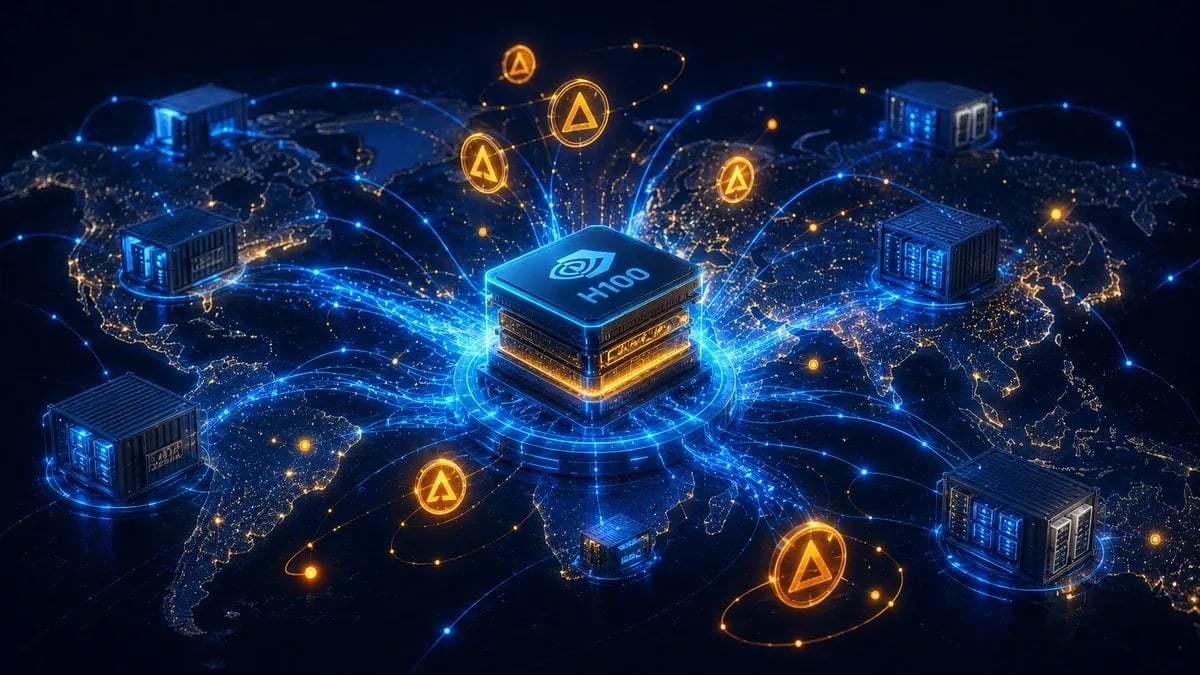
Plasma (XPL) is a stablecoin-native Layer 1 blockchain offering zero-fee USDT transfers, PlasmaBFT sub-second finality, EVM compatibility, and periodic Bitcoin anchoring. This 2026 evergreen guide explains the architecture, XPL token economics, Plasma One neobank, the Tether and Bitfinex backing story, the September 25 2025 mainnet beta launch with over two billion dollars in stablecoin liquidity, and how Plasma compares to Tron and Ethereum for moving USDT.
What Is Plasma (XPL)? The Bitcoin-Anchored Stablecoin Layer 1 Explained in 2026
Stablecoins are the busiest asset in crypto. By 2026 they settle more value every quarter than most public equity exchanges, with USDT alone responsible for hundreds of billions in monthly throughput across Tron, Ethereum, Solana, BNB Chain, and dozens of smaller networks. Yet sending a stablecoin is still strangely friction laden. You need a native gas token you do not really want. You pay variable fees in ETH or TRX or SOL just to move a dollar. You bridge across networks using infrastructure that frequently breaks.
Plasma is a Layer 1 blockchain built specifically to fix that problem. It is stablecoin native, which means the chain treats USDT as a first class asset rather than a guest. It offers zero-fee USDT transfers for normal users through a protocol level paymaster. It runs a custom proof of stake consensus called PlasmaBFT with sub-second finality. It periodically anchors its state into Bitcoin for added security. And it is fully EVM compatible, so Solidity contracts deploy without changes. The native token, XPL, exists primarily to secure the validator set, pay for complex computation, and govern the protocol.
Plasma launched mainnet beta on September 25, 2025, with more than two billion dollars in stablecoin liquidity from day one. The project is closely associated with Tether and Bitfinex, both of which have publicly disclosed involvement in early funding. The pitch is direct: build the rails the dollar deserves and let stablecoin payments behave like the digital cash they already pretend to be.
This guide explains what a serious user, builder, or analyst needs to know about Plasma in 2026: the founding story, technical architecture, XPL token economics, Plasma One neobank, how the chain compares to Tron and Ethereum for stablecoin transfers, realistic risks, and practical steps for getting on chain.
Featured Snippet
Plasma is a stablecoin-native Layer 1 blockchain that launched mainnet beta on September 25, 2025. It offers zero-fee USDT transfers via a protocol-level paymaster, sub-second finality through the PlasmaBFT consensus mechanism, full EVM compatibility for Solidity smart contracts, periodic state root anchoring to Bitcoin for added security, and stablecoin-denominated gas where users can pay transaction fees in USDT instead of the native XPL token. The XPL token is used primarily for validator staking, complex transaction gas, and on-chain governance. Plasma is backed by Tether and Bitfinex among other investors and positions itself as direct competition to Tron for USDT settlement.
What Is Plasma in Plain English
Strip out the marketing language and Plasma is a blockchain designed around one specific question: what would the chain look like if you assumed from the start that the most important asset on it would be a dollar stablecoin, not the native token? Most existing networks answer that question by accident. Ethereum was designed for general computation and ended up hosting hundreds of billions in USDT and USDC. Tron was designed to be cheap and ended up dominating retail USDT. Solana was designed to be fast and ended up doing significant stablecoin volume.
Plasma flips the design priority. The team built the consensus mechanism, fee model, gas system, and economic security around the assumption that the chain exists to move stablecoins at scale, and everything else has to support that primary use case. That sounds like a small philosophical shift but it produces very different engineering choices. You stop charging users in a volatile native token. You start thinking about how to make a USDT transfer feel like sending a message on a phone.
The result is a chain where sending a stablecoin from one wallet to another is free at point of use, instant in practice, and does not require holding any other asset. The validator set is still secured by a proof of stake model where validators stake XPL. The chain still supports Solidity smart contracts, so DeFi can deploy. But the design center is payments, and that single decision reorganizes the entire stack.
If you understand the underlying logic of how stablecoins work and have used either Tether USDT or USDC, you already understand the demand side. Plasma is the supply side answer: a settlement layer purpose built to carry that demand without forcing the friction of legacy general purpose chains.
The Stablecoin Settlement Problem It Solves
The stablecoin market has three structural problems Plasma targets. First is the gas token requirement. On Ethereum, sending one USDT requires holding ETH. On Tron, you need TRX. On Solana, you need SOL. Imagine if every time you used a debit card you had to top up a tiny secondary balance in a volatile foreign currency just to pay the processing fee. That is the current state of stablecoins on every major chain.
Second is fee unpredictability. Ethereum gas swings from a few cents to twenty dollars depending on congestion. Tron is cheaper but still asks users to manage TRX or energy fees that fluctuate with usage. For payments, predictability matters as much as cost. A merchant cannot price a checkout flow when the fee might be two cents this hour and two dollars next hour.
The third problem is settlement finality. Most chains offer probabilistic finality with multiple confirmations needed before a transaction is safe. For stablecoin payments at scale, users want one click and done, the equivalent of card swipe behavior rather than waiting for a wire to clear.

Plasma addresses each of these problems with a specific mechanism. The gas token requirement is removed for normal USDT transfers through a protocol-level paymaster that sponsors the gas. Fee unpredictability is addressed by letting users pay fees, when fees apply, in stablecoin denominated terms rather than in a volatile native token. Finality is solved through PlasmaBFT, a consensus mechanism that achieves sub-second deterministic finality. Together these design choices produce a chain where moving USDT is as close to a frictionless experience as the underlying cryptography permits.
Founding Team and Backers
Plasma was incubated with deep ties to the broader Tether and Bitfinex ecosystem. Both organizations have publicly disclosed involvement in early funding rounds and have supported the initial USDT supply that bootstrapped mainnet beta liquidity. Paolo Ardoino, the chief executive of Tether, has publicly endorsed the project on multiple occasions, framing it as a natural evolution of the USDT distribution strategy. Bitfinex executives have made similar statements, positioning Plasma as a settlement layer that complements the broader Tether stack.
Beyond the Tether and Bitfinex connection, Plasma raised capital from crypto native venture firms with track records of backing infrastructure projects. The practical signal is clear: the largest stablecoin issuer in the world has effectively chosen Plasma as a preferred settlement venue for some portion of its future distribution strategy.
That endorsement is both the strongest bull case and the most scrutinized risk factor for Plasma. On the positive side, you get direct access to Tether liquidity, brand alignment, and native USDT issuance rather than bridged synthetic versions. On the cautious side, a chain whose initial fortunes are tightly coupled to a single stablecoin issuer is exposed to any regulatory or operational disruption affecting Tether. That coupling cuts both ways and should be evaluated honestly.
Plasma Timeline
Project incubation. Early team assembled around the thesis that stablecoins deserve a purpose-built settlement layer. Initial research on PlasmaBFT consensus and Bitcoin anchoring published.
Seed and strategic rounds close. Tether and Bitfinex involvement publicly disclosed. First testnet specifications released to the developer community.
Public testnet goes live. EVM compatibility validated. External developers begin porting Solidity contracts. Initial dashboard infrastructure and block explorer released.
Public XPL token sale completes. Strong demand reported across retail allocations, with the sale heavily oversubscribed at the published cap.
Mainnet beta launches with more than two billion dollars in stablecoin liquidity available day one. XPL token goes live on multiple exchanges. First production transactions settle on PlasmaBFT.
DeFi ecosystem expansion. Major lending markets, DEXs, and stablecoin yield protocols deploy on Plasma. Cross-chain bridge infrastructure matures.
Plasma One neobank consumer product rolls out to additional jurisdictions. Validator decentralization milestones progress. Continued growth of native stablecoin issuance and payment volume.
PlasmaBFT Consensus Architecture
PlasmaBFT is the consensus mechanism that powers the chain. It is a proof of stake Byzantine fault tolerant protocol designed to provide sub-second deterministic finality with throughput sufficient for stablecoin payment volume. The exact engineering details have been published in protocol specifications, but the high level architecture is straightforward to understand without reading the formal proofs.
In a Byzantine fault tolerant system, a set of validators take turns proposing blocks. Each block must be approved by a supermajority of validators, typically two thirds, before it is considered final. PlasmaBFT uses a pipelined version of this idea where multiple rounds of voting happen in parallel rather than serially, which reduces the total wall clock time required to reach finality. The result is that a transaction submitted to Plasma typically becomes irreversible in well under one second, often closer to four hundred milliseconds in normal conditions.
Validators on Plasma stake XPL to participate. The stake serves two purposes. First, it gives validators economic skin in the game, since misbehavior such as signing conflicting blocks results in stake being slashed. Second, it concentrates security in the hands of participants who have invested in the long term health of the network. The validator set is designed to grow over time as the chain decentralizes, but at launch the set is intentionally smaller to ensure operational stability during the bootstrapping phase.
PlasmaBFT borrows ideas from prior research on BFT consensus including Tendermint and HotStuff. What is novel is the engineering integration, where consensus is tightly coupled with the stablecoin paymaster, the Bitcoin anchoring schedule, and the EVM execution layer.
Zero-Fee USDT Transfers via Paymaster Explained
The single most important user facing feature of Plasma is zero-fee USDT transfer. To send USDT to another wallet on Plasma, normal users do not pay anything. No XPL required. No native gas token required. No conversion or top up. You receive USDT, you send USDT, the transaction settles in under a second, and the balance moves.
The mechanism that makes this possible is a protocol-level paymaster. In Ethereum and other EVM chains, the concept of a paymaster refers to a smart contract that can sponsor gas on behalf of a user. The idea has existed for years through account abstraction proposals. Plasma takes the concept and bakes it into the protocol itself for USDT transfers, so the sponsorship is not a third party service but a native capability of the chain.
How a Zero-Fee USDT Transfer Flows
Step 1: Submit
User signs a USDT transfer from their wallet. No XPL balance check, no gas calculation in volatile native token.
Step 2: Paymaster
The protocol-level paymaster identifies the transaction as a qualifying USDT transfer and sponsors the gas internally.
Step 3: Finalize
PlasmaBFT finalizes the block in sub-second time. Recipient sees the balance update almost immediately.
The paymaster system has rate limits and qualifying conditions designed to prevent abuse. The chain cannot literally subsidize unlimited free transactions or it would be denial of service attacked into bankruptcy. The exact rate limits are tuned by governance and adjusted as network usage evolves, but the practical implication for normal users is that everyday stablecoin transfers feel free.
For more complex transactions, including DeFi interactions, smart contract deployments, and high frequency operations, normal gas economics apply. Users pay fees in either XPL or in stablecoin denominated terms. The chain offers a stablecoin gas mode where the protocol accepts USDT as payment for fees and handles the conversion internally, which removes the need for users to hold XPL just to interact with applications. This is a meaningful UX improvement compared to chains that force every user to manage a balance of the native token.

How Bitcoin Anchoring Works
One of the more distinctive design choices in Plasma is its periodic anchoring of state roots into Bitcoin. The chain runs its own consensus through PlasmaBFT for day to day operation, but at regular intervals it commits a cryptographic summary of its state to the Bitcoin blockchain. This summary, called a state root or checkpoint depending on the precise mechanism, is a hash that uniquely identifies the entire state of Plasma at a moment in time.
The purpose of anchoring is to inherit, partially, the economic security of Bitcoin. Once a checkpoint has been written to Bitcoin and buried under enough Bitcoin blocks to be considered final by Bitcoin standards, any attempt to rewrite Plasma history prior to that checkpoint would have to also rewrite Bitcoin history. Rewriting Bitcoin history is extraordinarily expensive due to its proof of work security, so anchoring effectively makes deep Plasma reorganizations economically irrational beyond the checkpoint horizon.
It is important to understand what anchoring does and does not provide. It does not give Plasma the throughput properties of Bitcoin. It does not require every Plasma transaction to settle on Bitcoin. It does not make Plasma a Layer 2 of Bitcoin in the strict sense. What it does is add an additional layer of defense in depth: if PlasmaBFT validators were somehow compromised and tried to rewrite history, the anchored checkpoints would expose the conflict, because the chain history after a checkpoint cannot be silently changed without also altering the corresponding Bitcoin record.
This design is sometimes described as Bitcoin anchored security, which is a defensible label, but should not be confused with the stronger claim that Plasma transactions inherit Bitcoin finality directly. Plasma still depends primarily on its own validator set for liveness and ordering. Bitcoin anchoring is a backstop, not a replacement, for the chain's own consensus.
EVM Compatibility and Developer Experience
Plasma is fully EVM compatible. This is a deliberate decision that allows the chain to leverage the existing developer ecosystem rather than building one from scratch. Solidity smart contracts that work on Ethereum, Polygon, Arbitrum, Base, or any other EVM chain can be deployed on Plasma with minimal or no changes. Tooling such as Hardhat, Foundry, Remix, MetaMask, Etherscan style block explorers, and the broader Ethereum developer stack all work out of the box.
The strategic value of EVM compatibility for a new Layer 1 is enormous. Building a new VM and developer ecosystem is a multi year project that has crushed otherwise interesting chains. By choosing to be EVM compatible from day one, Plasma focuses engineering effort on what actually differentiates the chain: the paymaster, consensus, Bitcoin anchoring, and stablecoin gas model.
Deploying on Plasma involves the same steps as any EVM chain. Configure your wallet with the Plasma RPC, fund a deployer address with a small amount of XPL or use stablecoin gas mode, compile, deploy, verify on the explorer. The interesting differences emerge in higher level integration, where you can opt into the paymaster for end user gas sponsorship or build applications that assume stablecoin denominated fees.
For users, EVM compatibility means wallets like MetaMask, Rabby, and major mobile wallets support Plasma with minor configuration. Same seed phrase, familiar DeFi interfaces, an Etherscan style block explorer. The chain feels like home for anyone who has used Ethereum or its rollups.
XPL Token Economics
XPL is the native token of the Plasma chain. Unlike chains where the native token is also the primary medium of exchange, XPL plays a more focused role. It is not the asset users primarily transfer (that role belongs to USDT). XPL is the economic security and governance asset of the protocol.
XPL has three core roles. First, validator staking. Validators who want to participate in PlasmaBFT consensus must lock XPL as collateral. The chain pays staking rewards to validators and their delegators, funded by a combination of protocol level inflation and fees collected from non-paymaster transactions. Second, gas for complex transactions. While simple USDT transfers are sponsored, more complex operations such as DeFi calls, contract deployments, and high frequency activity pay gas, which can be paid either in XPL directly or in stablecoin terms that are converted internally. Third, governance. XPL holders participate in on-chain governance decisions about parameters such as paymaster rate limits, validator set size, fee schedules, and treasury allocations.
The total supply and distribution of XPL was published at launch. The breakdown includes allocations for the public sale, team and advisors with multi year vesting, ecosystem grants, treasury, and an inflation schedule funding staking rewards. Always check current official sources because parameters can adjust through governance, but the structure follows the standard Layer 1 pattern with long term unlocks any holder should size around.
The tension in XPL economics is that the chain deliberately minimizes the native token in everyday UX. That removes friction for users, but it means XPL value accrual is less direct than on chains where every user must constantly buy the native token to pay fees. XPL accrues through staking demand, gas on complex transactions, governance utility, and treasury fee share. Whether that accrual supports a given price target depends heavily on how much non payment activity migrates to the chain over time.
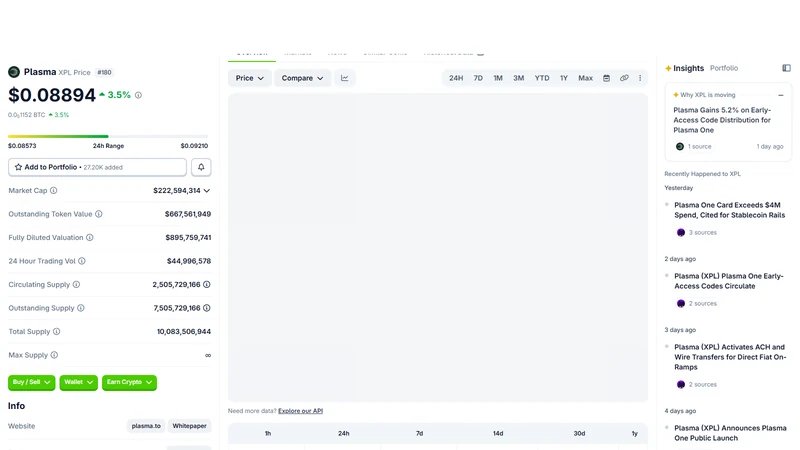
Plasma One Neobank Product
Plasma One is a consumer-facing neobank product built on top of the Plasma chain. It is one of the more strategically interesting parts of the broader Plasma stack because it represents an attempt to bring the chain's payment capabilities directly to end users rather than leaving distribution entirely to third party wallets and applications.
The Plasma One product is positioned as a stablecoin native banking experience. Users can hold a USDT balance that lives natively on the Plasma chain, send and receive stablecoins from other Plasma users, spend through linked payment cards in jurisdictions where the infrastructure supports it, and access yield products that put their stablecoin balance to work in carefully selected protocols. The exact feature set varies by region due to regulatory differences, and the rollout has been gradual through 2025 and into 2026.
The strategic logic of Plasma One is to capture the consumer relationship directly. If most users in emerging markets are already using USDT as a savings and payment instrument through informal channels, providing them a polished mobile experience with proper card integration, support, and security is potentially a large business in itself. From the Plasma chain's perspective, Plasma One also drives transaction volume, validator activity, and the network effect of having a flagship consumer application visibly using the chain.
Treat Plasma One as a separate product from the chain itself. The chain can succeed even if Plasma One does not, and vice versa. The two are aligned but not identical, and the regulatory considerations of a neobank product are very different from those of a permissionless blockchain.
Plasma vs Tron vs Ethereum for Stablecoins
The most direct competitor to Plasma is Tron, which currently dominates retail USDT settlement. Tron is cheap, fast, widely integrated with exchanges, and familiar to millions of users in emerging markets. It is also a centralized chain in practice, with a small validator set and a project structure that does not pretend to be a decentralization showcase. The case for Tron is pragmatic: it works, it is cheap enough, and existing flows are already built around it.
Plasma differentiates from Tron in several ways. Native zero-fee USDT transfers, as opposed to small but nonzero TRX or energy costs on Tron. Sub-second deterministic finality through PlasmaBFT, as opposed to the slightly longer finality on Tron. Bitcoin anchored security as an additional layer of defense in depth. EVM compatibility, which Tron also offers but in a less complete and less developer-friendly form. And, perhaps most importantly, alignment with the Tether and Bitfinex ecosystem, which strongly suggests that future USDT distribution strategy will favor Plasma as a settlement venue.
Against Ethereum, Plasma is not really competing for the same workload. Ethereum is a general purpose smart contract platform with the largest DeFi ecosystem in the industry. Sending USDT on Ethereum mainnet is expensive precisely because Ethereum is busy doing other things. The relevant comparison is not Plasma versus Ethereum mainnet but Plasma versus Ethereum based stablecoin focused products and rollups. Even there, Plasma's protocol-level paymaster and stablecoin gas model give it a structural advantage for the specific use case of high volume USDT transfer.
Other contenders include payment-optimized rollups, Solana, and emerging chains targeting similar problems. The competitive landscape is real and Plasma's success is not guaranteed by technical merit alone. Distribution, integrations, and regulatory positioning will matter as much as throughput numbers.
Risks and Honest Tradeoffs
No infrastructure project is without risk. Plasma has several specific tradeoffs that anyone allocating capital or building on the chain should weigh carefully. The first is the validator set centralization at launch. To ship a stable mainnet, the initial validator set is intentionally limited. Decentralization is on the roadmap but it is not a current state. For users who view decentralization as a hard requirement, Plasma in its 2026 state is not yet there.
The second risk is the tight coupling to Tether. The thesis behind Plasma is strongest in a world where Tether continues to expand its dominance. Any regulatory action affecting Tether, any operational disruption, or any shift in Tether's distribution strategy would directly impact Plasma. This is not necessarily bad, because Tether's track record over the last several years has been resilient, but it is a concentration risk that should be acknowledged.
The third risk is the paymaster economic model. Subsidizing free USDT transfers indefinitely requires the protocol to find a sustainable source of revenue. The current model relies on a combination of fees from complex transactions, treasury allocation, and the implicit value of network effects driving non payment activity. If those revenue sources do not materialize at scale, the paymaster rate limits will tighten and the user experience will degrade. This is a known design tension and is being managed through governance, but it is a real economic question.
The fourth risk is XPL price volatility. As with any newly launched Layer 1 token, XPL is subject to vesting unlocks, market sentiment, and the broader crypto cycle. Even a strong fundamental case does not insulate the token from significant price drawdowns. Users staking XPL or holding it as a portfolio position should size accordingly and avoid leverage that could be liquidated during a normal market correction.
The fifth risk is bridge and cross chain security. Moving funds onto Plasma requires a bridge from another chain, and bridges have historically been one of the highest risk components of crypto infrastructure. Prefer official or audited options and run test transactions first. Address based attacks such as those covered in our guide on avoiding crypto address poisoning scams remain relevant.
Plasma Pros and Cons
Pros
- Zero-fee USDT transfers at the protocol level
- Sub-second deterministic finality through PlasmaBFT
- Bitcoin anchored state roots for added security defense
- Full EVM compatibility for existing Solidity contracts
- Stablecoin denominated gas removes native token friction
- Direct Tether and Bitfinex ecosystem alignment
- Over two billion in day one stablecoin liquidity
- Plasma One neobank as a flagship consumer channel
- Strong cross chain bridge ecosystem from launch
Cons
- Validator set intentionally small at launch, decentralization ongoing
- Tight coupling to Tether as a single stablecoin issuer
- Paymaster subsidy economics depend on growing non-payment activity
- XPL value accrual less direct than chains where users must hold native
- Token unlocks and vesting introduce supply pressure over time
- Bitcoin anchoring is defense in depth not full Bitcoin finality
- Competition from Tron, Solana, and payment focused rollups is real
- Bridges introduce standard cross chain security exposure
- Regulatory environment for stablecoin focused chains still evolving
Best Practices for Users
If you are getting started on Plasma, a few practical habits will save you headaches. Always do a small test transaction before moving meaningful amounts. The chain is fast and cheap enough that a one dollar test costs essentially nothing and confirms that your wallet, the bridge, and the destination address are all working as expected. This is doubly important when you are bridging from another chain for the first time.
Verify the official RPC endpoints and contract addresses from the canonical Plasma documentation rather than relying on links from social media or messaging apps. Phishing through fake RPC endpoints and fake token contracts is a real attack vector across all chains, and a new chain with significant attention is a natural target. The same caution applies to bridge selection. Use the official bridge or a well known, audited cross chain provider, and avoid obscure bridges that promise marginal cost savings.
When tracking activity, use reputable on-chain analytics tools. Platforms like DEXTools are useful for monitoring trading activity, liquidity, and price action on Plasma's DEX ecosystem, especially as new tokens and pools emerge. Combining a strong analytics view with the underlying chain explorer gives you both market context and transaction level visibility.
For users moving stablecoins across chains, understand the difference between native USDT issued on Plasma and bridged synthetic versions. Native USDT is issued directly by Tether on the Plasma chain. Bridged USDT is a wrapped representation of USDT held on another chain. The two are not identical from a counterparty risk perspective, and for large amounts you should prefer native issuance where available. For users planning cross chain stablecoin operations more broadly, our guide to Circle CCTP cross chain transfer explains the analogous mechanism Circle operates for USDC and is useful background for understanding what to expect from a mature cross chain stablecoin stack.
Finally, if you use Plasma for payments at scale, build reconciliation habits. Keep records of which addresses you control. Use separate addresses for separate purposes. Treat sub-second finality as a UX feature but still verify confirmations through your own application logic for high value payments. Defense in depth at the application level remains good engineering practice.
Frequently Asked Questions
1. What is Plasma (XPL) in one sentence?
Plasma is a stablecoin-native Layer 1 blockchain that offers zero-fee USDT transfers, sub-second finality through the PlasmaBFT consensus mechanism, EVM compatibility, and periodic Bitcoin anchored state roots, with XPL as the native staking, governance, and complex transaction gas token.
2. How does zero-fee USDT transfer actually work on Plasma?
The chain runs a protocol-level paymaster that sponsors gas for qualifying USDT transfers. When a user submits a transaction that matches the qualifying pattern, the paymaster pays the gas internally, so the user does not need to hold any XPL or native gas token. Rate limits and qualifying conditions prevent abuse, but for normal user activity the experience is effectively free at point of use.
3. What is PlasmaBFT consensus?
PlasmaBFT is the proof of stake Byzantine fault tolerant consensus mechanism used by Plasma. It uses a pipelined voting structure to achieve sub-second deterministic finality. Validators stake XPL to participate, and misbehavior such as signing conflicting blocks results in slashed stake. The design draws on a generation of BFT research including Tendermint and HotStuff variants, with engineering tuned for the stablecoin payment workload.
4. How does Plasma anchor to Bitcoin?
At regular intervals, Plasma commits a cryptographic summary of its state into the Bitcoin blockchain. This anchored checkpoint inherits, partially, the economic security of Bitcoin proof of work. Any attempt to rewrite Plasma history prior to a checkpoint would also require rewriting Bitcoin history, which is extraordinarily expensive. Anchoring is a defense in depth backstop on top of PlasmaBFT's own consensus, not a replacement.
5. Is Plasma a Layer 1 or a Layer 2?
Plasma is a standalone Layer 1 with its own validator set and its own consensus. It is not a Layer 2 rollup on Ethereum, and it is not a Layer 2 on Bitcoin in the strict technical sense. It periodically anchors state roots into Bitcoin, but liveness, ordering, and execution all happen on its own consensus layer. For a deeper background on the distinction, see our explanation of Layer 1 blockchains.
6. Can I run Ethereum smart contracts on Plasma?
Yes. Plasma is fully EVM compatible. Solidity contracts that run on Ethereum or any other EVM chain can be deployed on Plasma with minimal or no changes. Standard tooling including Hardhat, Foundry, Remix, MetaMask, and Etherscan style block explorers all work. The chain adds extra capabilities such as the paymaster and stablecoin gas mode, but the base EVM behavior is preserved.
7. What is the XPL token used for?
XPL has three core roles: validator staking, where validators lock XPL as economic collateral to participate in consensus; gas for complex transactions such as DeFi calls and contract deployments, which can be paid in XPL directly or in stablecoin denominated terms; and on-chain governance, where holders vote on parameters such as paymaster rate limits, fee schedules, and treasury allocations.
8. How is Plasma different from Tron for USDT payments?
Both chains target high volume USDT settlement. Plasma differentiates through native zero-fee USDT transfers via protocol-level paymaster, sub-second deterministic finality, Bitcoin anchored security as defense in depth, more complete EVM compatibility, and direct ecosystem alignment with Tether and Bitfinex. Tron remains widely integrated and familiar to users in emerging markets, so the practical question is which chain captures the next generation of stablecoin flows.
9. Who is behind Plasma?
Plasma was incubated with deep ties to the Tether and Bitfinex ecosystem. Both organizations have publicly disclosed involvement in early funding rounds. Tether CEO Paolo Ardoino has publicly endorsed the project multiple times. Additional backers include crypto native venture funds with established track records of backing infrastructure projects. The exact cap table is partly opaque, as is normal for early stage crypto projects.
10. What is Plasma One?
Plasma One is a consumer facing neobank product built on top of the Plasma chain. It lets users hold native USDT balances, send and receive stablecoin payments, spend through linked payment cards where regulation supports it, and access curated yield products. The rollout is gradual by jurisdiction. Plasma One is a separate product from the chain itself, though success of both is aligned.
11. What are the main risks of holding XPL or using Plasma?
Key risks include a small initial validator set with ongoing decentralization, tight coupling to Tether as a single stablecoin issuer, the long term economic sustainability of the paymaster subsidy, XPL token unlock schedule and general crypto market volatility, cross chain bridge security exposure when moving funds onto Plasma, and the evolving regulatory environment for stablecoin focused chains. None of these are deal breakers in isolation, but they should be evaluated honestly before sizing a position.
12. How can I bridge to Plasma?
Plasma supports several bridge options for moving stablecoins and other assets from Ethereum, Tron, BNB Chain, and other major networks. Always use the official bridge listed in canonical Plasma documentation or a well known audited cross chain provider. Do a small test transaction first. Verify the destination address character by character. Understand the difference between native USDT issued on Plasma by Tether and bridged synthetic versions held on other chains.
Closing Thoughts
Plasma is one of the more interesting structural bets in the 2025 to 2026 crypto cycle. The thesis is concrete. Stablecoins are already the dominant on-chain asset by transaction volume and will continue to grow as users, merchants, and businesses adopt them for cross border payments, savings, and treasury operations. The chains currently hosting this activity were not designed for it, which leaves a structural opening for a purpose-built settlement layer.
Plasma's technical answer is reasonable. Zero-fee USDT via protocol level paymaster addresses the most visible UX friction. PlasmaBFT delivers payment style finality. Bitcoin anchoring adds defense in depth. EVM compatibility lets developers deploy without rewriting code. Stablecoin denominated gas removes the requirement to hold a volatile native token. Plasma One extends the stack into a consumer banking experience.
The risks are concrete too. Validator decentralization is ongoing. Tether coupling is both a strength and a concentration. The paymaster needs growing non payment activity to remain sustainable. XPL economics involve unlock schedules and crypto cycle exposure. Competition from Tron, Solana, and payment rollups is real. None of these dismiss Plasma. They argue for thoughtful position sizing and continued attention to roadmap execution.
For users, Plasma is worth experimenting with if you move stablecoins at any volume. Bridge a small amount, do a few test transfers, compare with your current chain, and form your own view. For builders, the chain offers a familiar EVM environment with novel infrastructure for stablecoin focused applications. For investors, XPL is a Layer 1 bet whose thesis is unusually clear, with corresponding clarity on what would need to be true for it to play out.
Whatever you conclude about XPL as an asset, the broader trend Plasma represents is real. Stablecoins are eating an increasing share of global payments and the infrastructure carrying that volume will evolve. Whether Plasma specifically wins or one of its competitors does, the direction of travel toward purpose-built stablecoin settlement is one of the more durable themes in the current cycle. Plasma is one credible answer to that direction.
Related Guides
- What Is the Lightning Network? How Bitcoin Layer 2 Works
- Top 5 Bitcoin Layer 2 Solutions in 2026: The Rise of BTCFi
- What Is Anchored VWAP in Crypto? Full Trader Guide 2026
- Is XRP a Stablecoin or an Altcoin? Full 2026 Guide
- What Is Tether (USDT): Complete Stablecoin Guide (2026)