What Is Pocket Network: Public RPC, Gateways and Decentralized Data Access (2026)
— By Tony Rabbit in Tutorials
What is Pocket Network? Learn how this decentralized infrastructure network approaches public RPC, gateways and open blockchain data access in 2026.
Intent check: If you only want a generic provider comparison, start with our RPC providers roundup. This page is specifically about Pocket Network as a decentralized access network with public RPC characteristics.
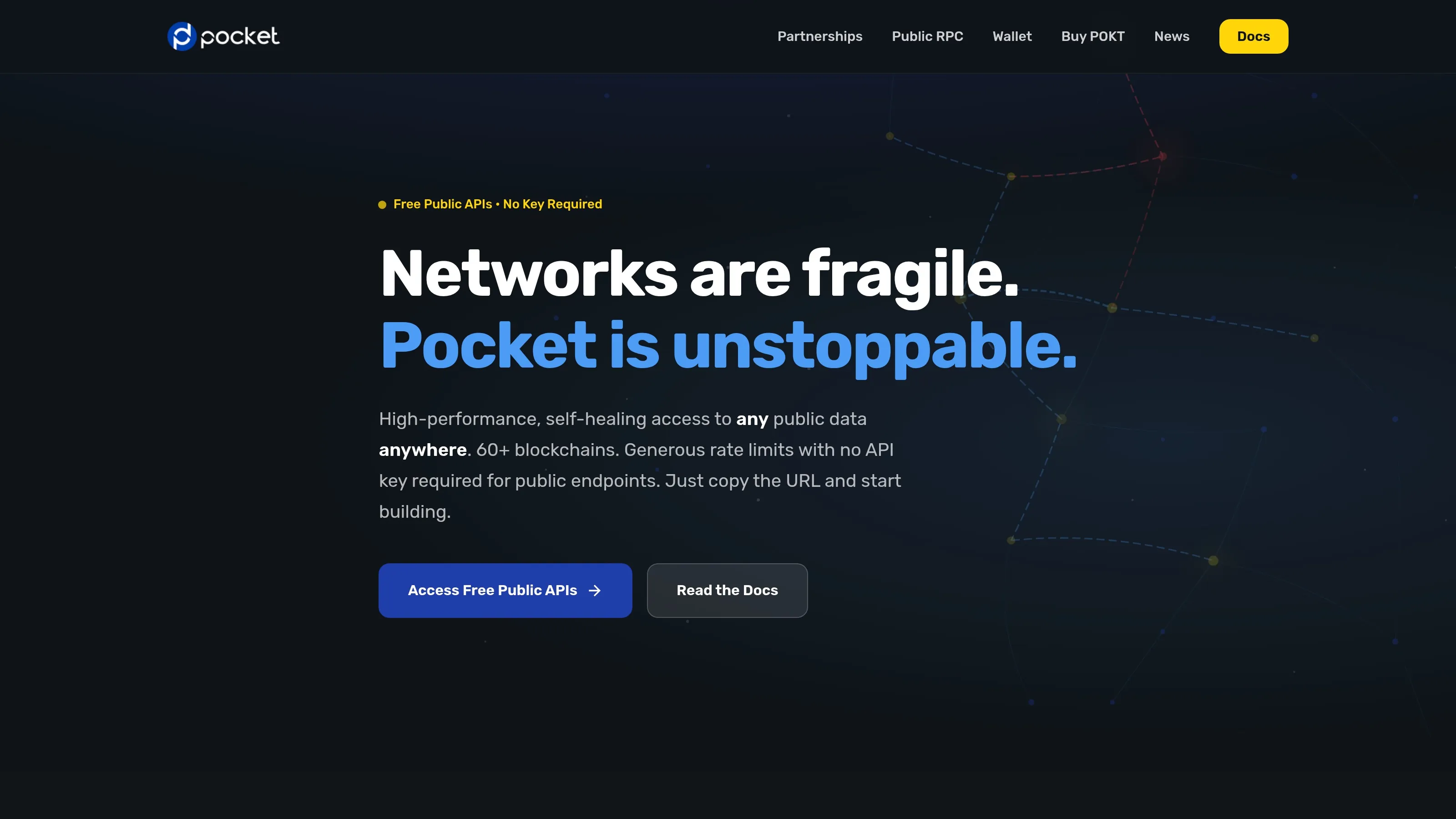
Pocket Network stands out because it frames blockchain data access partly as public infrastructure. Instead of focusing only on premium hosted endpoints, Pocket talks about open access, no-key public APIs, gateways and a decentralized network of participants serving data across many blockchains.
That is what keeps the topic evergreen. People searching Pocket Network are usually trying to understand whether it is a token story, an RPC story or a broader decentralized data-access model. The useful answer is that the infrastructure model is the real point, and the token only makes sense in that context.
What Pocket Network does in plain English
The easiest way to explain Pocket is as a network that wants blockchain data access to feel less dependent on a handful of centralized providers. Public APIs, gateway logic and supplier participation are all part of that model, even if the exact way a team uses Pocket will vary by app, chain and throughput needs.
That matters because many projects begin with public access, community tooling or ecosystem-level needs that do not map neatly onto traditional enterprise pricing. Pocket speaks to that part of the market by treating some access paths as a public good and some heavier uses as a coordination and supply problem.
Why teams look at Pocket Network
Teams and foundations look at Pocket when they care about open access, broad supported-chain coverage and an infrastructure model that does not force every workflow into a standard vendor relationship. That can be attractive for community tooling, public-facing products and ecosystems that want dependable access without over-centralizing the data layer.
How Pocket Network fits into a Web3 stack
Pocket lives in the blockchain access layer, but the more interesting frame is economic and structural. It is about how open access gets funded, served and coordinated in a decentralized way rather than only how one provider sells one endpoint.
How this article avoids internal overlap
We already have provider explainers, RPC endpoint education and branded hosted-infra pages. Repeating that exact structure here would flatten the thing that makes Pocket distinctive.
The better angle is to explain Pocket as a decentralized access model with public-RPC style relevance, not as one more generic “best node provider” article.
Who Pocket Network is for, and where it can feel like overkill
Pocket Network is most useful to understand for builders, foundations and ecosystem operators who care about open blockchain data access, public infrastructure and alternatives to highly centralized provider dependency.
It can feel less immediate for someone who only wants a quick premium endpoint with no interest in the access model underneath. For that buyer, a more traditional hosted provider might still be simpler.
Final take
Pocket Network matters because blockchain access is not only about speed, it is also about who gets to access data and under what structure. Pocket stays relevant when that question matters, especially for open ecosystems and public-facing products.
FAQ
Related Guides
- What Is Lava Network: Decentralized RPC Routing and Provider Markets (2026)
- What Is Filecoin: Decentralized Storage Markets, Incentives and Web3 Data (2026)
- What Is QuickNode: Managed RPC Infrastructure, APIs and Blockchain Access (2026)
- What Is NOWNodes: Shared RPC, Dedicated Nodes and WebSocket Access (2026)
- What Is GetBlock: Multichain RPC Access, Node APIs and Web3 Connectivity (2026)
Frequently Asked Questions
What is Pocket Network?
Pocket Network is a decentralized infrastructure network that aims to provide RPC access to blockchain data through a distributed set of node operators. Instead of relying on a single provider, requests can be served by many independent nodes.
What is an RPC endpoint in crypto?
An RPC endpoint is a URL that applications and wallets use to send requests to a blockchain, such as reading balances or broadcasting transactions. Without a working RPC endpoint, a dApp cannot communicate with the network.
How is decentralized RPC different from centralized RPC?
Centralized RPC routes requests through one provider, which creates a single point of failure and reliance on that company. Decentralized RPC spreads requests across many independent operators to reduce that dependence.
What is a gateway in a decentralized RPC network?
A gateway is a service that routes application requests into the underlying network of node operators and handles tasks like authentication and load balancing. It gives developers a familiar endpoint while the work is served by distributed nodes.