What Is RainbowKit: Wallet Connection UI for EVM Apps (2026)
— By Tony Rabbit in Tutorials
What is RainbowKit? Learn how this wallet connection toolkit helps EVM apps build faster, cleaner and more customizable wallet onboarding flows in 2026.
Intent check: If you want the frontend state layer behind the scenes, start with our wagmi explainer. This page is specifically about RainbowKit as the wallet connection UX layer.
RainbowKit is easiest to understand as the wallet connection experience layer for EVM apps. When teams want a cleaner connect-wallet flow, a better modal, more customization and less time designing wallet onboarding from scratch, RainbowKit is one of the first names that comes up.
That branded search stays evergreen because connect-wallet UX is not a tiny detail. It is one of the first product moments a user sees in a Web3 app. RainbowKit deserves its own page because it solves a different problem from low-level client libraries, auth systems or embedded-wallet infrastructure. It is about the connection experience itself.
What RainbowKit does in plain English
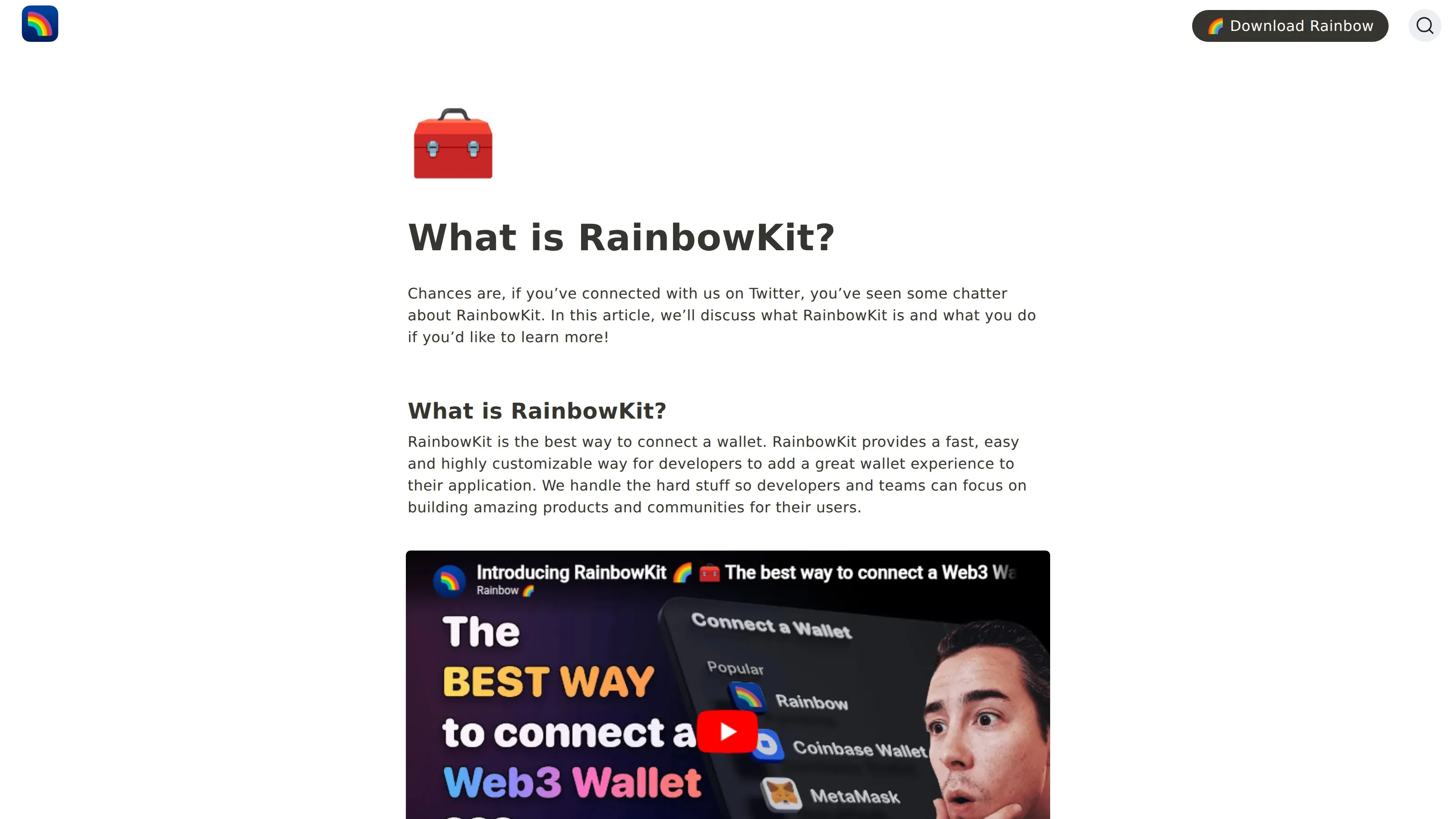
The cleanest mental model is that RainbowKit handles how wallet connection feels to the user. It gives developers structured components and patterns for connect-wallet flows so they do not have to invent the modal, wallet list and interaction patterns from zero.
That matters because even strong Web3 products can feel rough if the first connection step is confusing or ugly. Wallet support alone is not enough. The user experience around discovery, choice and connection quality is part of the product, and RainbowKit exists to improve that layer.
Why teams look at RainbowKit
Teams choose RainbowKit because they want faster wallet onboarding without sacrificing control over the interface. A strong connection UI can improve first-session confidence, reduce friction and make the app feel more complete, which is why RainbowKit is best framed as a product-experience tool, not a mere developer convenience.
How RainbowKit fits into a Web3 stack
RainbowKit sits in the user-facing wallet-connection layer. It is not trying to be the underlying client library, and it is not trying to replace embedded-wallet infrastructure. It is the polished front door for wallet onboarding.
How this article avoids internal overlap
We already cover WalletConnect, wagmi and broader wallet infrastructure topics. If this article tried to explain all of them at once, it would muddy the cluster and create overlap.
So the better angle is to keep RainbowKit specific to wallet onboarding UI, user-facing connection quality and where it sits relative to deeper app-state or auth layers.
Who RainbowKit is for, and where it can feel like overkill
RainbowKit is most useful for EVM app teams that care about polished onboarding, developer speed and a connection experience that feels product-grade instead of improvised.
It is less relevant if the app has no wallet connection at all, uses a very different onboarding model or only needs a lower-level interaction library without a polished modal layer.
Final take
RainbowKit matters because connect-wallet UX is a product surface, not just an implementation detail. Teams that treat it seriously usually get a better first user experience, and RainbowKit stays relevant because it helps them do that faster.
FAQ
Related Guides
- What Is wagmi: React Hooks, Wallet Connectors and EVM State (2026)
- Rabby Wallet Pre-Sign Simulator: Safer EVM Signing Explained (2026)
- How to Use Rabby Wallet: Complete Multi-Chain EVM Wallet Tutorial (2026)
- What Is an RPC Endpoint? How Wallets Reach Blockchains
- Sui Network Architecture: Object-Centric Design, Parallel Execution and DeFi Apps (2026)
Frequently Asked Questions
What is RainbowKit?
RainbowKit is a toolkit for adding wallet connection interfaces to EVM-based decentralized applications. It provides ready-made, customizable UI components for onboarding users with their wallets.
What does RainbowKit do for developers?
It simplifies building the connect-wallet flow so developers do not have to design wallet selection and connection screens from scratch. This speeds up onboarding and provides a consistent user experience.
Does RainbowKit support multiple wallets?
Wallet connection toolkits commonly support many popular wallets through a single unified interface. This lets users choose their preferred wallet when connecting to an app.
Is RainbowKit only for Ethereum apps?
RainbowKit is designed for EVM-compatible applications, which includes Ethereum and other EVM chains. It focuses on the wallet connection layer rather than the app's underlying logic.