What Is wagmi: React Hooks, Wallet Connectors and EVM State (2026)
— By Tony Rabbit in Tutorials
What is wagmi? Learn how this React-focused Web3 library handles wallet connectors, contract hooks and frontend state for EVM apps in 2026.
Intent check: If you want a wallet UI article, go to our RainbowKit explainer. This page is specifically about wagmi as the frontend state and hooks layer for EVM apps.
wagmi is best understood as the frontend interaction layer for EVM apps built with React. It gives developers structured hooks and wallet connectors for common Web3 jobs like reading chain data, managing account state, preparing writes and reacting to wallet changes without rebuilding the same plumbing by hand every time.
That search intent is evergreen because frontend teams keep running into the same question: which layer should handle wallet connections, transaction state and contract reads inside the app? wagmi earns its own page because it answers that question differently from a wallet UI kit, a low-level TypeScript client or a broad all-in-one platform.
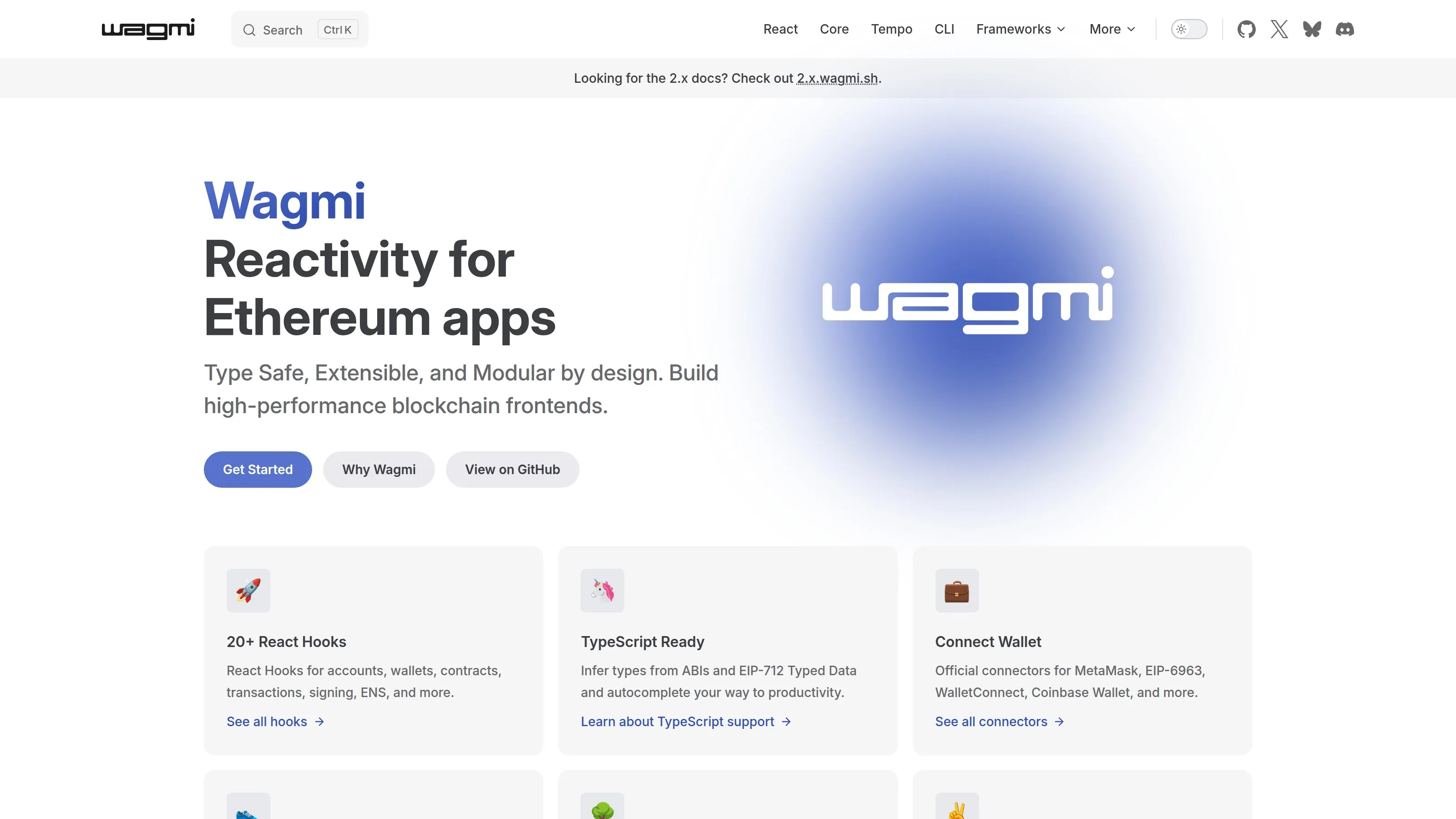
What wagmi does in plain English
The useful way to think about wagmi is as a state and interaction toolkit for Web3 frontends. It does not try to be a hosted infrastructure company or an embedded-wallet vendor. Its job is to make common app-level blockchain actions easier to express inside React apps.
That matters because wallet connection, chain switching, contract reads, writes and transaction feedback are where many EVM frontends get repetitive and fragile. wagmi reduces that friction by turning those jobs into composable hooks and connectors that fit the way React teams already work.
Why teams look at wagmi
Developers look at wagmi because it sits in a very practical spot. It is close enough to the UI that it improves product work, but close enough to onchain interactions that it reduces real engineering overhead. That balance is why wagmi is not just a library name, it is often a deliberate architecture choice for how a Web3 frontend should behave.
How wagmi fits into a Web3 stack
wagmi sits above low-level EVM clients and below final interface design. It is stronger as the app-facing interaction layer than as a raw protocol library or a polished wallet modal by itself.
How this article avoids internal overlap
We now have pages for RainbowKit, thirdweb, WalletConnect and other adjacent tools. If this article blurred into those, it would cannibalize our own cluster and weaken the intent match.
So the cleaner angle is to define wagmi narrowly as the React hooks and connectors layer, not the wallet UI layer, not the embedded-wallet layer and not a generic hosted infrastructure vendor.
Who wagmi is for, and where it can feel like overkill
wagmi is most useful for React teams building EVM apps that need reusable connection logic, predictable onchain state handling and modular hooks across the interface.
It can feel like overkill for a minimal script, a non-React stack or a project that wants to stay closer to lower-level client libraries without another abstraction layer in the middle.
Final take
wagmi matters because Web3 frontend quality often lives in the glue between wallets, state and contract interactions. A library that makes that glue cleaner stays relevant as long as React remains a major way to build EVM apps.
FAQ
Related Guides
- What Is RainbowKit: Wallet Connection UI for EVM Apps (2026)
- Rabby Wallet Pre-Sign Simulator: Safer EVM Signing Explained (2026)
- How to Use Rabby Wallet: Complete Multi-Chain EVM Wallet Tutorial (2026)
- What Is Uniswap V4 (Hooks): Complete Customizable AMM Guide (2026)
- What Is a State Channel? Off-Chain Transactions Explained
Frequently Asked Questions
What is wagmi used for in Web3 development?
wagmi is a React library that provides hooks and utilities for building Ethereum and EVM-compatible frontends. It helps developers connect wallets, read and write to smart contracts, and manage onchain state inside React applications.
Is wagmi only for Ethereum or does it support other EVM chains?
wagmi is designed for EVM-compatible networks in general, not just Ethereum mainnet. Because these chains share the same account and contract model, the same hooks can typically be used across multiple EVM chains.
What is the difference between wagmi and viem?
viem is a lower-level TypeScript library for interacting with EVM chains, while wagmi builds React hooks and connectors on top of it. In many setups wagmi uses viem under the hood to handle the actual blockchain communication.
Do I need wagmi to connect a wallet to a dApp?
No, you can connect wallets using lower-level libraries or wallet SDKs directly. wagmi is a convenience layer that standardizes wallet connectors and reactive state, which can reduce boilerplate in React projects.