What Is Tenderly: Smart Contract Simulation, Debugging and Web3 Monitoring (2026)
— By Tony Rabbit in Tutorials
What is Tenderly? Learn how this Web3 infrastructure platform helps teams simulate transactions, debug contracts and monitor EVM apps in 2026.
Intent check: If you mainly need broad RPC or indexed blockchain data, start with our Helius explainer, our Infura explainer or our Moralis explainer. This page is specifically about simulation, debugging, monitoring and shared EVM development environments.
Tenderly is best understood as the tooling layer teams reach for when generic node access stops being enough. It is built around seeing what a transaction will do, understanding why a contract call failed and monitoring live application behavior after code reaches production.
That branded search stays evergreen because smart contract teams always hit the same wall. A block explorer can show what already happened, but production apps need better answers before and after execution. Developers want to preview outcomes, decode reverts, inspect state changes and share realistic test environments with the rest of the team.
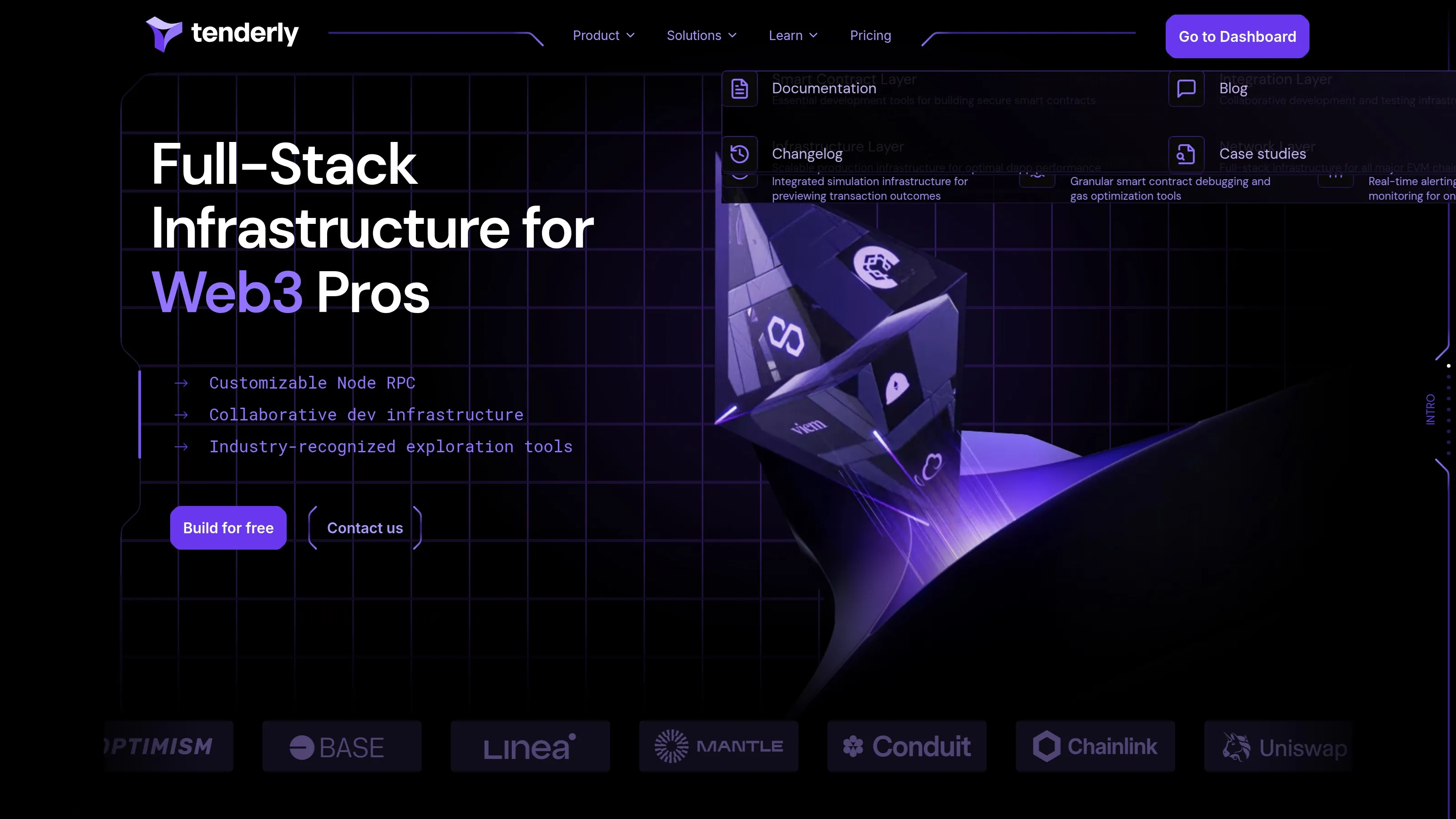
What Tenderly does in plain English
The cleanest mental model is that Tenderly helps developers look inside execution instead of treating the EVM as a black box. It gives teams a way to simulate transactions, inspect traces, read human-friendly errors and work against realistic test environments without guessing.
That matters because onchain mistakes are expensive. Failed transactions cost money, production regressions break user trust and complicated call stacks are hard to diagnose from ordinary explorer pages alone. Tenderly became important by turning that execution layer into something teams can inspect and reason about more directly.
Why teams look at Tenderly
Teams look at Tenderly because modern dapps are not just about sending transactions. They need pre-trade previews, alerting, state inspection and a faster path from bug report to root cause. Tenderly earns its own category because those needs are deeper than simple RPC uptime or wallet history indexing.
What makes Tenderly different from adjacent tools
Compared with Helius, Infura or Moralis, Tenderly is not primarily the answer when the user intent is broad API coverage or basic backend data access. Its real value begins when the question becomes execution quality: what will happen, why did it fail and how do we reproduce it safely.
It also differs from a normal block explorer. An explorer is strongest for reading what already landed onchain. Tenderly becomes more useful when a team needs simulations, deep traces, debugging context and production observability built around smart contract behavior itself.
Who it is for, and where it can feel like overkill
Tenderly is most useful for protocol teams, wallets, DeFi products, auditors and developers who need better visibility into execution, testing and production behavior.
It can feel like overkill for a casual user who only sends occasional transfers and never touches contract development, staging environments or application monitoring.
Final take
Tenderly matters because it shortens the distance between a failed transaction and an actionable explanation. In a stack where execution mistakes are costly, simulation and observability deserve their own lane.
FAQ
Related Guides
- What Is Tenderly: Smart Contract Monitoring, Simulation and Debugging (2026)
- What Is Tenderly: Web3 Simulation, Debugging and Full-Stack Infrastructure (2026)
- What Is OpenZeppelin: Smart Contract Libraries, Security and Access Control (2026)
- What Is Foundry: Smart Contract Testing, Fuzzing and Solidity Tooling (2026)
- What Is Argent Wallet? Smart Contract Wallet with Social Recovery (2026 Guide)
- What Is a Reentrancy Attack? Smart Contract Risk (2026)
Frequently Asked Questions
What is Tenderly used for?
Tenderly is a Web3 infrastructure platform that helps developers simulate, debug and monitor smart contracts on EVM-compatible networks. It is used to understand how transactions behave before and after they run onchain.
What is transaction simulation in Tenderly?
Transaction simulation lets developers run a transaction in a test environment to preview its outcome without broadcasting it to the network. This helps catch errors and understand effects before spending real gas.
How does Tenderly help with debugging smart contracts?
Debugging tools can show the step-by-step execution of a transaction, including state changes and where a failure occurred. This makes it easier to find and fix issues in contract logic.
What does smart contract monitoring involve?
Monitoring tracks onchain activity and can send alerts when specific events or conditions occur for a contract. This helps teams respond quickly to important or unexpected behavior.