What Is Argent Wallet? Smart Contract Wallet with Social Recovery (2026 Guide)
— By Tony Rabbit in Tutorials
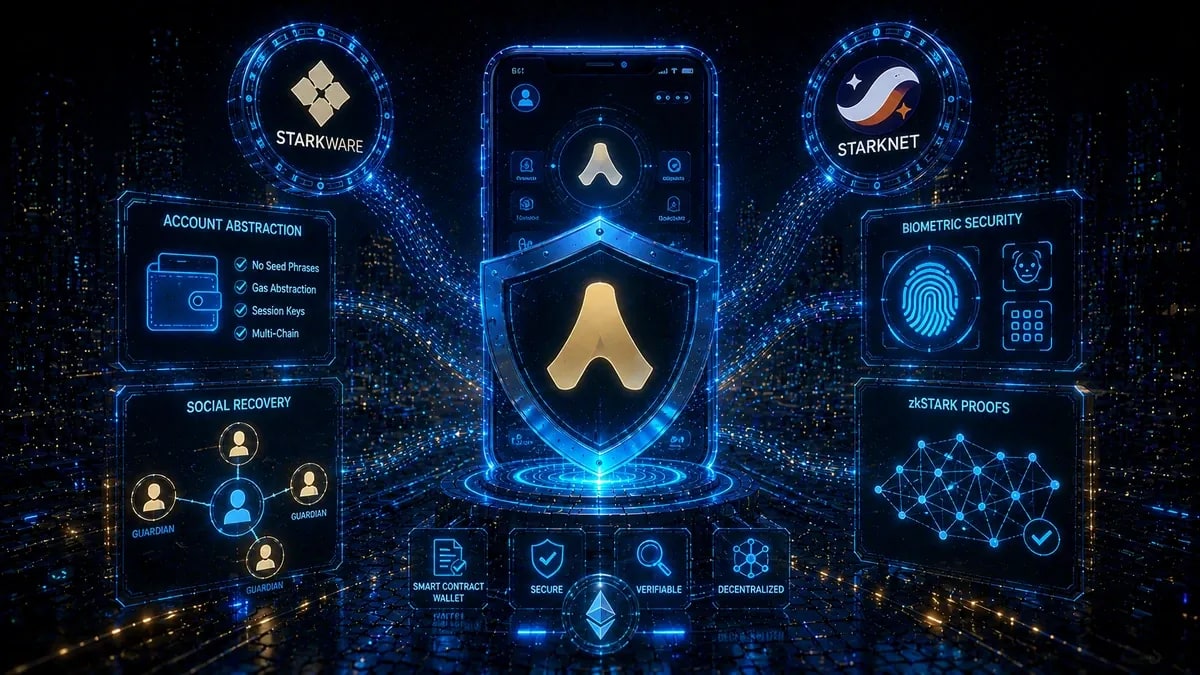
Complete 2026 guide to Argent Wallet, the smart contract wallet that replaces seed phrases with social recovery via guardians. Argent X for StarkNet, Argent Mobile for Ethereum, account abstraction, biometric login, DeFi integrations, plus a full comparison vs MetaMask, Rabby and Coinbase Wallet.
What Is Argent Wallet? The Smart Contract Wallet with Social Recovery Explained in 2026
For nearly a decade, the crypto industry has accepted a brutal truth as if it were a law of nature: lose your twelve word seed phrase, lose your money forever. That is the experience Ethereum inherited from Bitcoin, and it is the biggest reason mainstream users still refuse to self custody. Argent Wallet was built specifically to break that assumption.
Argent is a smart contract wallet, not an externally owned account, and that one technical decision changes almost everything about how you interact with your funds. Instead of a seed phrase, you have guardians. Instead of a single private key that controls everything irreversibly, you have programmable rules: daily transaction limits, trusted address lists, social recovery, and biometric authentication. The wallet also pioneered native account abstraction years before ERC 4337 formalized the concept, and today it powers two of the most polished consumer experiences in crypto: Argent Mobile for Ethereum and Layer 2 networks, and Argent X, the leading wallet on StarkNet.
This 2026 guide unpacks Argent in full: how smart contract wallets differ from MetaMask style EOAs, how social recovery replaces the seed phrase, what daily limits and trusted contacts protect you from, how Argent integrates with DeFi protocols like Aave, Compound and Lido, and how it stacks up against MetaMask, Rabby, Phantom and Coinbase Wallet.
Featured snippet: Argent is a non custodial smart contract wallet for Ethereum, StarkNet and other Layer 2 networks that replaces seed phrases with social recovery. Instead of memorizing twelve words, users designate trusted guardians (other Argent wallets, hardware wallets or Ethereum addresses) who can collectively help recover access to the account. Argent also enforces optional daily transaction limits, trusted contacts, biometric authentication and native account abstraction features, making it one of the safest and most user friendly wallets in 2026.
What Is Argent Wallet Exactly?
Argent is a self custody crypto wallet developed by the London based company Argent Labs. The wallet exists as two distinct but complementary products. Argent Mobile is an iOS and Android application focused on Ethereum mainnet plus the major optimistic and zero knowledge rollups: Arbitrum, Optimism, Base, zkSync and Linea. Argent X is a browser extension dedicated entirely to StarkNet, the zero knowledge rollup built by StarkWare using the Cairo programming language.
Both products share the same philosophical foundation: every Argent wallet is a smart contract deployed on chain. There is no seed phrase to back up because the account is not controlled by a single private key. Instead, the contract enforces a set of programmable rules that the user configures, and access is granted through a combination of biometric authentication on the device and, when needed, signatures from designated guardian accounts. This architecture is what the broader Ethereum community now calls account abstraction, and Argent was building it years before the term entered the mainstream vocabulary.
The practical implication is straightforward. With a traditional wallet like MetaMask, your security is binary: either you control the seed phrase and you have full access, or someone else gets the seed phrase and you lose everything. With Argent, security becomes a spectrum that you tune. You can set a daily spending limit so even a compromised device cannot drain your savings. You can lock high value transfers behind a multi signature workflow that requires confirmation from your guardians. You can freeze the wallet entirely if you suspect compromise. None of that is possible with an EOA.
Smart Contract Wallet vs EOA: Why It Matters
To understand why Argent feels so different, you need to understand the two account types that exist on Ethereum. An externally owned account, or EOA, is the original Ethereum account type. It is controlled by a private key, which is typically derived from a seed phrase using the BIP 39 standard. The account itself is not code. It is just an address with a balance, and the private key is the sole authority over it. MetaMask, Rabby, Trust Wallet, Phantom in its EVM mode, Coinbase Wallet and almost every browser extension wallet you have ever used is an EOA wallet.
A smart contract wallet, by contrast, is an actual contract deployed on chain. The contract holds the funds and contains the logic that decides which transactions are valid. There is no single private key that automatically authorizes everything. Instead, the contract defines what counts as a valid signature, how many signatures are required for different actions, and what additional rules apply such as time delays or spending limits. This is the model Argent uses, and it is also the model behind Safe (formerly Gnosis Safe), Ambire and most account abstraction wallets built on ERC 4337.
The differences cascade through the entire user experience. With an EOA, signing a transaction is irreversible. If a phishing site tricks you into signing a malicious approval, the tokens are gone. With Argent, the smart contract can refuse transfers above your daily limit, require additional signatures for transfers to new addresses, and block interactions with untrusted contracts. The signature is no longer the final word, just one input the contract evaluates against your rules.
The cost is gas. Smart contract wallets are slightly more expensive than EOAs on Ethereum mainnet. On Layer 2 networks like Arbitrum, Base or StarkNet the difference is negligible, which is why Argent has invested heavily in making Layer 2 the default experience.
Who Founded Argent? The Team Behind the Wallet
Argent was founded in 2017 in London by Itamar Lesuisse and Gerald Goldstein. Lesuisse, the chief executive, came from a product background at Google and was previously a co founder of Peak, the brain training app acquired by Mindvalley. Goldstein, the chief technology officer, had spent years working on consumer mobile applications and brought the engineering culture that distinguishes Argent from wallets built primarily by cryptography researchers. The pair started Argent with a thesis that has aged remarkably well: if crypto self custody is ever going to reach a billion users, the seed phrase has to die.
That thesis attracted top tier capital. Argent has raised over forty million dollars across multiple rounds from investors including Index Ventures, Paradigm, Animoca Brands, Creandum, firstminute capital and a number of strategic angels from the broader Ethereum ecosystem. Paradigm in particular signaled the technical credibility of the approach, since the firm rarely backs consumer wallets and tends to focus on protocol level infrastructure. Animoca brought distribution into the gaming and Web3 entertainment world. Index Ventures, known for backing Slack, Figma and Revolut, brought consumer product expertise that shows up everywhere in Argent's interface design.
The team has remained small and product focused, with engineering offices in London and Paris. When StarkWare launched StarkNet, Argent was the first major wallet to ship a dedicated client, and the partnership between the two teams remains one of the closest in the L2 ecosystem.
Argent Timeline: From 2017 Vision to 2026 Reality
2017: Itamar Lesuisse and Gerald Goldstein found Argent in London with the explicit goal of eliminating the seed phrase from self custody.
2018: Seed funding round closes with Index Ventures and Creandum. Initial prototype demonstrates social recovery using Ethereum based guardians.
2019: Argent Mobile launches publicly on iOS and Android. The wallet is the first major consumer product to ship a smart contract account by default. Daily transaction limits and trusted contacts ship in the initial version.
2020: Argent integrates Aave, Compound, Maker and Uniswap directly inside the mobile app, turning the wallet into a one tap DeFi front end. Series A round led by Paradigm closes.
2021: Layer 2 support arrives. zkSync 1.0 is the first integration, followed by Argent's partnership with StarkWare on the upcoming StarkNet.
2022: Argent X launches as a dedicated browser extension for StarkNet, becoming the default wallet for early StarkNet users and developers.
2023: ERC 4337 ships on Ethereum mainnet. Argent is one of the reference implementations and its prior work directly influenced the standard. The wallet expands support to Arbitrum, Optimism and Base.
2024: Argent surpasses one million active wallets across mobile and extension. StarkNet airdrop drives a major spike in Argent X adoption.
2025: Argent ships native account abstraction across all supported chains, including session keys for gaming applications and gasless transactions via paymasters.
2026: Argent has become one of the top three non custodial wallets by active user count, with deep integrations across the major Layer 2 ecosystems and a growing footprint in Web3 gaming through Animoca portfolio partnerships.

Inside the Argent Architecture
The Argent wallet is built around a modular smart contract architecture. When you create a new account, Argent deploys a proxy contract on chain that points to a set of implementation modules. Each module is responsible for a specific behavior: signature validation, guardian management, recovery logic, daily limit enforcement, session key handling and so on. This modular design lets Argent ship upgrades and new features without forcing every user to migrate to a new contract address.
The wallet's owner is the private key generated and stored securely on your device, typically inside the secure enclave on iOS or the equivalent hardware backed keystore on Android. This key signs everyday transactions, and the device requires biometric authentication, Face ID, Touch ID or fingerprint, before that key will sign anything. The key never leaves the device and is never written to disk in plain form. If the device is lost, the key is lost too, but that does not mean the wallet is lost, because the smart contract account still exists on chain and can be recovered through the guardian system.
Guardians are separate accounts you designate when you set up the wallet. They can be other Argent wallets owned by friends or family, hardware wallets like Ledger, or even any Ethereum address you control. Guardians cannot move your funds. They cannot see your balances or transactions. Their only power is collective: a majority of guardians can together authorize a recovery, which transfers control of the smart contract account from the lost device key to a new key on a new device. This is the mechanism that replaces the seed phrase.
Layered on top of this are the optional security rules. The daily transaction limit caps how much value you can transfer to non trusted addresses in a twenty four hour window. The trusted contacts feature lets you whitelist specific addresses so transfers to them happen instantly regardless of the daily limit. Trusted contracts work similarly for DeFi interactions. All of these rules live in the smart contract and are enforced on chain, which means even an attacker who fully controls your device cannot bypass them without going through the recovery process.
Social Recovery: The Feature That Defines Argent
Social recovery is the feature that the entire Argent product is built around, and it is the single biggest reason users choose the wallet over a traditional seed phrase based alternative. The concept is simple but the implementation took years to refine. When you set up Argent, you pick a small number of guardians. Argent recommends at least three guardians for meaningful security. The guardians do not need to know each other and do not need to coordinate during normal operation. They only become active in two situations: when you initiate a recovery, or when you want to override a security setting like raising your daily limit.
If you lose your phone, drop it in a lake or just buy a new device, you download Argent on the new phone and start the recovery flow. You enter your wallet address or email, the new device generates a fresh private key, and Argent sends a recovery request to each of your guardians. A majority of guardians have to approve the request from their own Argent wallets or signing devices. Once enough approvals arrive, a thirty six hour security window begins, during which the original device, if you still control it, can cancel the recovery. After the window closes, control transfers to the new device and you are back in your wallet.
The thirty six hour delay is critical. It is the mechanism that defends against a malicious guardian colluding with an attacker. Even if someone bribes or compromises enough of your guardians to initiate a fraudulent recovery, you have a day and a half to notice and cancel it from your existing device. Argent sends notifications through multiple channels during this window so you do not miss the alert. The system trades some convenience for a meaningful security guarantee, and most users find the tradeoff worthwhile.
The Three Step Social Recovery Flow
Step 1: Request
User installs Argent on a new device, enters their wallet identifier and triggers a recovery request. The new device generates a fresh private key locally. Argent broadcasts the request to all designated guardians via the app and email.
Step 2: Approve
A majority of guardians review the request inside their own Argent wallets and approve it with their biometric. Each approval is recorded on chain. Once the threshold is reached, the smart contract enters a thirty six hour security delay.
Step 3: Execute
After the security window expires without cancellation, the smart contract rotates ownership to the new device key. The user regains full access. Funds never moved during the process and the wallet address stays the same.
One important nuance: guardians do not see your transactions, balances or trading history. The only information shared with them is the recovery request itself. This privacy property is what makes the system practical to use with family members or friends.
Argent X: The StarkNet Native Wallet
Argent X is the browser extension that brought StarkNet to the masses. Where Argent Mobile focuses on Ethereum mainnet and EVM compatible L2s, Argent X is built exclusively for StarkNet, the zero knowledge rollup developed by StarkWare. StarkNet uses Cairo, a programming language designed specifically for zero knowledge proofs, and accounts on StarkNet are smart contract accounts by default, with no concept of an EOA. This makes StarkNet a natural fit for Argent's philosophy.
Because every StarkNet account is a smart contract, features like account abstraction, fee payment in arbitrary tokens, multi call transactions and custom signature schemes are native rather than bolted on. Argent X exploits all of this. A single transaction can include multiple operations executed atomically, fees can be paid in tokens other than the native one, and signing logic can be customized per account.
For end users, Argent X feels like a faster, cleaner version of MetaMask. The extension uses the same guardian based social recovery model as Argent Mobile, the same daily limit and trusted contact concepts, and the same biometric or password unlock pattern. Bridging from Ethereum is integrated directly into the extension. As StarkNet has matured, Argent X has remained the most widely used wallet on the chain.

Account Abstraction Done Right
Account abstraction lets smart contracts function as first class accounts, with custom signature validation, fee payment and execution logic. Ethereum spent years debating proposals before settling on ERC 4337, activated on mainnet in 2023. Argent's relevance to this story is hard to overstate. Years before ERC 4337 was drafted, Argent was already shipping a working account abstraction implementation on Ethereum mainnet using its own contract architecture and a meta transaction relayer service.
The benefits are concrete. Gasless transactions, where a sponsor pays the gas in exchange for a fee in a stablecoin, become trivial. Session keys, which authorize a limited subset of actions for a limited time, make on chain gaming playable. Multi call transactions bundle approvals and the actual operation into a single signature, eliminating one of the biggest sources of user error in DeFi: unlimited approvals.
Argent ships all of these capabilities. On StarkNet they are native. On EVM chains they use a combination of the wallet's own contract design and ERC 4337 infrastructure. The user simply experiences a wallet that does things their old MetaMask could not, like signing a single transaction that swaps, approves and deposits into Aave in one step.
DeFi Integrations: Aave, Compound, Lido and Beyond
One of Argent Mobile's most distinctive features is its built in DeFi catalog. Rather than treating DeFi protocols as external dApps that users connect to through WalletConnect, Argent integrates a curated set of protocols directly into the app. You can deposit into Aave, lend to Compound, stake ETH with Lido, swap tokens through Uniswap or Paraswap, and provide liquidity to a number of pools, all without leaving the wallet. This is part of Argent's broader vision of the wallet as a financial app rather than a passive key manager.
The integration is not just a UI veneer. Argent uses meta transactions and batching to make these interactions cheaper and safer. A deposit into Aave that would normally require an approval transaction followed by a deposit becomes a single multi call signed once. Approvals are scoped to the exact amount being deposited rather than unlimited, eliminating the most common attack vector in DeFi. And because all of this happens inside the smart contract account, daily limit and trusted contract rules still apply.
For users who want to explore beyond the curated catalog, Argent supports WalletConnect like any other wallet, but the smart contract safety net remains in place regardless of which dApp initiated the transaction.
Daily Limits and Trusted Contacts: The Safety Net
The daily transaction limit is one of Argent's most underrated features. When you set up the wallet, you configure a ceiling on how much value you can move per day to addresses not on your trusted list. Transfers within the limit happen instantly with biometric authentication. Transfers exceeding it require additional guardian confirmation with a built in delay.
This design defends against an entire category of attacks. If your phone is stolen and the attacker bypasses the biometric lock, they cannot drain your wallet in a single transaction. The same applies if a malicious dApp tricks you into signing a draining transaction: the smart contract refuses to execute the part exceeding your limit.
Trusted contacts give you flexibility when you need it. You can whitelist your hardware wallet, your exchange deposit address, or a specific DeFi protocol. Adding a new trusted address requires guardian confirmation, preventing attackers from adding their own address.
How Argent Compares: MetaMask, Rabby, Phantom and Coinbase Wallet
Choosing a wallet is one of the most consequential decisions in crypto, and the right answer depends heavily on your use case. Argent occupies a specific niche, smart contract security with consumer friendly UX, while competitors optimize for different priorities. The comparison below focuses on the four wallets most often mentioned alongside Argent: MetaMask, Rabby, Phantom and Coinbase Wallet.
Argent vs MetaMask: MetaMask is the default Ethereum wallet for tens of millions of users and supports virtually every EVM chain through custom RPCs. It is an EOA wallet, so it relies on seed phrase backup with all the risk that implies. MetaMask has no native social recovery, no daily limits, and no built in DeFi catalog. It does have unmatched ecosystem support, a strong developer community and a hardware wallet integration story that is more mature than Argent's. If you need cross chain breadth and you are comfortable managing a seed phrase, MetaMask wins. If you prioritize security and want to eliminate seed phrase risk, Argent wins.
Argent vs Rabby: Rabby was built by the DeBank team and is widely regarded as the best EOA wallet for DeFi power users. It excels at transaction simulation, showing you exactly what will happen before you sign, and its multi chain experience is unusually smooth. Rabby is still an EOA wallet, so the seed phrase model applies, but its security tooling around transaction inspection is best in class. Argent's smart contract guardrails operate at a different layer: rather than helping you understand what you are about to sign, they enforce rules on chain that prevent dangerous actions from executing at all. The two approaches are complementary, and many users run both.
Argent vs Phantom: Phantom started as a Solana wallet and has expanded to support Ethereum and Polygon as EOA accounts. It is widely loved for its clean interface and fast execution, particularly on Solana where account abstraction is not a relevant concept. For users primarily active on Solana, Phantom is the obvious choice. Argent does not support Solana at all. For Ethereum and L2 users, Argent's smart contract architecture is structurally more secure than Phantom's EOA implementation.
Argent vs Coinbase Wallet: Coinbase Wallet is the self custody product from Coinbase, distinct from the centralized exchange. It is an EOA wallet by default, with optional smart contract account features being added through Coinbase's Base ecosystem. It benefits from tight integration with the Coinbase exchange and from Coinbase's brand recognition. Argent has no exchange integration of comparable depth, but offers a more thoroughly developed smart contract account experience and broader L2 coverage outside of Base.

Risks and Limitations to Understand
No wallet is perfect, and being honest about Argent's limitations is important. The first and most significant risk is smart contract risk. Because Argent funds live inside a smart contract rather than at an EOA address, a serious bug in the contract could in theory put funds at risk. Argent's contracts have been audited by multiple top tier security firms and have been live with significant value for years without incident, but the category of risk does not exist with EOA wallets and you should understand it before committing meaningful sums.
The second risk relates to guardians. Social recovery only works if you pick guardians who will be available when you need them, who will not lose their own devices, and who will not collude against you. Guardians are not custodians, they cannot move your money, but a sufficient majority of compromised guardians could potentially execute a malicious recovery. The thirty six hour delay defends against this, but it requires you to be paying attention to notifications during that window. If you stop using Argent for a year and your guardians have all moved on, recovery may be more difficult than you expect.
The third risk is platform dependence. Argent Mobile is an app, and the app is updated regularly. The smart contracts themselves live on chain and can never be taken away, but the app that interacts with them is centralized infrastructure controlled by Argent Labs. If the company shut down tomorrow, your funds would not disappear, the contracts on chain would continue to exist and could in principle be interacted with directly, but most users would find that workflow inaccessible. Argent has open sourced significant portions of its codebase to mitigate this, but the operational dependency is real.
Finally, Argent is not currently available in every jurisdiction. The wallet itself is non custodial and the company does not hold user funds, but regulatory uncertainty around features like the integrated DeFi catalog has led Argent to geo restrict certain functions in some regions. Check the current availability of features in your jurisdiction before relying on Argent for active DeFi use. Also be aware of general onchain risks like address poisoning, which Argent's trusted contacts feature helps to mitigate but does not eliminate, covered in our guide to avoiding address poisoning scams.
Pros and Cons of Argent in 2026
Pros
- No seed phrase to lose, steal or write down
- Social recovery with guardians replaces single point of failure
- Daily transaction limits cap loss from compromised devices
- Trusted contacts whitelist prevents address poisoning
- Native account abstraction across Ethereum and L2s
- Best in class StarkNet support through Argent X
- Integrated DeFi catalog with Aave, Compound, Lido, Uniswap
- Biometric authentication on iOS and Android
- Multi call transactions reduce gas and user error
- Funded by Index Ventures, Paradigm and Animoca
Cons
- Smart contract risk: not zero, even with audits
- Higher gas costs on Ethereum mainnet vs EOA wallets
- No native Solana, Bitcoin or Cosmos support
- Guardian setup requires upfront thought and coordination
- Recovery delay of thirty six hours can be inconvenient
- Mobile first design means desktop power users may prefer extensions
- Some features geo restricted in certain jurisdictions
- Hardware wallet integration less mature than MetaMask
- Centralized app distribution depends on Apple and Google
- Steeper learning curve than a basic EOA wallet
Best Practices for Using Argent Safely
The security benefits of Argent only fully materialize if you configure the wallet thoughtfully. Pick your guardians carefully. Argent recommends at least three. They should be people you trust who are likely to be reachable long term. Mix at least one hardware wallet you control with several human guardians so you have a fallback if your social network changes.
Set your daily transaction limit at a level that reflects your actual usage rather than the maximum you might ever need. The limit is there to contain damage. You can always raise it through guardian override when you need a large transfer.
Use the trusted contacts feature. Add your hardware wallet, verified exchange deposit addresses, and DeFi contracts you use frequently. This eliminates friction for routine operations while keeping the daily limit in place for everything else.
Keep your device updated. Argent's security depends on the integrity of the secure enclave. Enable a strong passcode, use biometric authentication, and avoid jailbreaking. None of Argent's protections matter if the device is compromised at the OS level.
Be skeptical of recovery notifications. If you receive a recovery request you did not initiate, cancel it immediately from your existing device. The thirty six hour delay exists precisely so you have time to detect malicious recoveries. For broader guidance, see our guide on how to spot rug pulls and crypto scams.
Finally, read transaction simulations. Argent Mobile and Argent X both show you what a transaction will do before you sign. The smart contract account catches many dangerous actions, but the strongest defense is a user who notices warning signs before signing.
Frequently Asked Questions
1. What is Argent?
Argent is a non custodial smart contract wallet for Ethereum, StarkNet and major Layer 2 networks. It replaces the seed phrase with social recovery via guardians, enforces optional daily transaction limits, supports biometric authentication and ships native account abstraction. Argent exists as a mobile app for iOS and Android and as the Argent X browser extension dedicated to StarkNet.
2. What is a smart contract wallet?
A smart contract wallet is a wallet where the account itself is a smart contract deployed on chain, rather than an externally owned account controlled by a single private key. The contract holds the funds and contains programmable logic that decides which transactions are valid. This lets the wallet enforce rules like daily limits, multi signature requirements and recovery procedures that are impossible with traditional EOA wallets like MetaMask.
3. How does social recovery work?
When you set up Argent, you designate a small number of guardians, typically three or more, who can collectively help you recover your wallet if you lose access to your device. To recover, you install Argent on a new device, request a recovery, and wait for a majority of your guardians to approve. After their approvals, a thirty six hour security delay begins, during which your original device can cancel the recovery if you still control it. Once the delay passes, control transfers to the new device and you regain access to your funds without ever touching a seed phrase.
4. Do I need a seed phrase with Argent?
No. Argent does not use seed phrases at all. The wallet is controlled by a key generated on your device and stored in the secure enclave, plus the social recovery mechanism through your guardians. There is no twelve or twenty four word phrase to write down, lose, or have stolen. This is the core design choice that distinguishes Argent from almost every other major wallet.
5. What is the difference between Argent X and Argent Mobile?
Argent Mobile is the iOS and Android app focused on Ethereum mainnet and EVM compatible Layer 2 networks including Arbitrum, Optimism, Base, zkSync and Linea. Argent X is a browser extension dedicated entirely to StarkNet, the zero knowledge rollup that uses the Cairo programming language. The two products share the same security philosophy but operate on different chain ecosystems and ship as separate applications.
6. Who founded Argent?
Argent was founded in 2017 in London by Itamar Lesuisse and Gerald Goldstein. Lesuisse, the chief executive, previously worked at Google and co founded the brain training app Peak. Goldstein, the chief technology officer, came from a consumer mobile background. The company has raised over forty million dollars from investors including Index Ventures, Paradigm and Animoca Brands.
7. What Layer 2 networks does Argent support?
Argent Mobile supports Ethereum mainnet along with Arbitrum, Optimism, Base, zkSync and Linea as of 2026. Argent X focuses exclusively on StarkNet. The wallet's roadmap continues to expand L2 coverage as new rollups achieve meaningful adoption, with a clear preference for chains where the smart contract account experience is fast and cheap.
8. How is Argent different from MetaMask?
The fundamental difference is account type. MetaMask is an EOA wallet controlled by a seed phrase, while Argent is a smart contract wallet controlled by a combination of a device key, guardians and on chain rules. Argent has no seed phrase, supports social recovery, enforces daily limits, and ships native account abstraction. MetaMask has broader chain support, more mature hardware wallet integration, and a larger ecosystem of dApp connections. Many users use both wallets for different purposes. You can track on chain activity from either wallet using tools like DEXTools.
9. What are guardians in Argent?
Guardians are accounts you designate as part of your Argent wallet setup, and they form the basis of the social recovery system. Guardians can be other Argent wallets owned by friends or family, hardware wallets like Ledger, or any Ethereum address you control. Guardians cannot move your funds, see your balances or initiate transactions on their own. Their only role is to collectively approve recovery requests when you need to regain access to your wallet from a new device.
10. Does Argent charge fees?
Argent itself does not charge a fee for using the wallet. You still pay standard network gas fees for transactions, and these can be higher than EOA wallets on Ethereum mainnet because smart contract accounts execute more logic per transaction. On Layer 2 networks the overhead is negligible. Argent does collect modest fees on certain integrated services like swaps, which are disclosed before you confirm the transaction.
11. What are the main risks of using Argent?
The main risks are smart contract risk, since funds live in a contract that could in theory have bugs despite multiple audits; guardian risk, since social recovery depends on your guardians being available and trustworthy over time; platform dependence, since the app is distributed by Argent Labs and updated regularly; and the general onchain risks that affect all wallets including phishing, malicious dApps and social engineering. The smart contract guardrails mitigate but do not eliminate these last risks.
12. Is Argent safe to use in 2026?
Argent is widely considered one of the safest self custody wallets available in 2026. Its smart contract architecture has been live for years with significant value and has been audited by multiple top tier security firms. The combination of biometric authentication, social recovery, daily limits and trusted contacts provides a security model that is structurally stronger than EOA wallets for most users, particularly those who are not comfortable managing a seed phrase. As with any wallet, safety also depends on how the user configures and operates it. Picking trustworthy guardians, setting reasonable limits and staying alert to recovery notifications are essential.
Schema.org JSON LD
Final Thoughts: Is Argent the Right Wallet for You?
Argent is not the right wallet for every crypto user. If your portfolio spans Solana, Bitcoin and Cosmos as well as Ethereum, you will need other wallets to cover those ecosystems. If you are a developer working across dozens of EVM chains with custom RPCs, MetaMask's flexibility may still serve you better. If you are a high frequency trader who needs to move large sums in seconds without any recovery delay, the friction Argent introduces will frustrate you. These are legitimate use cases where a different tool is the right tool.
For everyone else, and especially for users who want to take meaningful self custody seriously without spending the rest of their lives terrified of losing a piece of paper, Argent represents the most thoroughly developed smart contract wallet experience available in 2026. The combination of social recovery, daily limits, trusted contacts, native account abstraction and consumer grade interface design is genuinely difficult to replicate, and Argent has been refining the formula for nearly a decade. The fact that StarkNet adopted the architecture as its native account model is a strong external validation of the underlying ideas.
The seed phrase was never a good answer to the self custody problem. It was the only answer that early Ethereum could ship, and the industry built a culture around it because there was no alternative. Argent's most important contribution is demonstrating, at scale and over time, that there is now an alternative. Whether you adopt Argent or not, the principles it embodies, programmable accounts, social recovery, on chain rules that protect users from themselves, will define how the next generation of wallets is built. Understanding Argent is understanding where self custody is going.
Related Guides
- How to Recover a Crypto Wallet - Seed Phrase Recovery Guide 2026
- Crypto Wallet Recovery 2026: 7-Step Emergency Guide
- What Is Tenderly: Smart Contract Simulation, Debugging and Web3 Monitoring (2026)
- What Is Tenderly: Smart Contract Monitoring, Simulation and Debugging (2026)
- What Is OpenZeppelin: Smart Contract Libraries, Security and Access Control (2026)