CEX Deposit Pressure: How Exchange Inflows Can Signal Future Selling
— By Whatsertrade in Tutorials

When tokens move to centralized exchanges, traders pay attention. A wallet transfer does not always mean selling is about to happen, but exchange inflows can cr
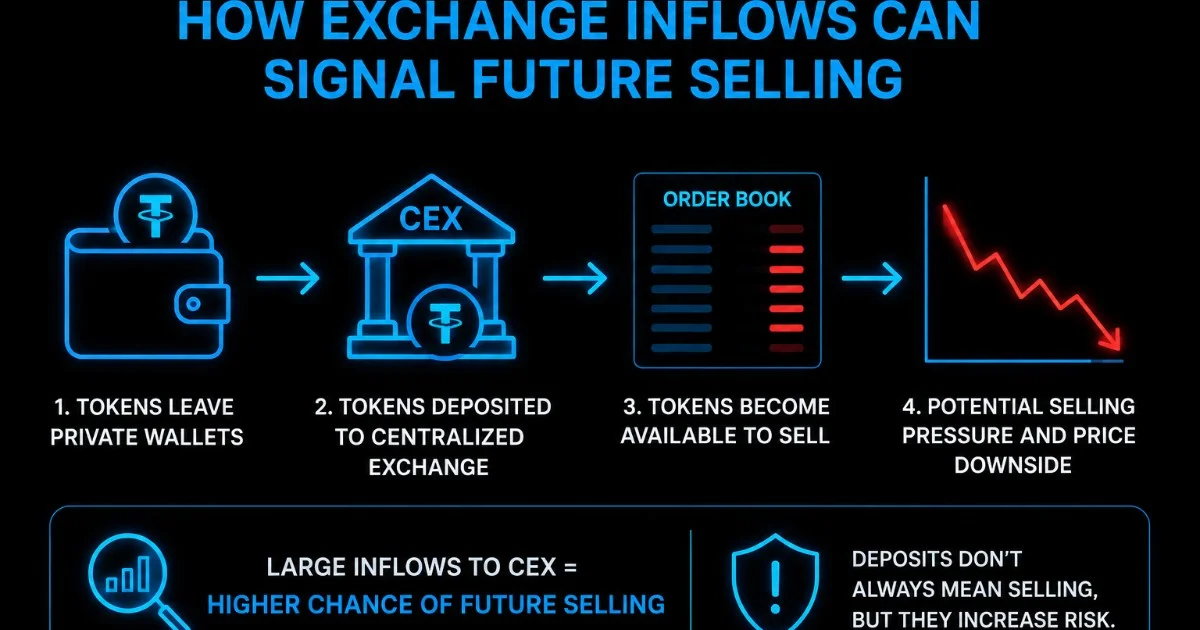
When tokens move to centralized exchanges, traders pay attention. A wallet transfer does not always mean selling is about to happen, but exchange inflows can create future sell pressure. For tokens that trade across decentralized and centralized markets, these movements can influence confidence, liquidity, and price behavior.
CEX deposit pressure refers to the potential selling risk created when holders move tokens to centralized exchanges. Since centralized exchanges are common places to sell, large deposits can become an important market signal.
For DEX traders, understanding this pressure can help identify risk before it appears on the chart.
What Is CEX Deposit Pressure?
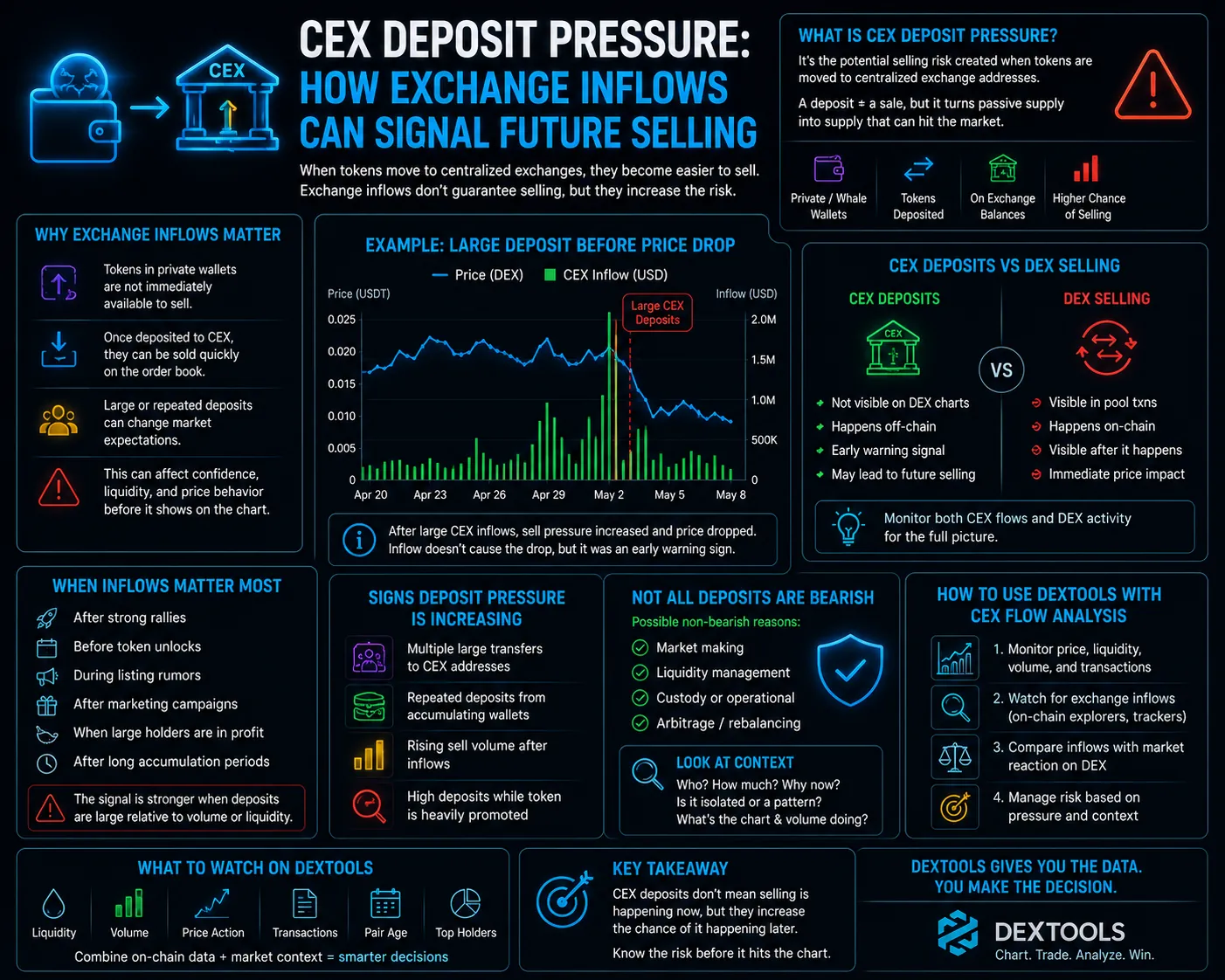
CEX deposit pressure happens when tokens are transferred from private wallets, project wallets, whale wallets, or treasury wallets to centralized exchange addresses. These transfers may suggest that the holder is preparing to sell, provide liquidity, market make, rebalance, or move funds for another reason.
The key word is pressure. A deposit is not the same as a sale, but it increases the possibility that tokens may become available for selling.
When large amounts move to exchanges, traders often become more cautious because those tokens can enter the market quickly.
Why Exchange Inflows Matter
Tokens held in private wallets are not immediately on an exchange order book. Once they are deposited to a centralized exchange, they become easier to sell. This change in location matters because it can alter market expectations.
If a whale wallet sends a large amount of tokens to an exchange after a major price increase, traders may interpret it as a possible profit taking signal. If a project wallet sends tokens without explanation, it may raise questions about future supply. If multiple wallets deposit at the same time, the market may expect increased sell pressure.
Exchange inflows matter because they can turn passive supply into active supply.
CEX Deposits vs DEX Selling
DEX selling is visible in pool transactions. CEX selling may not be visible in the same way because trades happen inside the exchange. This makes deposits important as early warning signals.
A token may look stable on a DEX chart while tokens are quietly moving to exchanges. If those deposits later become sell orders, price can react suddenly. Traders who only watch the DEX chart may miss part of the picture.
For tokens with both DEX and CEX activity, traders should consider both environments.
When CEX Deposits Are Most Important
CEX deposits are especially important after strong rallies, before unlock events, during listing rumors, after promotional campaigns, and when large holders are in profit. In these situations, there may be a stronger incentive to sell.
A deposit after a long accumulation period can also matter. If a wallet held for months and suddenly moves tokens to an exchange, the market may interpret that as a change in conviction.
The signal becomes stronger when deposits are large relative to daily volume or available liquidity.
How Traders Can Use DEXTools With CEX Deposit Analysis
DEXTools provides the DEX market view: price action, liquidity, volume, pair data, and recent transactions. Traders can use this information to understand how the market is reacting while exchange inflows happen.
If large CEX deposits appear and DEX volume begins to rise with selling pressure, caution may be warranted. If deposits occur but liquidity remains stable and buyers absorb sells, the market may handle the pressure.
The best analysis combines exchange flow awareness with DEX market behavior.
Signs That Deposit Pressure Is Increasing
One sign is multiple large transfers to known exchange addresses. Another is repeated deposits from wallets that previously accumulated. A third is rising sell activity after exchange inflows.
Traders should also watch social context. If a token is heavily promoted while large wallets move tokens to exchanges, the promotion may be creating demand for potential sellers.
Deposit pressure is not always immediate. Sometimes tokens sit on exchanges before being sold. The risk is that they are now closer to the market.
When Deposits May Not Be Bearish
Not every exchange deposit is bearish. Tokens may move to exchanges for market making, liquidity management, custody, arbitrage, or operational reasons. Some deposits may even support healthier trading if they improve market depth.
The key is context. Who deposited the tokens? How much was moved? What is the token's volume? What is the chart doing? Is there communication from the project? Are deposits isolated or repeated?
A single deposit is a clue. A pattern is a stronger signal.
Conclusion
CEX deposit pressure helps traders understand potential future selling risk. Tokens moving to centralized exchanges may not be sold immediately, but they become easier to sell. This can affect confidence and market behavior.
DEXTools helps traders monitor how DEX markets respond to these risks through liquidity, volume, transactions, and price action. When combined with exchange flow awareness, traders can better evaluate whether a token is facing hidden sell pressure.
Before buying into strength, ask whether large holders are moving closer to the exit.
How to Bridge Crypto Between Chains: Complete Cross-Chain Tutorial 2026 How to Use 1inch for Swaps: Classic, Fusion and Limit Orders (2026) OKX Web3 Wallet Tutorial 2026: Multi-Chain Setup GuideFrequently Asked Questions
What does centralized mean in cryptocurrency?
Centralized refers to systems where a single entity or small group controls operations and decision-making. In crypto, this often applies to exchanges or projects with a governing body.
How do centralized exchanges (CEX) differ from decentralized exchanges (DEX)?
CEXs are operated by a company that holds user funds and manages trading. DEXs allow peer-to-peer trading directly from users' wallets, without an intermediary.
What are the advantages of using a centralized exchange?
CEXs typically offer higher liquidity, simpler user interfaces, and customer support. They can also provide fiat on-ramps for converting traditional currency to crypto.
What are the risks associated with centralized platforms?
Centralized platforms are susceptible to hacks, regulatory pressure, and single points of failure. Users do not have direct control over their assets held on these platforms.
Why do some crypto users prefer centralized platforms despite the risks?
Many users prioritize convenience, ease of use, and the ability to quickly convert between fiat and crypto. CEXs also often offer a wider range of trading pairs and advanced features.