Crypto ETPs vs. ETFs: Understanding Market Structure
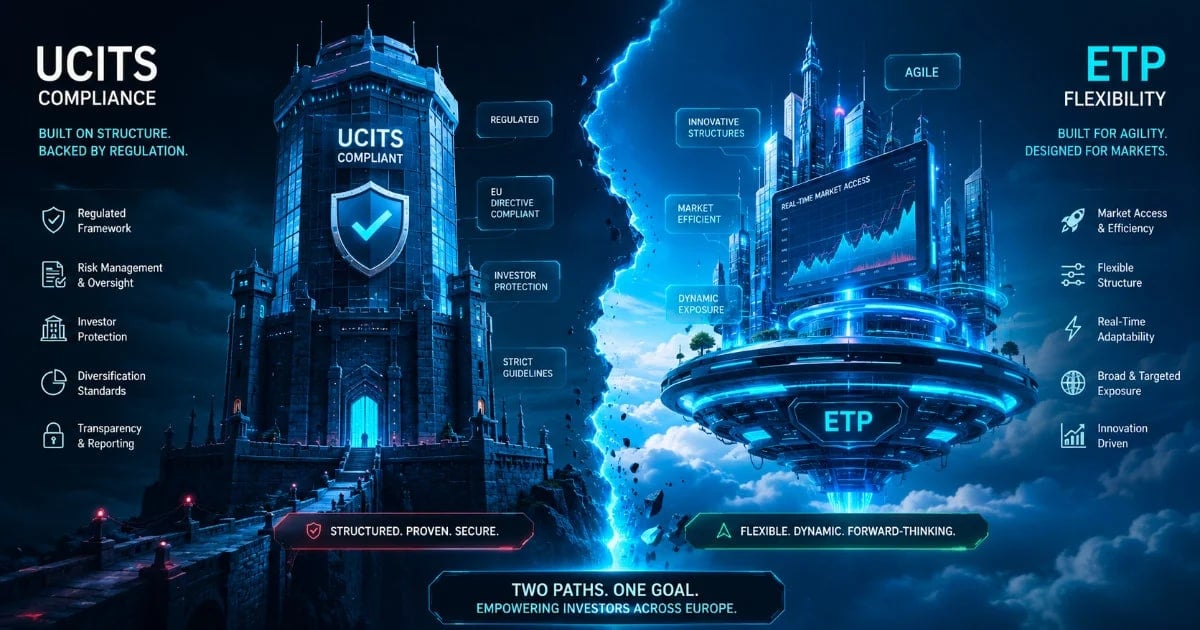
Europe’s market structure is uniquely segmented. We compare the rigid diversification rules of UCITS ETFs with the agility of Crypto ETPs to help you master regional compliance.
Understanding Europe’s Investment Product Framework
- For institutional and retail investors operating within the European Economic Area, the terminology surrounding investment products can be complex. While global markets often use "ETF" as a catch-all term, European regulations create a clear, technical distinction between UCITS-compliant funds and Crypto ETPs.
- Understanding the structural differences between these wrappers is the first step toward building a compliant and efficient portfolio within the European digital asset landscape.
The Regulatory Architecture: UCITS vs. ETPs
In Europe, the term ETF is largely reserved for products that comply with the Undertakings for Collective Investment in Transferable Securities (UCITS) directive. UCITS is a highly restrictive regulatory framework designed to ensure maximum investor protection, characterized by strict diversification requirements.
The Constraint of UCITS Diversification
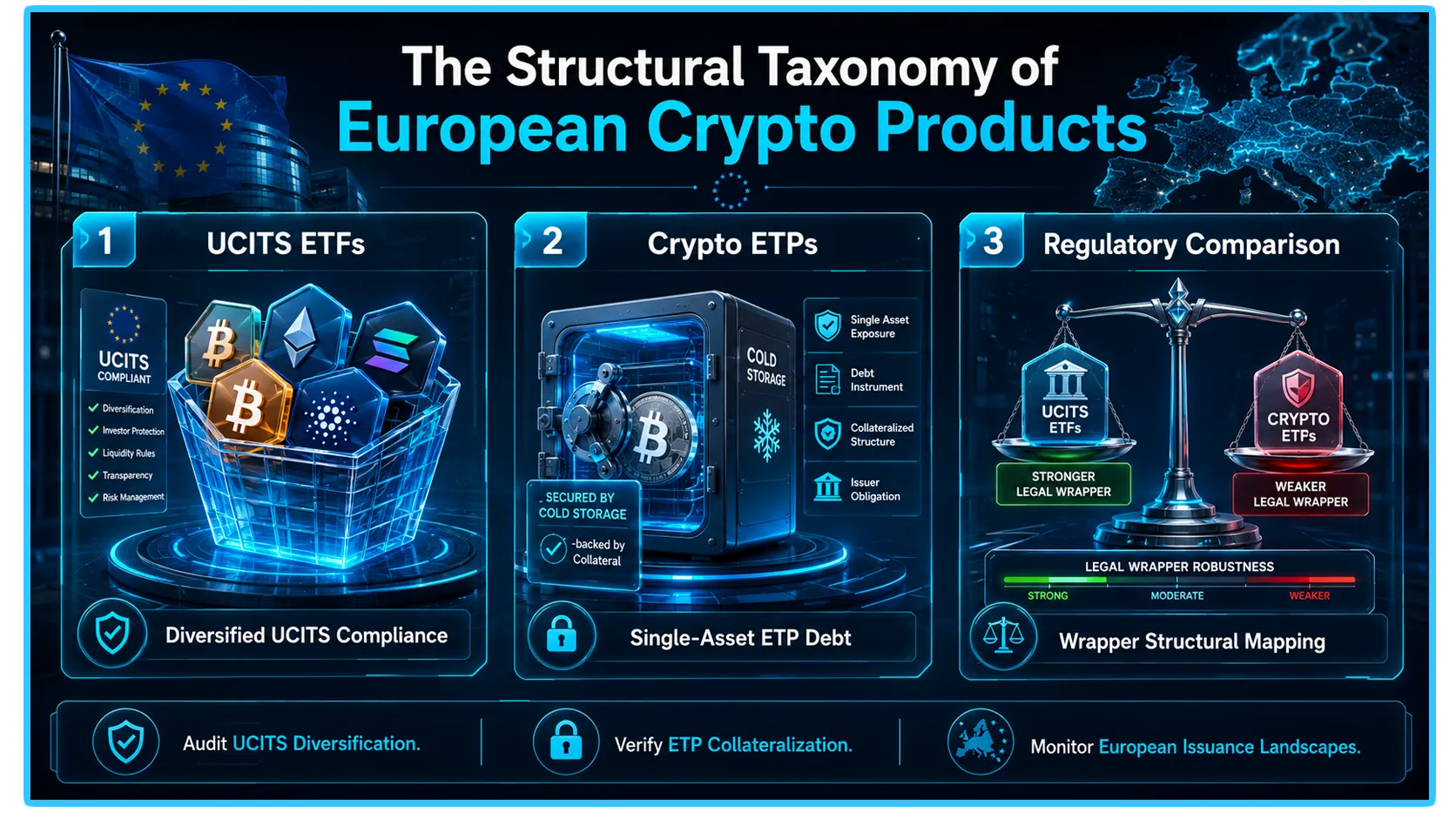
The core principle of a UCITS-compliant ETF is that it cannot have concentrated exposure to a single asset. A fund must diversify its holdings across multiple securities, meaning it cannot simply hold 100% Bitcoin. For investors seeking pure, single-asset exposure, this creates a structural mismatch. To bypass these diversification constraints, the European market developed the Exchange Traded Product (ETP) wrapper.
The Agility of Crypto ETPs
- Crypto ETPs are legally structured as debt instruments rather than collective investment funds. Because they are not subject to the diversification requirements of the UCITS directive, they allow for pure-play, single-asset exposure.
- Whether you want an instrument that tracks only Bitcoin, Ethereum, or a more niche protocol token, an ETP provides the surgical precision that a UCITS ETF cannot legally offer. This flexibility has made these products the preferred vehicle for European issuers looking to provide targeted exposure to the digital asset market.
Issuers and the Collateralization Model
The European market is dominated by innovators like 21Shares and ETC Group, who have successfully standardized the Crypto ETPs landscape. These issuers have built their reputation on transparency, particularly regarding collateralization.
Physical Collateralization
Unlike derivative-based products that carry counterparty risk, most leading European ETPs are "physically backed." This means the issuer is legally obligated to hold the underlying digital assets in cold storage with a regulated custodian for every single unit of the ETP created. This collateralization is audited on a periodic basis, providing investors with a level of security that mimics the physical backing of Gold ETFs.
The MiFID II Framework
All these products must operate within the MiFID II (Markets in Financial Instruments Directive) framework. This directive mandates rigorous transparency and investor protection standards. When you trade these instruments on major European exchanges, you are operating within a system that requires clear disclosures regarding product risks, issuer fees, and the physical security of the underlying assets.
Market Impact and Institutional Adoption
- The divergence between UCITS ETFs and Crypto ETPs has created a tiered market. Institutional investors seeking broad, low-risk index exposure look toward UCITS products if they become available. However, for those seeking to implement an alpha-generating strategy or build a specific asset allocation, ETPs remain the primary tool.
- The growth of these products in hubs like Switzerland, Germany, and France shows that the market has adapted to the regulatory reality of the EU. European investors have moved beyond the initial confusion of nomenclature and have embraced the surgical precision of ETPs, which now command significant AUM across major exchanges.
Telemetry and Verification
- Even when operating through a regulated European wrapper, the ultimate performance of your investment depends on the market behavior of the underlying digital assets. Sophisticated investors use data telemetry to monitor the health of these assets independently of the fund’s reporting.
- DEXTools is an indispensable tool for this, allowing you to track liquidity depth, volatility patterns, and large wallet movements that influence the value of the assets backing your ETPs. By verifying the underlying asset’s real-time performance against the reported NAV of your product, you ensure that your portfolio remains balanced and transparent.
You can access DEXTools here and start trading today!
Disclaimer: This article is for informational purposes only and does not constitute investment advice, financial advice, trading advice, or any other kind of advice. DEXTools does not recommend buying, selling, or holding any cryptocurrency or token. Users should conduct their own research and consult with a qualified financial advisor before making any investment decisions. Cryptocurrency investments are volatile and high-risk. DEXTools is not responsible for any losses incurred.