DEXTools for Project Teams: A Pre Launch Visibility Checklist for New Tokens
— By Whatsertrade in Tutorials

A token launch is not only a technical event. It is also a visibility event. When a new token starts trading, users, traders, community members, and researchers
A token launch is not only a technical event. It is also a visibility event. When a new token starts trading, users, traders, community members, and researchers begin forming opinions within seconds. They check the chart, liquidity, volume, contract, socials, token page, and early market behavior. If key information is missing or confusing, trust can weaken before the project has a chance to explain itself.
DEXTools is one of the main places where traders discover and evaluate tokens in decentralized markets. For project teams, this means the token page and early market data are part of the launch experience. A clean, transparent, and well prepared presence can help users understand the project faster and reduce friction during the first phase of trading.
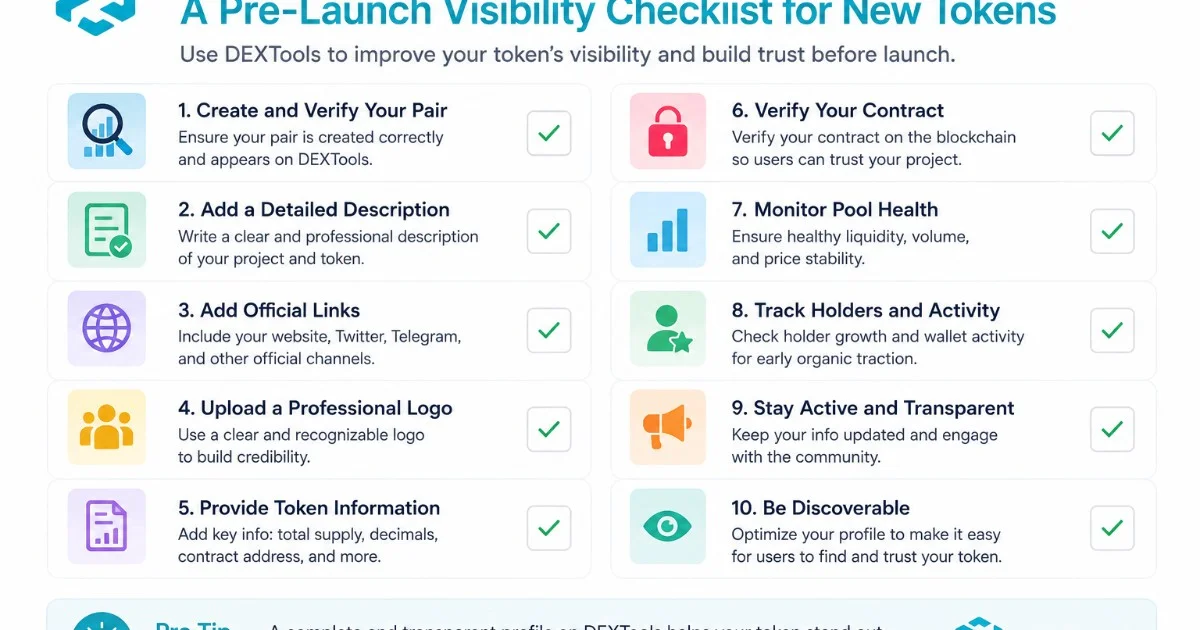
This checklist is designed for crypto project teams that want to prepare their DEXTools visibility before launching a campaign.
Why Project Teams Should Think Like Traders
Many teams prepare launches from the project side. They focus on branding, smart contracts, community, tokenomics, marketing, and exchange plans. These are important, but traders often evaluate the launch from a different perspective.
A trader asks practical questions. Is this the correct token? Is the pool active? Is liquidity acceptable? Are the links real? Does the contract look suspicious? Is the market moving naturally? Are early sellers dominating the chart? Can I understand the project quickly?
If a project team wants to earn market confidence, it should prepare for these questions before the token goes live.´
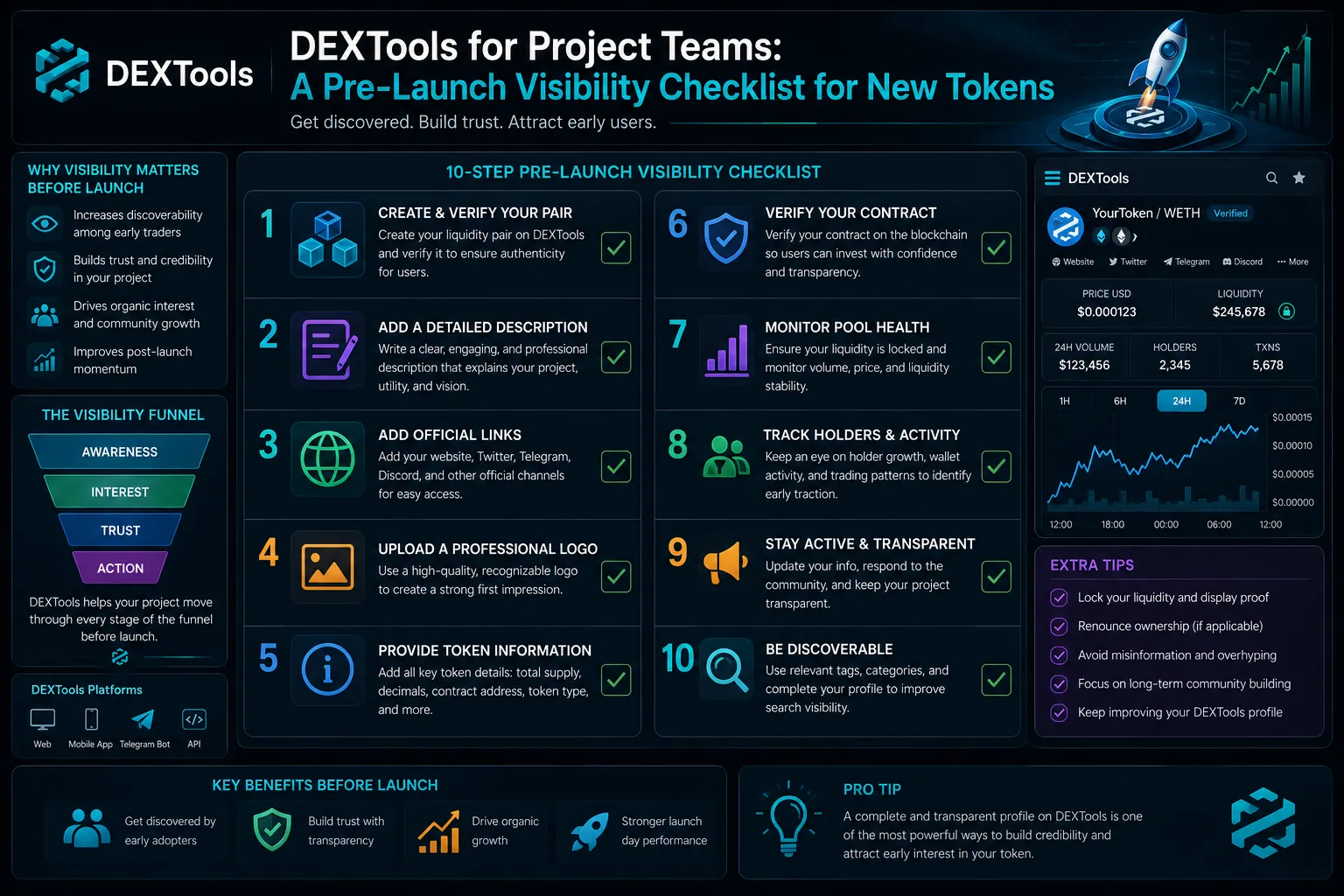
Step 1: Make the Token Easy to Identify
Confusion is dangerous during a launch. If users cannot quickly identify the correct token, fake versions and copycats can benefit from the attention. Project teams should make sure their branding, ticker, contract address, official links, and public communication are consistent.
The token name and ticker should match across the website, social channels, announcements, and trading pages. The contract address should be easy to find through official channels. Any chain specific details should be clearly explained.
When users search for a token, they should not need to guess which version is real.
Step 2: Prepare Official Links and Social Channels
A token page with missing links may feel incomplete. Traders often look for a website, social channels, community links, and project information before deciding whether to spend more time researching. Project teams should make sure official links are active, accurate, and aligned with the current launch.
Broken links, outdated websites, inactive accounts, or inconsistent branding can reduce confidence. Even if the project is legitimate, poor presentation can make it look unprepared.
Good visibility starts with basic clarity.
Step 3: Plan Liquidity Before Promotion
Marketing without liquidity can damage a launch. If a project attracts attention but the pool cannot support trading activity, users may experience heavy slippage, sharp price swings, and frustrating entries. This can turn a successful awareness push into a negative trading experience.
Before launching a campaign, teams should consider whether liquidity is appropriate for the expected attention. The goal is not simply to show a large number. The goal is to create a market that can function with reasonable stability.
Traders will judge the project not only by what it says, but also by how the market behaves when people try to trade.
Step 4: Understand How Early Volume Will Be Interpreted
Early volume attracts attention, but it also invites analysis. Traders will look at whether volume is organic, whether it fades quickly, and whether it is supported by real participation. If volume looks artificial or disconnected from holder growth, the market may become skeptical.
Project teams should avoid thinking of volume as a vanity metric. Sustainable volume is more valuable than a short burst that disappears. A launch that builds steady activity can be more credible than a launch that creates one dramatic candle and then loses momentum.
The best early volume is the kind that makes traders want to keep watching.
Step 5: Monitor the First 72 Hours Closely
The first 72 hours after launch are critical. Teams should monitor liquidity, volume, holder growth, transaction patterns, and community feedback. This does not mean manipulating the market or reacting emotionally to every candle. It means understanding how the launch is being perceived.
If users are confused about the correct pool, clarify quickly. If links are missing or outdated, fix them. If questions repeat across the community, improve public information. If liquidity conditions are creating issues, evaluate whether the market structure needs attention.
A launch is not finished when the token goes live. The first days are part of the launch.
Step 6: Make the Token Page Useful for New Visitors
A strong token page should help new visitors answer basic questions quickly. What is the project? Where is the official website? Which social channels are active? Is this the correct contract? Where is the main pool? Is the market liquid enough to trade?
Project teams should view the token page as a first impression. Many traders will not read a long whitepaper before checking the chart. They may begin with the market and decide whether to research further. If the first impression is incomplete, some users may leave before discovering the full project.
In decentralized markets, the chart page often becomes the front door.
Step 7: Avoid Overpromising in Early Messaging
Strong marketing can help a launch, but unrealistic claims can damage credibility. Traders are cautious, especially around new tokens. If a project promises too much before proving market quality, users may become skeptical.
Clear, specific, and realistic messaging performs better over time. Teams should explain what the project is, why the token exists, what users can expect, and where official information can be found. Avoid creating pressure that encourages emotional buying without research.
Trust grows when the public message matches the market reality.
Step 8: Prepare for Pool Fragmentation
Some projects may have more than one pool or may trade across multiple decentralized exchanges. This can create confusion if not communicated clearly. Teams should identify the main pool and make sure users know which pair has the most relevant liquidity and volume.
If a token exists on multiple chains, explain the differences between versions. If liquidity is concentrated in one place, make that clear. If unofficial pools appear, warn users through official channels.
Pool clarity helps protect users and strengthens the launch experience.
Step 9: Think Beyond Launch Day
A launch campaign can create attention, but long term visibility depends on continued activity. Teams should plan how they will maintain communication after the first wave. This includes product updates, community management, market education, and transparent information.
Traders often revisit tokens after the initial hype cools down. A project that remains active, clear, and consistent has a better chance of earning second looks. A project that disappears after launch may lose trust quickly.
The goal is not only to be noticed. The goal is to remain worth watching.
Conclusion
DEXTools is not only a platform for traders. It is also a key visibility layer for project teams launching tokens in decentralized markets. A well prepared token presence can help users identify the correct asset, understand the market, and build confidence during the most sensitive phase of launch.
Project teams should prepare official links, contract information, liquidity strategy, pool clarity, and communication before promotion begins. They should also monitor the first 72 hours carefully and respond to confusion with clear information.
A strong launch is not just about attracting att
How to Bridge Crypto Between Chains: Complete Cross-Chain Tutorial 2026 How to Use 1inch for Swaps: Classic, Fusion and Limit Orders (2026) How to Use OKX Web3 Wallet: Multi-Chain DeFi Hub Guide (2026)Frequently Asked Questions
What is a pre launch visibility checklist for new tokens?
It is a strategic plan outlining steps to maximize a new token's exposure and awareness before its public launch. This checklist typically covers various marketing, community building, and platform listing preparation activities.
Why is pre launch visibility important for new tokens?
Pre launch visibility builds anticipation, attracts early investors, and establishes a community around the token. It helps create initial liquidity and a strong foundation for the token's long term success.
What are key components of a pre launch visibility checklist?
Key components often include social media campaigns, community engagement on platforms like Telegram and Discord, influencer marketing, press releases, and preparing for listings on data aggregators and exchanges.
How can DEXTools assist with pre launch visibility?
DEXTools can help by providing a platform for token information, charting, and community interaction. Projects can leverage DEXTools' user base for increased exposure and to track their token's performance post launch.
What role does community building play in pre launch visibility?
Community building is crucial for fostering early adoption and creating a loyal user base. An engaged community can act as advocates, spreading awareness and providing valuable feedback for the project.
Related Guides
- How to Verify Token Safety Before Buying: A Pre-Buy Crypto Checklist
- How Token Teams Can Prepare for Their First Week on DEXTools
- The No-Buy Checklist: 12 Times DEXTools Data Tells You to Walk Away
- The First 60 Minutes After a Token Launch: What to Watch on DEXTools
- Ghost Chain vs Dormant Project: Spot Crypto Decay