How to Verify Token Safety Before Buying: A Pre-Buy Crypto Checklist
— By Whatsertrade in Tutorials

Learn how to verify token safety before buying with a practical pre-buy checklist covering liquidity, contract risk, taxes and sellability.
Buying tokens on-chain is fast and simple, but risks abound. From fake contract addresses to liquidity traps and sell restrictions, many tokens are designed to exploit buyers. To avoid immediate losses, following a consistent verification routine is crucial.
What Does 'Safe' Mean for Crypto Tokens?
In the world of crypto, no token is ever risk-free. 'Safe' means you can buy and sell normally, the liquidity is real, the contract lacks obvious traps, and the token is structured to avoid instant losses. Importantly, the focus is on avoiding common scams not guaranteeing upward price movement.
Intent split
- For tool comparisons, read Top 5 Rug Pull Checker Tools in 2026.
- For smart contract analysis tools, read Best Free Smart Contract Analysis Tools in 2026.
- This page targets the pre-buy checklist intent.
Step 1: Confirm the Right Contract Address
Spot Fake Tokens
Scammers commonly copy token names and logos to deceive buyers. Verify the token's contract address across multiple official channels. If the address appears inconsistent or is only shared in public replies, treat it as high-risk.
Check Network Compatibility
Make sure the token trades on the expected blockchain. Many tokens have deceptive duplicates on other networks, posing as legitimate versions.
Step 2: Assess Liquidity Stability
Why Liquidity Matters
Liquidity is critical. Low liquidity makes price manipulation easy and exiting difficult, while unstable liquidity can vanish, leaving buyers trapped. Genuine projects often show consistent liquidity growth or stability.
Ask the Right Question
If buying your intended size would crash the token's price, consider avoiding the trade or sizing considerably smaller.
Step 3: Analyze Holder Distribution
Detect Concentrated Control
Extensive wallet concentration raises the risk of dramatic price dumps. Look for disproportionate token ownership in team wallets or signs of linked wallets controlling the market.
Focus on Microcap Risks
For microcap tokens, even a single major sell can collapse the token's upward movement, making balanced distribution even more critical.
Step 4: Confirm Sellability
Identify Sell Restrictions
Tokens designed to trap buyers often apply extreme sell taxes, block transfer mechanics, or blacklist wallets. Conduct a small test trade (if fees allow) to ensure the token behaves like a standard asset.
Spot Abnormal Behavior
If selling fails or incurs unusual fees, treat the token as unsafe.
Step 5: Evaluate Taxes and Transfer Rules
Understand Tax Structures
While taxes aren't inherently harmful, they must be transparent and stable. Dynamic taxes that spike during sell trades or change unpredictably are strong warning signs.
Confirm Free Transfers
Tokens requiring special permissions for transfers or blocking wallets without clarity pose significant risks.
Step 6: Review Trading Activity
Healthy vs. Manipulative Trading
Legitimate tokens display diverse trade sizes and organic activity across wallets. Suspicious tokens often show patterned trades, identical transaction sizes, or sudden activity bursts lacking sustainability.
Identify Managed Charts
Be cautious with charts showing perfect candles on limited liquidity indicative of artificial management.
Step 7: Check Contract Vulnerabilities
Privileged Control Risks
A contract allowing changes like adjustable taxes, transfer pauses, or wallet blacklisting post-launch points to a high-risk scenario. Heavy privileged controls without transparency are unacceptable.
Simple Flags to Watch
You don't need developer skills to identify concerning signs. Check for control mechanisms allowing the project to exploit holders.
Step 8: Look at Project Context Beyond Marketing
Beware of Professional-Looking Scams
Slick websites and branding are common among scams. Consistency across official channels, stable team claims, and clear communication matter far more.
Understand Risk Signals
If a project focuses solely on promises of quick profits, aggressive urgency, or intimidation tactics within its community, these behaviors are red flags.
A Quick Checklist Before You Buy
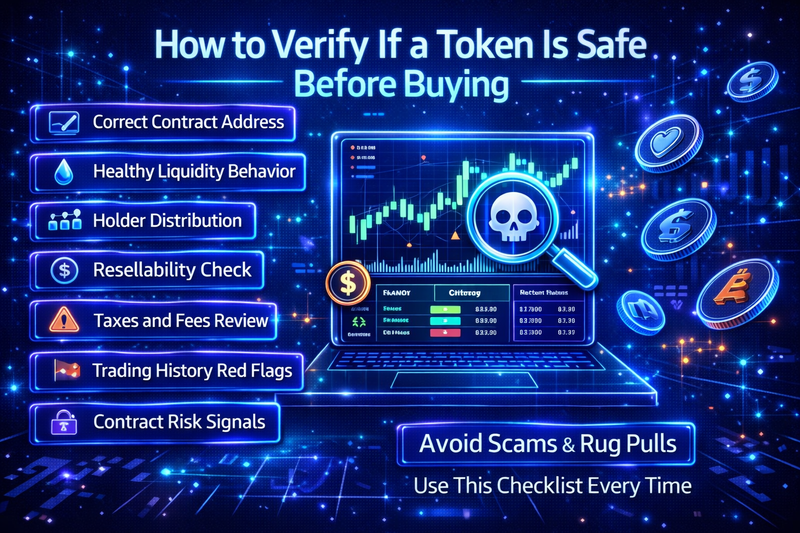
Create a simple process that avoids skipped steps: verify the contract address, review liquidity stability, check holder concentration, ensure sellability, and analyze abnormal trade flow and contract risk signals. If doubts persist, avoid the trade. More opportunities will come.
Pro Tip: The smartest investment decision often involves skipping questionable trades rather than chasing uncertain profits.
How to Check Liquidity Lock Before Buying a Token How to Spot a Rug Pull: The Complete 2026 Crypto Checklist How to check for honeypots in crypto trading (Step by Step) How to avoid Rug Pulls on Solana, Ethereum and Base How to DYOR in crypto: a comprehensive GuideVideo Tutorial

Frequently Asked Questions
How can I check a token's smart contract for safety?
Examine the smart contract code on block explorers like Etherscan for audits, renounced ownership, and potential backdoors or suspicious functions.
What are common red flags in a token's smart contract?
Look for mutable parameters, the ability to mint unlimited tokens, or functions that allow the developer to drain liquidity or freeze transfers.
Why is it important to verify the project team behind a token?
A doxxed and reputable team with a proven track record reduces the risk of a rug pull or abandonment. Investigate their professional history and past projects.
How can I assess a token's liquidity and trading volume?
Check the token's liquidity on decentralized exchanges and its trading volume on reputable data sites. Low liquidity can lead to significant price volatility and difficulty selling.
What role does community sentiment play in token safety?
A strong, active, and engaged community can indicate a healthy project, but be wary of overly hyped or spammy communities that might be artificially inflated.
Related Guides
- EVM Honeypot Prevention Checklist: What to Verify Before You Buy
- How to Check Buy and Sell Tax Before Buying a Token (2026)
- DEXTools for Project Teams: A Pre Launch Visibility Checklist for New Tokens
- How to Verify a Token Contract Before Trading (2026)
- DEXTools for Crypto Journalists: How to Verify a Token Story Before Publishing