DEXTools vs DEXScreener: Complete Comparison 2026
— By Tony Rabbit in Tutorials
DEXTools vs DEXScreener in 2026: compare speed, token discovery, research depth, beginner usability, and which platform fits different trading styles.
DEXScreener is generally faster and lighter for initial token scans and quickly assessing multiple fresh pairs. DEXTools excels when deeper context, more comprehensive research, and less speed-focused decision-making are required, offering a more in-depth workflow for evaluating token pairs.
DEXTools and DEXScreener are two of the most commonly used interfaces for finding tokens, checking charts, and judging whether a pair is worth deeper research. Traders often ask which one is better, but the real answer is more practical than tribal. They are good at different moments of the workflow.
This guide is built around the exact search intent behind DEXTools vs DEXScreener. The goal is not to crown a fake universal winner. It is to show what each platform does well, where each one feels faster or deeper, and when a trader should actually use one, the other, or both together.
Quick answer
- DEXScreener usually feels faster and lighter for the first scan, especially if you are moving quickly across many fresh pairs.
- DEXTools usually feels better once you want more context, a deeper research workflow, and less pure speed-only decision making.
- Most active traders eventually use both, because scanning and validating are not the same job.
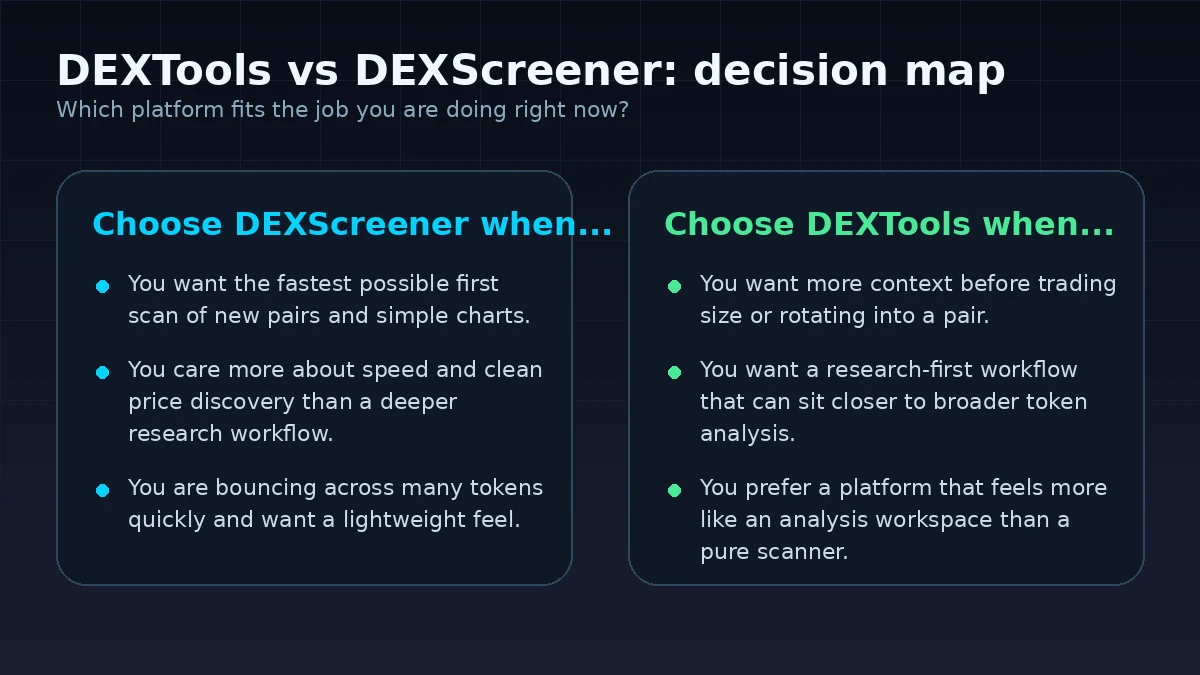
DEXTools vs DEXScreener: The Big Picture
The biggest mistake users make is thinking these two platforms are direct replacements for each other in every situation. They overlap, but they do not feel identical in actual use. One often wins the first minute. The other often wins the next thirty minutes.
In practical terms, DEXScreener often wins on speed and simplicity. The interface is easy to scan, the charts feel quick to reach, and the overall experience is lightweight. If your whole style is moving fast across many pairs, that matters a lot.
DEXTools often wins when the trader wants more context. Once you are past the initial curiosity stage and trying to decide whether a token deserves real capital, the more research-oriented feel becomes more valuable. That difference is why many traders discover on one platform and validate on the other.
What each platform tends to optimize for
Which One Feels Faster Day to Day?
If the question is pure speed, DEXScreener usually has the edge. That does not automatically mean it is better overall. It means it feels quicker when the job is simple: find a pair, open the chart, glance at the structure, and move on if it looks weak.
This matters a lot for memecoin hunters, short-term scanners, and traders who spend more time rejecting pairs than actually trading them. In those workflows, even small friction feels expensive. A cleaner and lighter interface wins because the trader is not trying to build conviction yet. They are trying to eliminate noise fast.
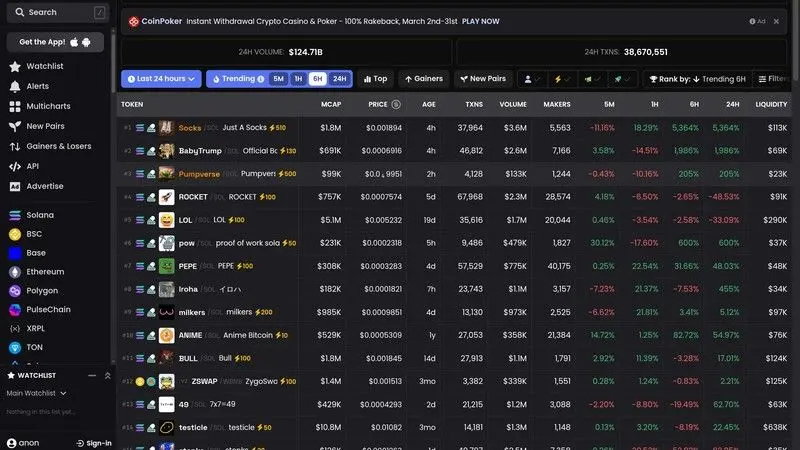
DEXTools can still be fast, but its advantage often appears later in the process. If the question is not “what is moving?” but “what deserves deeper attention?” then the interface depth starts working in its favor instead of against it.
Which One Is Better for Deeper Research?
Once a trader stops browsing casually and starts asking real questions, the balance changes. This is where DEXTools usually feels stronger. The platform makes more sense for users who want an analysis workspace rather than only a scanner.
The exact preference still depends on the trader, but the pattern is common. DEXScreener helps answer: what is hot right now? DEXTools helps answer: should I actually care? Those are not the same question.
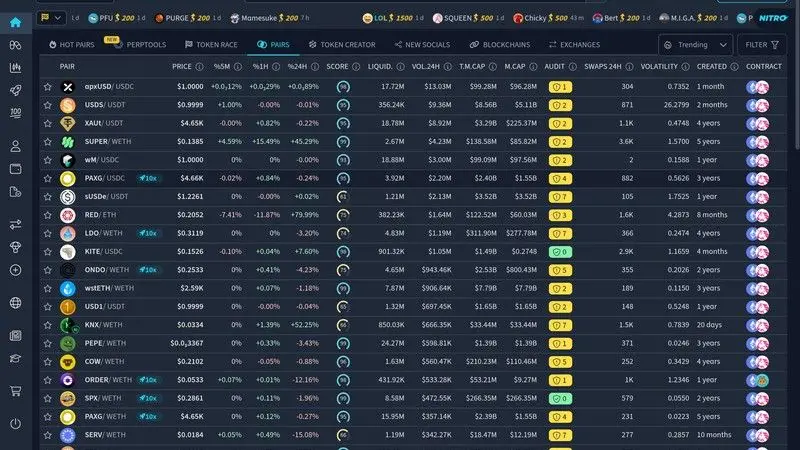
For research topics that help no matter which interface you use, DEXTools already has evergreen explainers for reading crypto charts, market cap, and FDV. Those concepts matter more than platform loyalty.
Which One Is Better for Finding New Tokens Early?
If the workflow is pure discovery, DEXScreener often gets the nod because it feels optimized for high-volume browsing. Many traders use it when they want to jump quickly between fresh pairs and rapidly compare whether something deserves five more seconds or none at all.
That said, discovery is only one part of the job. Traders lose money when discovery is mistaken for due diligence. Finding a token early is valuable only if the next step is disciplined. That is exactly where many users naturally shift into DEXTools or into a broader research stack.

Discovery vs validation
If early token hunting is your main use case, the strongest companion piece here is How to Find New Crypto Tokens Before They Pump.
Which One Is Better for Solana Traders?
Solana traders often care about speed more than most other user groups. That naturally pushes many of them toward DEXScreener during the first scan. Fast-moving launches, rapid rotations, and fast chart reading make the lighter experience attractive.
But Solana traders also deal with some of the noisiest token flow in crypto. That means a deeper second look matters even more, not less. When the speed of the ecosystem increases, the cost of shallow analysis increases too. That is why a lot of Solana users still keep DEXTools in the workflow after the first discovery pass.

Which One Is Better for Beginners?
Beginners often assume the simplest-looking platform must be the best place to learn. That is only partly true. A lighter interface can reduce overwhelm, but it can also encourage superficial decisions if the user mistakes cleaner charts for deeper understanding.
A realistic answer is that beginners can start anywhere, but they should not stay shallow. If a new user starts with DEXScreener because it feels cleaner, that is fine. They still need to learn chart reading, market cap, FDV, liquidity basics, and risk management. If they start with DEXTools, they may face more information earlier, but that can also nudge them toward better habits sooner if they do not rush.
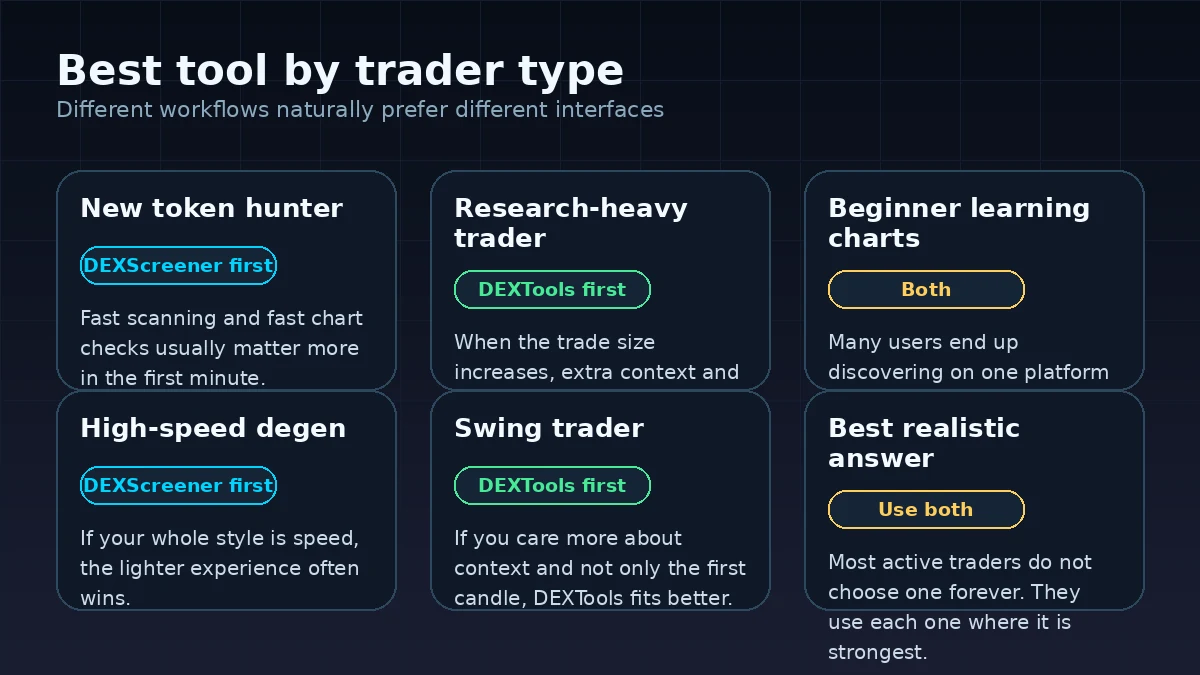
Final Verdict: Which One Should You Use?
If you want the shortest possible answer, it is this:
This comparison is also a good reminder that the platform is not the strategy. Traders still need risk rules, chart literacy, and discipline. No interface can save a user who confuses excitement with edge.
Keep exploring
Frequently Asked Questions
Is DEXTools better than DEXScreener?
Not in every situation. DEXScreener often wins on speed and fast scanning, while DEXTools often feels stronger once the user wants more context and a deeper workflow.
Which platform is better for finding new tokens early?
Many traders prefer DEXScreener for the first scan because it feels faster. The bigger issue is what happens after discovery, because early does not automatically mean safe or tradable.
Which one is better for beginners?
Beginners can use either one, but they should focus on learning how to read charts, liquidity, market cap, and risk. A clean interface is helpful, but it is not a substitute for understanding the trade.
Do professional traders use both DEXTools and DEXScreener?
Yes, many do. It is common to use one tool for rapid discovery and the other for deeper validation or follow-up analysis.
What matters more, the platform or the strategy?
The strategy matters more. A good platform can improve speed and clarity, but it cannot fix bad risk management or weak decision-making.
Related reading
Disclaimer: This article is for educational purposes only and does not constitute investment, tax, or legal advice. Platform interfaces, chain coverage, layout, and research tools can change over time. Always verify the live platform before making real trading decisions.