Holder Inflation: Why More Wallets Does Not Always Mean More Believers
— By Whatsertrade in Tutorials

A rising holder count looks good. But it does not always mean what traders think it means. In DeFi, many traders use holder growth as a quick signal of adoption
A rising holder count looks good. But it does not always mean what traders think it means.
In DeFi, many traders use holder growth as a quick signal of adoption. If more wallets hold a token, the project must be gaining traction. That assumption sounds logical, but it can be dangerously incomplete.
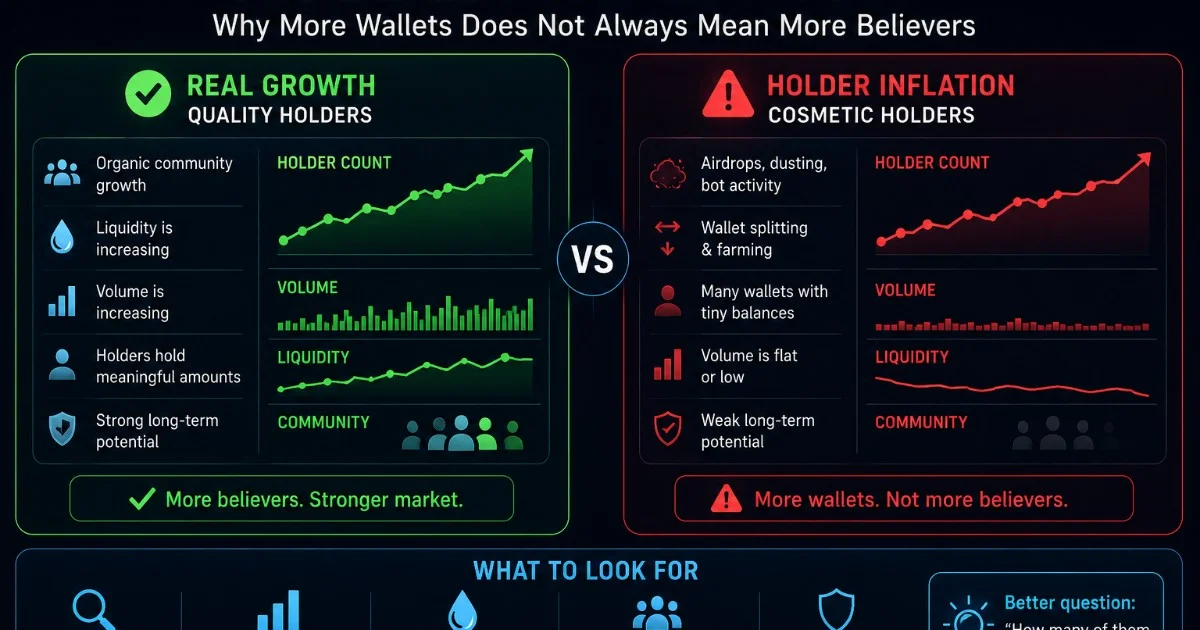
More wallets do not always mean more believers.
Sometimes it means holder inflation.
What Is Holder Inflation?
Holder inflation happens when the number of token holding wallets increases without a matching increase in real community conviction, organic demand, or meaningful distribution.
A token can gain holders through tiny transfers, airdrops, dusting, bot activity, wallet splitting, farming strategies, or artificial distribution. The holder count rises, but the quality of holders may remain weak.
This creates a misleading picture of adoption.
Why Holder Count Became Popular
Holder count is easy to understand. It gives traders a simple number that appears to measure growth. A token with 10,000 holders looks more established than a token with 500 holders.
But simplicity can be dangerous. Holder count tells you how many wallets hold a token. It does not tell you why they hold it, how much they hold, whether they care about the project, or whether they are likely to sell.
A large number can hide weak conviction.
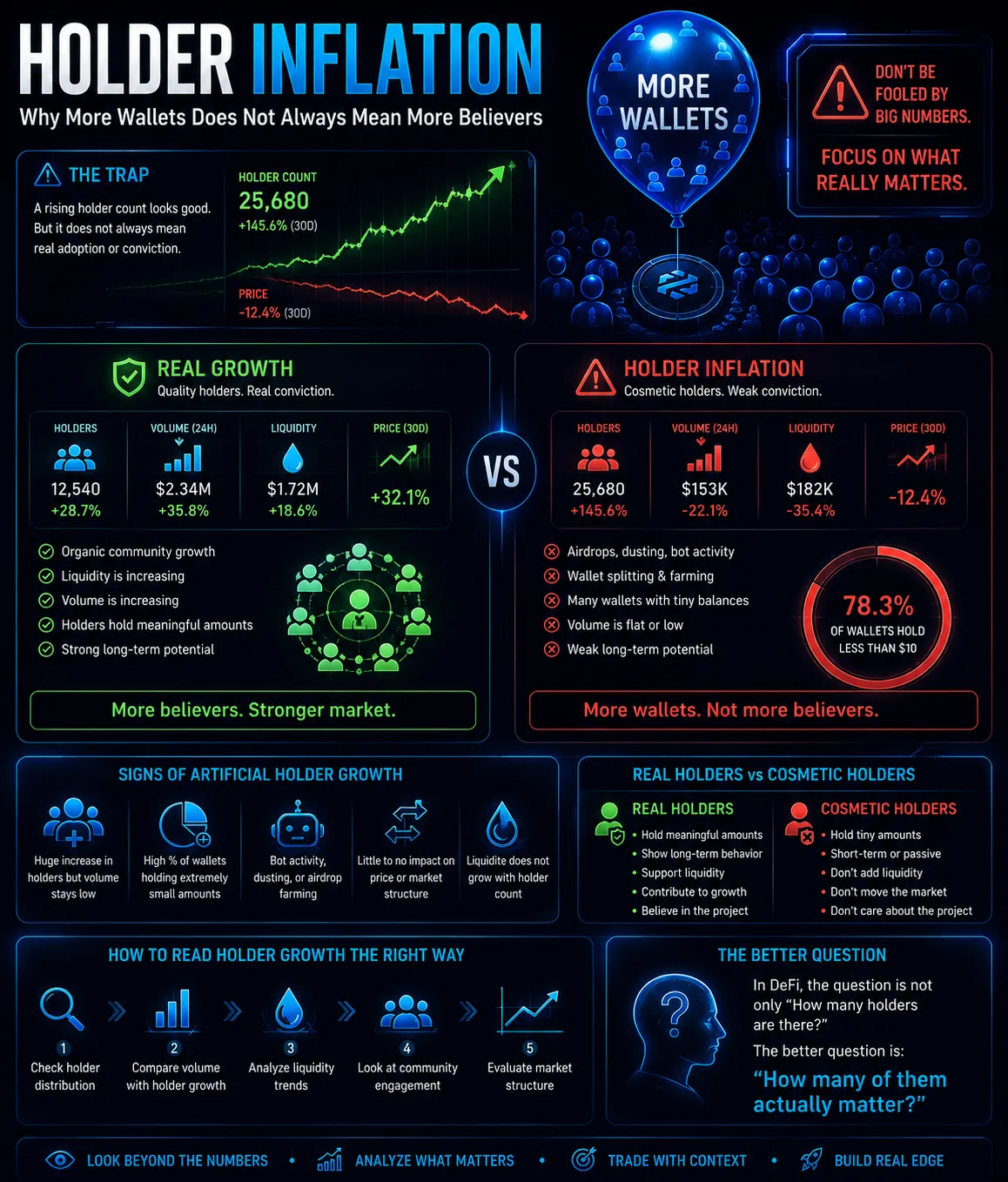
Signs of Artificial Holder Growth
One warning sign is a large increase in holders without matching volume or price structure. If many new wallets appear but trading activity remains thin, the growth may not reflect real demand.
Another signal is a high number of wallets holding extremely small amounts. This may happen naturally, but it can also result from dusting or artificial distribution.
Traders should also watch whether holder growth is connected to community activity, liquidity growth, and repeated buying. If holders rise but everything else remains flat, the number deserves closer inspection.
DEXTools can help traders review holders, pair activity, liquidity, and trading patterns together instead of relying on one metric.
Real Holders vs Cosmetic Holders
A real holder is not just a wallet with tokens. A real holder represents potential conviction, participation, or demand.
Cosmetic holders only improve the appearance of the project. They may not contribute to liquidity, trading, community growth, or long term support.
The difference matters because markets are driven by behavior, not just numbers.
How Traders Should Read Holder Growth
Holder growth should be treated as a starting point, not a final answer. If holders are increasing, traders should ask what kind of holders are appearing.
Are wallets accumulating meaningful amounts? Is volume rising with holder count? Is liquidity improving? Are holders spreading naturally or clustering in suspicious ways?
The goal is not to ignore holder count. The goal is to read it with context.
Final Thoughts
Holder inflation is one of the quietest traps in DeFi analysis. It gives traders a number that feels bullish, even when the underlying behavior may be weak.
More wallets can be a good sign, but only when supported by real activity, healthy distribution, and stronger market structure.
In DeFi, the question is not only "How many holders are there?"
The better question is, "How many of them actually matter?"
Holder Count vs Holder Quality in Token Analysis The Wallet Age Signal: What Fresh Wallets vs Old Wallets Reveal About a Token Organic Traction vs Paid Campaigns: How to Analyze Real Demand in a New Token Fake Volume vs Real Demand: How to Spot Artificial Momentum in DeFi TradingFrequently Asked Questions
What is a crypto holder?
A crypto holder is an individual or entity that owns and retains a cryptocurrency, often with the expectation of future value appreciation.
What is 'holder inflation'?
Holder inflation refers to an increase in the number of unique wallets holding a cryptocurrency, which might not always correlate with a proportional increase in active users or genuine belief in the asset.
Why might more wallets not mean more believers?
An increase in wallet count can be influenced by factors like exchange-controlled wallets, test wallets, or individuals creating multiple wallets, rather than solely new, dedicated investors.
How can one differentiate between genuine holders and inflated numbers?
Analyzing on-chain data for transaction frequency, average holding period, and the distribution of assets across wallets can provide insights into genuine holding patterns versus inflated counts.
What are the implications of holder inflation for a cryptocurrency?
Holder inflation can create a misleading perception of a project's adoption and community size, potentially impacting market sentiment if not properly understood.