Locked Liquidity Is Not Enough: What Traders Still Need to Check
— By Whatsertrade in Tutorials

Discover essential factors beyond locked liquidity that traders must consider for safer decentralized finance investments. Learn more today!
Locked liquidity is one of the most common safety signals in decentralized trading. When traders see that liquidity is locked, they often feel more confident because the project team cannot easily remove the main pool liquidity.
But locked liquidity does not make a token risk free.
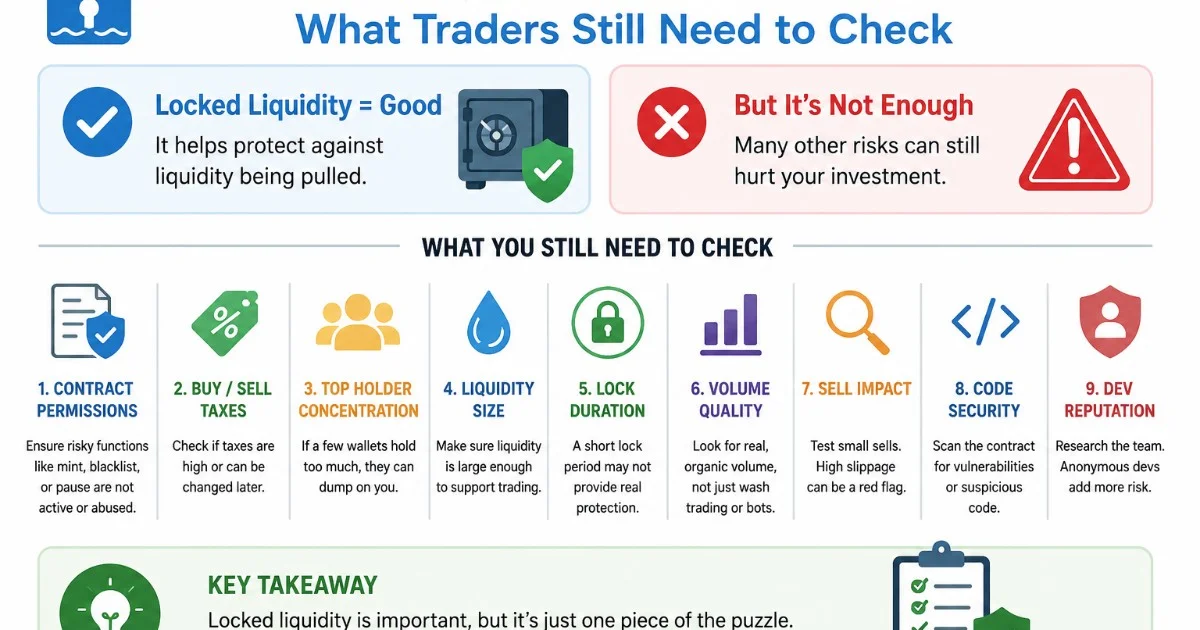
A token can have locked liquidity and still be dangerous. The contract can include harmful functions, large holders can dump, taxes can change, supply can be manipulated, and trading conditions can still be poor.
Locked liquidity is useful, but it is only one part of token analysis.
What Locked Liquidity Means
Locked liquidity means that the liquidity provider tokens for a pool are locked for a specific period. This reduces the risk that the liquidity provider will suddenly remove liquidity and leave traders unable to sell.
This is important because unlocked liquidity can expose traders to rug pull risk. If the pool disappears, holders may be left with tokens that cannot be traded properly.
However, liquidity lock only addresses one risk. It does not protect traders from every possible problem.
Why Locked Liquidity Can Still Be Risky
Even with locked liquidity, a token can fail for many reasons.
The token contract may allow the owner to change taxes, block selling, mint new tokens, blacklist wallets, or adjust trading rules. Large wallets may hold enough supply to crash the market. Liquidity may be locked, but still too small to support real trading.
Some tokens use locked liquidity as a marketing tool. They promote the lock heavily while ignoring other weaknesses.
Traders should never treat locked liquidity as a final approval signal.
What Traders Should Check Next
After confirming liquidity is locked, traders should review additional signals:
- Contract permissions
- Buy and sell taxes
- Minting ability
- Blacklist or whitelist functions
- Top holder concentration
- Liquidity size
- Lock duration
- Trading volume quality
- Sell impact on the chart
The goal is to understand the full risk profile, not just one safety feature.
Lock Duration Matters
A short liquidity lock may not provide much comfort. If liquidity is locked for only a brief period, the risk may return quickly.
A longer lock can be more reassuring, but it still does not guarantee project quality. Traders should compare lock duration with the project’s age, activity, and market behavior.
A long lock with weak liquidity is still weak. A lock only matters if the pool has meaningful depth.
Holder Concentration Matters
One of the biggest risks after liquidity lock is holder concentration. If a few wallets control a large percentage of supply, they may be able to create heavy sell pressure even if liquidity is locked.
Traders should watch whether top wallets are holding, selling, or distributing supply. A locked pool does not stop whales from dumping tokens into that pool.
Contract Risk Matters
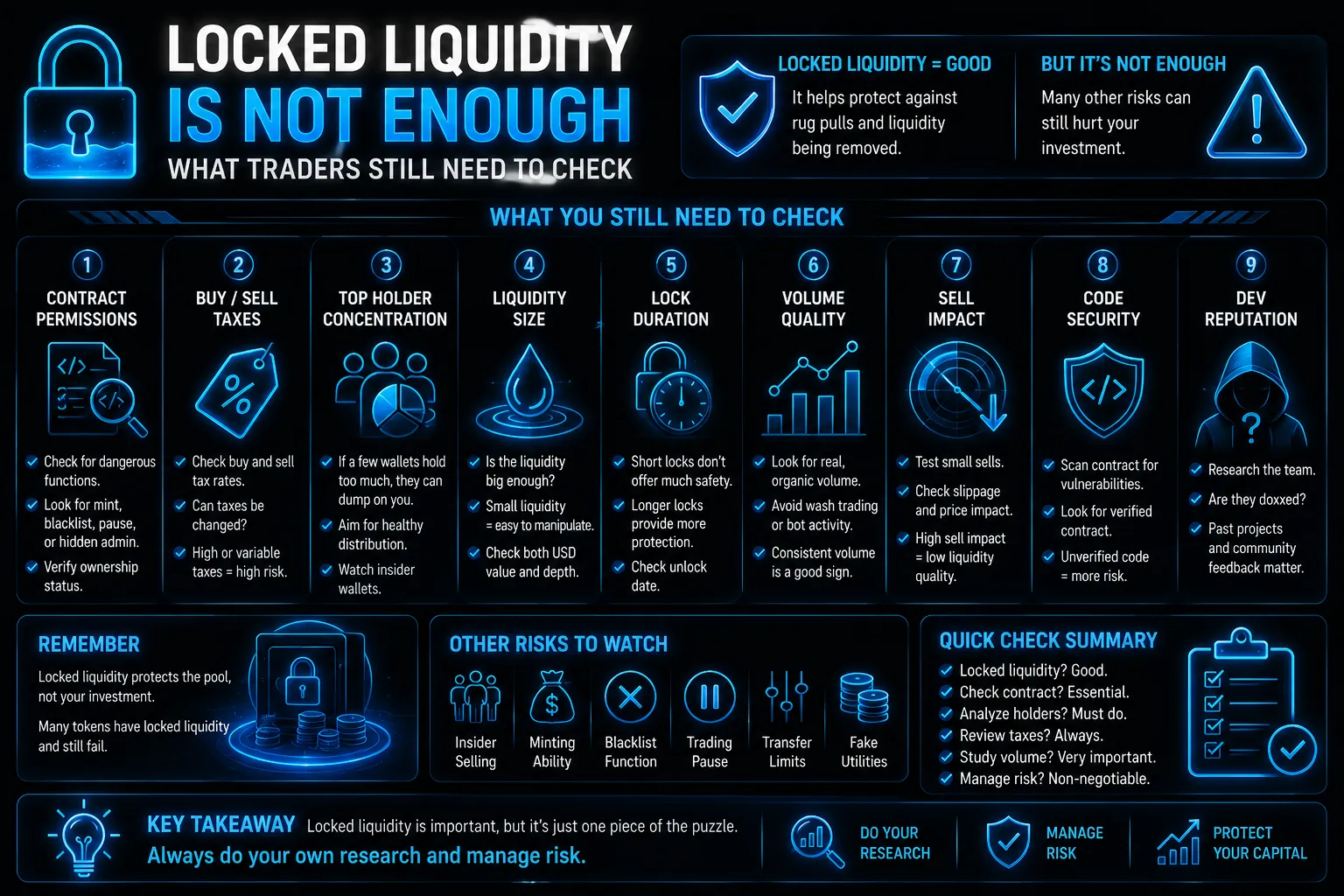
Smart contract risk can be more dangerous than liquidity risk. A token may have locked liquidity but still include functions that harm traders.
Red flags include:
- Changeable sell tax
- Trading restrictions
- Hidden mint functions
- Blacklist controls
- Transfer limits
- Owner privileges that remain active
A good chart can hide a bad contract. Traders should check both.
Final Thoughts
Locked liquidity is important, but it is not enough.
It reduces one type of risk, but traders still need to analyze contract permissions, holder concentration, liquidity depth, taxes, lock duration, and real trading behavior.
A liquidity lock can protect the pool. It cannot protect traders from every weakness in the token.
LP Lock Expiry Risk: What Happens When Token Liquidity Unlocks? How to Spot a Rug Pull: 2026 Checklist (Top Red Flags) What Is a Top Holder in Crypto? Supply Risk Explained Token Taxes in 2026: Identifying Buy/Sell Tax Red Flags