Pool Chart Divergence: When the Candle Looks Bullish but the Liquidity Says No
— By Whatsertrade in Tutorials

A green candle can tell one story. The liquidity pool can tell another. In DeFi trading, many traders focus on price first. They look for breakouts, strong cand
A green candle can tell one story. The liquidity pool can tell another.
In DeFi trading, many traders focus on price first. They look for breakouts, strong candles, sudden volume, and fast upward movement. But on a DEX, price action is only part of the picture. A token can look bullish on the chart while the pool remains weak, thin, or dangerous.
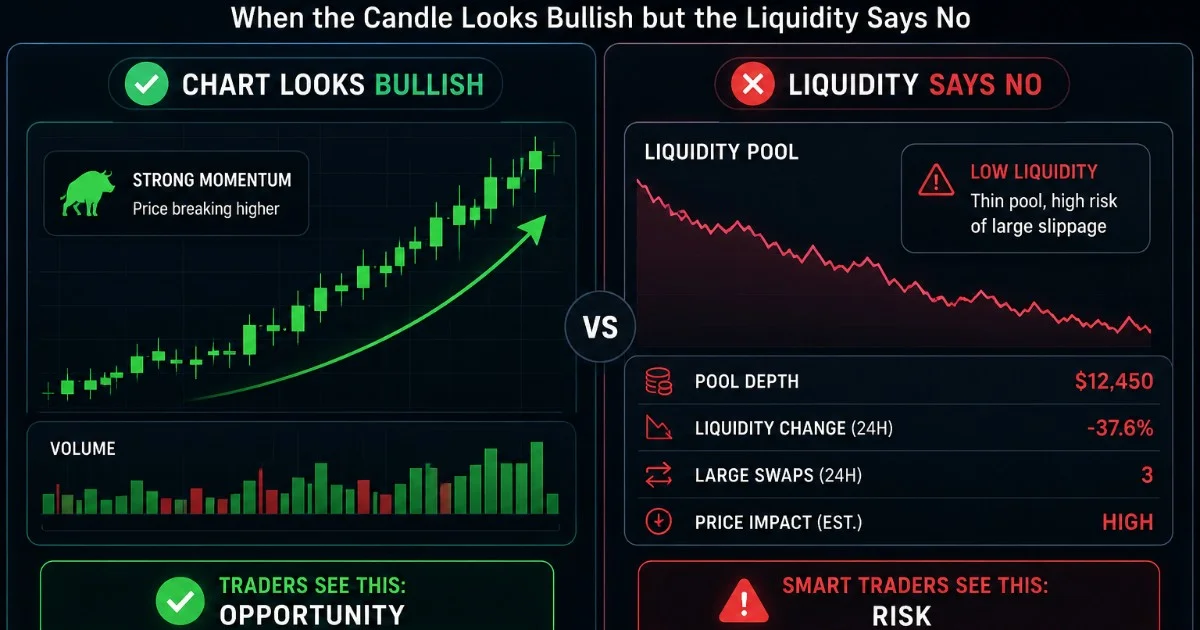
This disconnect is called pool chart divergence.
What Is Pool Chart Divergence?
Pool chart divergence happens when the price chart suggests strength, but the liquidity pool shows fragility. The token may be rising, but there may not be enough liquidity to support real buying and selling. The chart may show momentum, but the market may be difficult to exit without major slippage.
This is especially common in new tokens, memecoins, and low liquidity pairs.
A trader who only watches candles might see opportunity. A trader who checks the pool might see risk.
Why Candles Can Be Misleading on DEXs
On centralized exchanges, large order books can absorb activity more smoothly. On DEXs, price movement depends heavily on pool depth. If liquidity is thin, even small buys can create dramatic candles.
That means a bullish candle does not always represent strong demand. Sometimes it only reflects poor liquidity.
A token can pump because the pool is shallow. But the same shallow pool can make exits painful. This is why price without liquidity context can be deceptive.
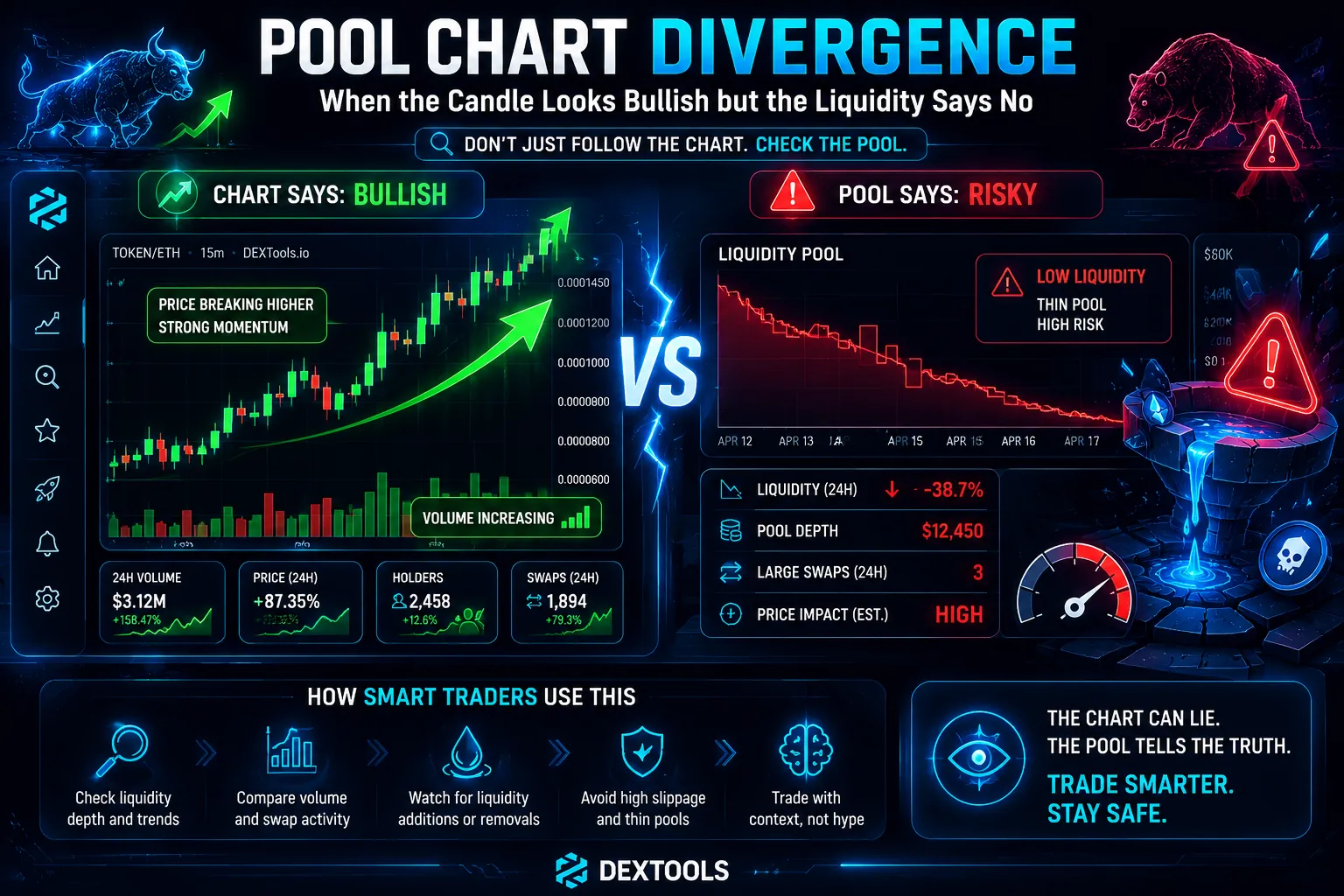
Signs of Pool Chart Divergence
Traders should be cautious when price rises quickly but liquidity remains low. Another warning sign is high volatility with small swap sizes. If the chart moves aggressively on modest trades, the pool may not be strong enough.
A token can also show divergence when liquidity is removed while price remains elevated. This creates a dangerous situation. The chart may still look attractive, but the underlying exit structure is weakening.
DEXTools allows traders to compare price action with liquidity, volume, swaps, and pair data, helping them avoid relying on candles alone.
Why Liquidity Is a Trust Signal
Liquidity is more than a technical metric. It is a signal of market seriousness. Stronger liquidity can make price action more meaningful because the market requires more capital to move.
Thin liquidity does not automatically mean a token is bad, but it does mean traders should adjust their expectations. Small trades can create large moves, and large exits can damage the chart quickly.
How Traders Can Use This Concept
Before entering a token that looks bullish, check whether the pool supports the move. Ask whether liquidity is growing, stable, or shrinking. Compare the size of recent swaps with the size of the price movement.
If a tiny buy creates a massive candle, the move may not be as strong as it looks.
Final Thoughts
Pool chart divergence reminds traders that DEX charts are not just about price. They are about the relationship between price, liquidity, and market depth.
A bullish candle can attract attention, but liquidity determines whether that move is sustainable.
In DeFi, the chart may shout "buy," while the pool quietly says "be careful."
How to Check a Liquidity Pool Before Buying a Token 2026 Fake Volume vs Real Demand: How to Spot Artificial Momentum in DeFi Trading Exit Liquidity Mapping: Who Might Sell Into You Before You Buy? How to Find New Crypto Tokens Before They Pump (2026)Frequently Asked Questions
What is a liquidity pool?
A liquidity pool is a collection of funds locked in a smart contract. It facilitates decentralized trading, lending, and other financial operations on a blockchain.
How does a liquidity pool work?
Users called liquidity providers (LPs) contribute crypto assets to a pool. In return, they receive a share of the trading fees generated by the pool.
What is impermanent loss in a liquidity pool?
Impermanent loss occurs when the price of your deposited assets changes relative to when you deposited them. It can result in a lower dollar value than if you had simply held the assets.
Why is liquidity important for a crypto pool?
High liquidity ensures that large trades can be executed without significant price impact. It also allows for efficient price discovery and reduces slippage.
What is a staking pool?
A staking pool allows multiple cryptocurrency holders to combine their resources to increase their chances of validating transactions and earning rewards. It is common in Proof of Stake networks.