What Is a Harami Candlestick Pattern in Crypto Trading? 2026 Guide
— By Tony Rabbit in Tutorials
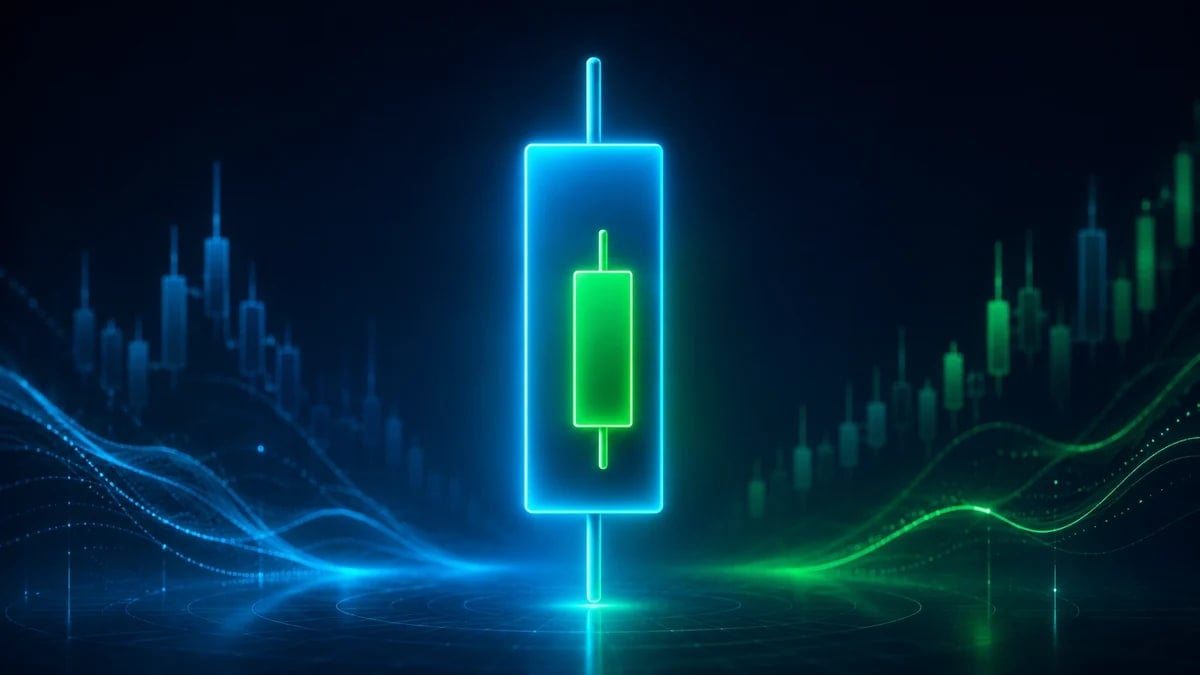
Learn how the harami candlestick pattern works in crypto trading, how to spot bullish and bearish setups, and how to confirm reversals with volume and price levels.
Candlestick patterns are one of the most popular ways to read price action in crypto markets, and the harami is among the classic formations that traders watch for signs of a possible trend change. It is a simple two candle pattern, yet it carries a lot of meaning when it shows up at the right place on a chart. Understanding it can help you read shifts in momentum before they become obvious.
In this 2026 guide we will break down what a harami candlestick pattern is, how the bullish and bearish versions differ, what the harami cross variant adds, and how to confirm the signal so you do not act on noise. The goal is to give you a clear, practical framework you can apply to any token chart without relying on guesswork.
What Is a Harami Candlestick Pattern?
A harami is a two candle reversal pattern. It is made up of a large candle followed by a small candle whose body is fully contained inside the body of the previous candle. Because the second candle sits within the range of the first, it is often called an inside candle. The name harami comes from an old Japanese word for pregnant, which fits the visual: the small candle looks like it is nestled inside the larger one, much like a mother and child.
The core idea behind the pattern is a loss of momentum. The first candle represents strong conviction in the current direction. The second, much smaller candle shows that the dominant side has lost steam and that the market is hesitating. This pause in momentum is what makes traders pay attention, because hesitation can sometimes mark the early stage of a reversal.

It is important to remember that a harami on its own is a hint, not a command. It tells you the prevailing momentum may be fading. Whether or not a reversal actually follows depends on what the market does next, which is why confirmation matters so much with this pattern.
Bullish Harami Explained
A bullish harami appears after a downtrend. It starts with a large bearish candle that reflects continued selling pressure, followed by a small bullish candle whose body sits inside the body of that bearish candle. The message is that selling momentum may be fading and that buyers are starting to step in, even if only tentatively.
The contrast between the two candles is the key. The big down candle shows sellers in full control, while the small up candle that follows shows they could not push the price much lower. That stall can mark the point where a downtrend begins to lose energy. On a crypto chart, this often shows up near a previous low or a support zone where buyers tend to defend the price.
How to Read a Bullish Harami
When you spot a bullish harami, focus on the location first. A pattern that forms after an extended decline and near a known support level is more meaningful than one that appears in the middle of choppy, directionless action. The further the prior downtrend has run, the more weight the signal tends to carry.
Next, look at the size of the second candle. A very small body shows strong indecision, which is usually what you want to see in a harami. If the second candle is almost as large as the first, the pattern is weaker and the momentum shift is less convincing.
Bearish Harami Explained
A bearish harami is the mirror image and appears after an uptrend. It begins with a large bullish candle that reflects strong buying, followed by a small bearish candle whose body is contained inside the previous candle. This signals that buying momentum may be fading and that sellers could be preparing to take over.
In a strong rally, a big green candle followed by a small red inside candle suggests buyers were unable to extend their gains. The market stalls, and that stall can be the first clue that the uptrend is running out of fuel. As with the bullish version, a bearish harami near a resistance zone or a prior high tends to be more reliable than one that appears at random.
Traders watching a bearish harami often wait to see whether the next candle continues lower. If price closes below the small candle and momentum builds to the downside, the pattern gains credibility as a possible top.
The Harami Cross Variant
The harami cross is a stronger variant of the standard pattern. It forms when the second candle is a doji, meaning the open and close are at or very near the same level so the body is little more than a thin line. A doji represents the highest degree of indecision, so when it appears inside the body of a large candle, the message of fading momentum becomes even clearer.
A bullish harami cross forms after a downtrend, with a large bearish candle followed by a doji inside it. A bearish harami cross forms after an uptrend, with a large bullish candle followed by a doji. In both cases, the doji shows the market has reached a balance point where neither buyers nor sellers are in control. That tug of war can precede a sharper turn than a regular harami, which is why many traders treat the cross as a more compelling signal.
How to Confirm a Harami Signal
Because a harami signals indecision and a possible reversal rather than a guarantee, confirmation is essential. Acting on the pattern alone exposes you to false signals, especially in volatile crypto markets where price can swing quickly. A few simple checks can help you filter the strong setups from the weak ones.
The most direct form of confirmation is the next candle. For a bullish harami, a strong candle that closes above the second candle suggests buyers are following through. For a bearish harami, a candle that closes below the second candle suggests sellers are taking control. Waiting for that follow through helps you avoid jumping in on a pattern that fizzles out.
Combining Volume and Price Levels
Volume adds another layer of confidence. A reversal that comes with rising volume in the new direction is more convincing than one on thin, declining volume. If a bullish harami is followed by a strong move higher backed by volume, the shift looks more real than a quiet drift upward.
Support and resistance levels matter too. A harami that forms right at a well tested support zone or resistance zone aligns the candlestick signal with the broader structure of the chart. When the pattern, the level, and the volume all agree, the setup is far stronger than any single clue on its own. Many traders also cross check signals using charting tools on platforms like DEXTools to study how a token behaves around these key levels.
Common Mistakes to Avoid
One frequent mistake is treating every harami as a sure reversal. The pattern only flags a potential change in momentum, and plenty of haramis appear without any meaningful turn following them. Trading them blindly, with no confirmation, tends to lead to a string of small losses.
Another mistake is ignoring context. A harami in the middle of a sideways range carries little weight, while the same pattern after a long trend and at a key level is much more informative. Risk management also gets overlooked: even a textbook harami can fail, so defining where you are wrong before you enter is part of using the pattern responsibly. Patterns inform decisions, but they do not replace a plan.
Conclusion
The harami candlestick pattern is a clean, intuitive way to spot fading momentum and a possible reversal in crypto markets. A large candle followed by a small inside candle shows that the dominant side is hesitating, with the bullish version forming after a downtrend and the bearish version after an uptrend. The harami cross, with its doji second candle, sharpens that message of indecision.
Used well, the pattern is most powerful when it is confirmed by the following candle, by supportive volume, and by alignment with support and resistance. Treat it as one input among several rather than a standalone signal, pair it with disciplined risk management, and the harami can become a useful part of how you read price action and time your decisions on a chart.
Beyond the Harami: Contextualizing Reversal Probability in Volatile Crypto Markets
While the Harami pattern signals a potential reversal, its predictive power in the notoriously volatile crypto market is significantly amplified when understood within a broader technical and fundamental context. Isolated, a Harami is merely a suggestion; integrated, it becomes a powerful component of a robust trading strategy. The rapid price swings and strong narratives often seen in digital assets mean that simply identifying the pattern is insufficient for high-probability setups. Traders must look for confluence with other indicators and market dynamics.
The "pregnant" nature of the Harami - where the second candle is entirely contained within the first - visually represents a momentary pause and indecision after a sustained trend. In crypto, this indecision can be quickly resolved in either direction due to news, whale activity, or broader market sentiment shifts. Therefore, confirming the Harami's signal with additional data points is not just recommended, but essential for managing risk and improving entry and exit timing.
Refining Harami Signals with Market Structure
- Always look for the Harami at established support or resistance zones. A bullish Harami at a prior demand zone or a bearish Harami at a supply zone significantly increases its reliability.
- Confirm the reversal with subsequent candle closes. A bullish Harami needs a strong green candle closing above the first candle's high, while a bearish Harami requires a red candle closing below the first candle's low.
- Pay close attention to the timeframe. A Harami on a daily chart carries far more weight than one on a 15-minute chart, especially for swing or position trading.
- Consider the overall market trend. Trading a bullish Harami against a strong bearish macro trend is inherently riskier than trading one that aligns with a higher timeframe uptrend.
- Look for divergence on momentum oscillators like RSI or MACD around the Harami pattern. Bullish divergence for a bullish Harami or bearish divergence for a bearish Harami provides strong corroboration.
- Assess the project's fundamentals and recent news. A technically sound Harami might be invalidated by significant negative news, or conversely, strengthened by positive developments.
Related Guides
- What Is an Evening Star Pattern in Crypto Trading? 2026 Guide
- What Is a Morning Star Pattern in Crypto Trading? 2026 Guide
- What Is a Spinning Top Candlestick in Crypto Trading? 2026 Guide
- What Is a Shooting Star Candlestick in Crypto Trading? 2026 Guide
- What Is a Hanging Man Candlestick in Crypto Trading? 2026 Guide
Frequently Asked Questions
What is a harami candlestick pattern in crypto trading?
A harami is a two-candle pattern where a large candle is followed by a smaller candle whose body is contained within the prior candle's body. It is often viewed as a sign of slowing momentum and possible reversal or indecision.
What is the difference between a bullish and bearish harami?
A bullish harami forms after a downtrend, with a large bearish candle followed by a smaller bullish candle inside it, hinting at fading selling pressure. A bearish harami forms after an uptrend, with a large bullish candle followed by a smaller bearish candle inside it, hinting at fading buying pressure.
How do you confirm a harami pattern?
Traders often wait for follow-through in the direction of the expected reversal, such as a break of a nearby price level on the next candles. Volume and the surrounding trend context can also help confirm whether the signal is meaningful.
Is the harami pattern reliable on its own?
Like most single candlestick patterns, a harami is not reliable in isolation and can produce false signals. It is generally more useful when combined with trend analysis, support and resistance, and other confirmation tools.