What Is a Morning Star Pattern in Crypto Trading? 2026 Guide
— By Tony Rabbit in Tutorials
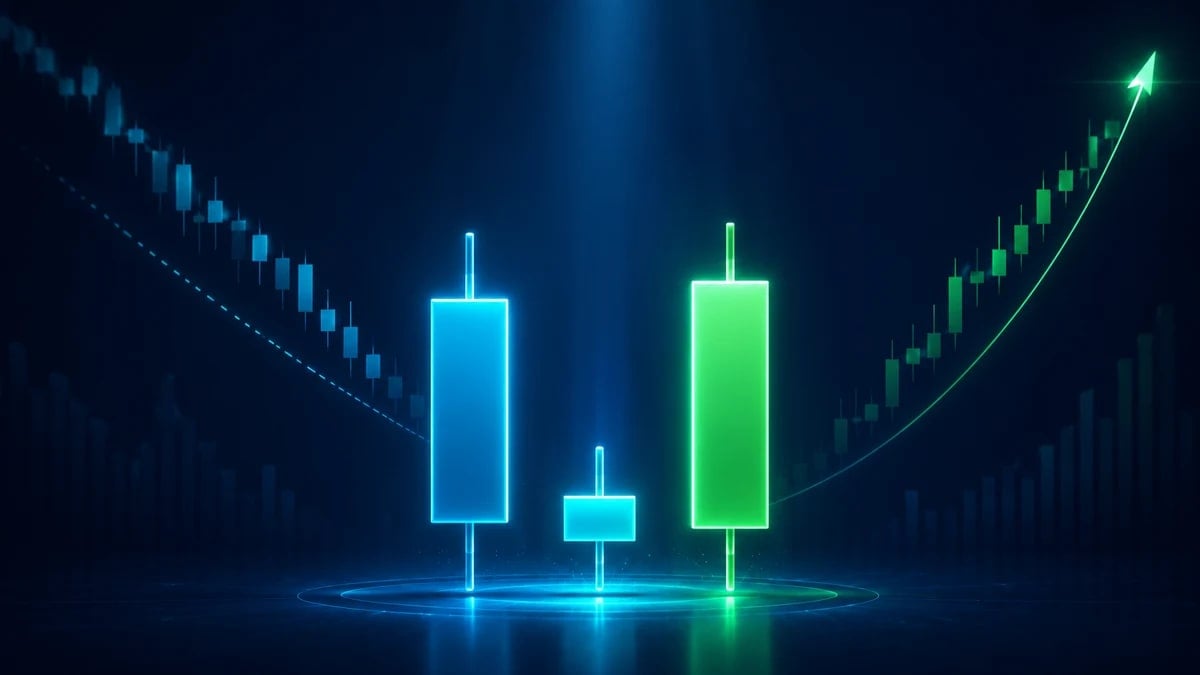
Learn how the morning star candlestick pattern signals a bullish reversal in crypto, how to read its three candles, and how to confirm it before you trade.
The morning star is one of the most recognizable bullish reversal patterns in candlestick analysis, and it shows up constantly on crypto charts where sharp downtrends are common. When traders spot it forming at the bottom of a sustained sell off, it often hints that the selling pressure that drove the move down is finally running out of steam.
In this guide you will learn exactly what a morning star pattern looks like, what each of its three candles means, why it matters for crypto traders, and how to confirm the signal before acting on it. Understanding this pattern can help you read shifts in market sentiment with more confidence and avoid the trap of buying too early.
What Is a Morning Star Pattern?
A morning star is a three candle bullish reversal pattern that forms at the bottom of a downtrend. The name comes from the idea that it appears like the morning star in the sky just before dawn, signaling that the dark period of falling prices may be ending and that a new upward move could be on the horizon.
The pattern works because it tells a visual story about the battle between buyers and sellers. The first candle shows sellers firmly in control. The second candle shows that control fading into indecision. The third candle shows buyers stepping in with force. Together these three candles capture the moment that momentum flips from bearish to bullish.

The Three Candles Explained
Reading a morning star correctly means understanding the role each candle plays. The pattern is only valid when all three appear in the right order and shape at the end of a clear downtrend.
Candle 1: The Large Bearish Candle
The first candle is a large bearish candle that continues the existing downtrend. It has a long red body and reflects strong selling pressure. At this stage, sellers are still dominant and there is little sign that the trend is about to change. This candle sets the stage by confirming that the market is still falling.
Candle 2: The Star
The second candle is a small bodied candle known as the star. It often gaps lower from the close of the first candle and shows indecision in the market. The small body, which can be either bullish or bearish, tells you that neither buyers nor sellers managed to take clear control during this session. This pause is the heart of the pattern because it signals that selling momentum is weakening.
Candle 3: The Large Bullish Candle
The third candle is a large bullish candle that closes well into the body of the first candle. This is the candle that confirms the reversal. A long green body shows that buyers have taken control and pushed price firmly higher. The deeper this candle closes into the first candle, the stronger the reversal signal is considered to be.
What the Morning Star Signals
At its core, the morning star signals that selling pressure is exhausting and that buyers are taking control. The progression from a strong down candle, to indecision, to a strong up candle maps directly onto a shift in market psychology. Fear and selling give way to hesitation, and then to renewed buying interest.
This makes the morning star a useful tool for spotting potential bottoms after a decline. It does not predict how far price will rise, and it offers no guarantees, but it can mark the point where a downtrend loses its grip. Many traders use it as an early warning that the balance of power may be changing.
Morning Star vs Morning Doji Star
There is a closely related variation worth knowing. When the middle candle of the pattern is a doji, meaning it opens and closes at almost the same level, the formation is called a morning doji star. A doji represents an even sharper form of indecision because neither side could push price away from the opening level at all.
Because a doji shows such a clean balance between buyers and sellers, many traders view the morning doji star as a particularly strong version of the reversal signal. The basic structure is identical, with a large bearish candle, the indecisive star, and a large bullish candle. The only difference is the precise shape of that middle candle.
The Bullish Mirror of the Evening Star
The morning star is the bullish mirror of the evening star pattern. While the morning star forms at the bottom of a downtrend and signals a possible move higher, the evening star forms at the top of an uptrend and signals a possible move lower. The two patterns are structurally identical but pointed in opposite directions.
Knowing both patterns gives you a more complete view of reversals. If you can recognize a morning star at the bottom of a chart, you already understand the logic needed to spot an evening star at the top. Both rely on the same three candle sequence of trend, indecision, and reversal.

How to Confirm a Morning Star in Crypto
Crypto markets are volatile and prone to false signals, so confirmation matters more than ever. A morning star is more reliable when several supporting factors line up rather than relying on the candles alone.
First, look for a clear prior downtrend. The pattern only makes sense as a reversal if there was a genuine decline to reverse. A morning star appearing in the middle of a sideways range carries far less weight.
Second, pay attention to volume on the third candle. Strong buying volume on the large bullish candle suggests real conviction behind the move and helps separate a meaningful reversal from a brief bounce. Light volume is a warning that the signal may not hold.
Third, wait for confirmation before acting. Some traders look for the next candle to continue higher, or for price to break above a nearby resistance level, before treating the reversal as confirmed. Combining the pattern with other tools such as support zones or momentum indicators can further improve your read. On platforms like DEXTools, you can study these candle formations directly on live token charts to practice spotting them in real conditions.
Common Mistakes to Avoid
One frequent error is calling a morning star without a real downtrend in place. Without that context, the three candle shape loses its meaning as a reversal. Another mistake is ignoring the close of the third candle. If it fails to push well into the body of the first candle, the signal is weak.
Traders also tend to forget that no single pattern is foolproof. Treating a morning star as an automatic buy signal without confirmation, volume, or risk management can lead to losses, especially in fast moving crypto markets where reversals can fail quickly.
Conclusion
The morning star is a powerful three candle bullish reversal pattern that captures the moment selling pressure fades and buyers regain control at the bottom of a downtrend. By understanding the role of each candle, recognizing the morning doji star variation, and confirming the signal with a prior downtrend and supporting volume, you can use it as a thoughtful part of your analysis. Like any pattern, it works best as one input among many rather than a standalone trigger. This article is educational only and is not financial advice.
Beyond the Candlesticks: The Macro Context of Morning Stars
While identifying the three-candlestick formation is crucial, a truly effective trader understands that the Morning Star pattern does not exist in a vacuum. Its predictive power is significantly amplified when viewed through the lens of broader market structure and fundamental catalysts. A Morning Star appearing at a critical support level after a prolonged downtrend, for example, carries far more weight than one forming in choppy, sideways consolidation.
Consider the psychological underpinnings. The pattern signifies a shift from seller dominance to buyer resurgence. This shift is more profound and sustainable if it aligns with a narrative that supports a market turnaround, such as a major protocol upgrade announcement, a positive regulatory development, or a significant inflow of institutional capital into the crypto ecosystem. Ignoring these macro forces can lead to false signals and suboptimal trading decisions.
Integrating Macro Data with Your Morning Star Analysis
- Volume Confirmation: Look for significantly higher volume on the third, bullish candle compared to the first two. This indicates strong buying conviction, especially if it coincides with overall market volume increases.
- Key Support and Resistance: Confirm the Morning Star forms at a historical support level, a major moving average, or a Fibonacci retracement level, which adds confluence to the reversal signal.
- Market Sentiment Indicators: Check the Crypto Fear and Greed Index or social media sentiment for a shift from extreme fear to neutrality or greed, aligning with the pattern's bullish implications.
- Fundamental Catalysts: Research recent news or upcoming events related to the asset or broader crypto market that could be driving a fundamental shift in perception and price action.
- Higher Timeframe Analysis: Validate the Morning Star on a daily or 4-hour chart by checking if the overall trend on a weekly or monthly chart is approaching a potential reversal point or major support.
Related Guides
- What Is an Evening Star Pattern in Crypto Trading? 2026 Guide
- What Is a Shooting Star Candlestick in Crypto Trading? 2026 Guide
- What Is a Harami Candlestick Pattern in Crypto Trading? 2026 Guide
- What Is a Spinning Top Candlestick in Crypto Trading? 2026 Guide
- What Is a Hanging Man Candlestick in Crypto Trading? 2026 Guide
- What Is a Bullish Engulfing Candlestick in Crypto Trading? 2
- What Is a Falling Wedge Pattern in Crypto Trading? 2026 Guid
- What Is a Hammer Candlestick in Crypto? Trading Guide 2026
- What Is a Cup and Handle Pattern in Crypto Trading? 2026 Gui
- What Is a Bull Flag Pattern in Crypto Trading? 2026 Guide
- What Is a Descending Triangle Pattern in Crypto Trading? 202
- What Is a Double Top Pattern in Crypto Trading? 2026 Guide
- What Is a Double Bottom Pattern in Crypto Trading? 2026 Guid
- What Are Three Black Crows in Crypto Trading? Bearish Patter
Frequently Asked Questions
What is a morning star candlestick pattern?
A morning star is a three candle pattern that often appears after a downtrend and is read as a possible bullish reversal. It typically shows a large down candle, a small bodied candle, and then a strong up candle.
What do the three candles in a morning star mean?
The first candle reflects continued selling, the middle candle shows indecision as momentum stalls, and the third candle shows buyers taking control. Together they suggest a shift from selling pressure to buying interest.
How do traders confirm a morning star?
Confirmation often comes from the third candle closing well into the body of the first, and some traders look for higher volume or supporting indicators. Waiting for follow through can reduce the risk of acting on a false signal.
Is the morning star a reliable signal on its own?
Like all candlestick patterns, the morning star is a probability based signal rather than a certainty, and it works best with context such as support levels or trend analysis. Using it alongside other tools improves decision making.