What Is a Paper Wallet? Crypto Cold Storage Explained (2026)
— By Whatsertrade in Tutorials
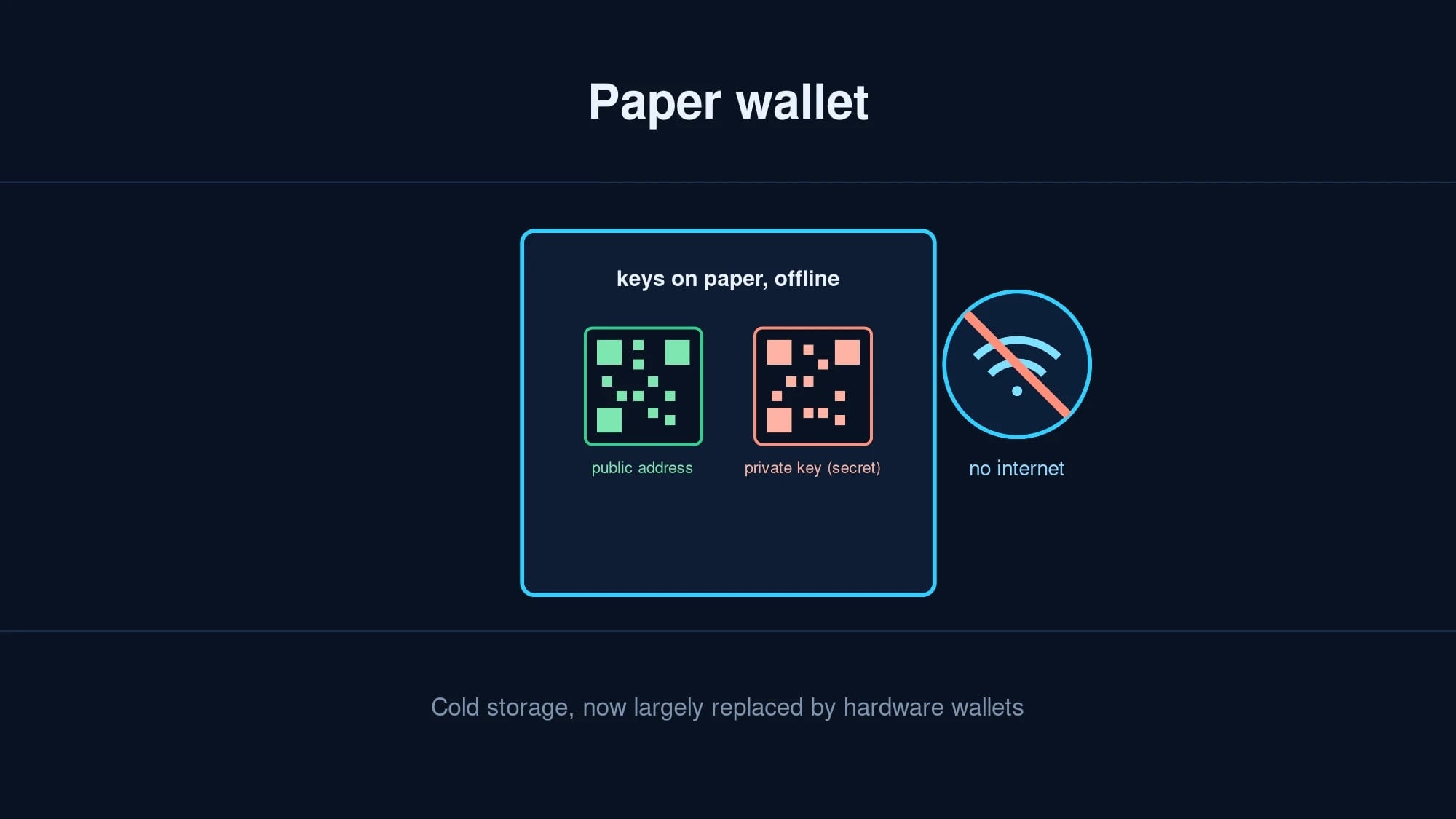
A paper wallet is an offline printout of your keys. Learn how it works, the real risks, and why hardware wallets and seed phrases replaced it.
Intent check: This explains what a paper wallet is, how it works, and why it is now a legacy method that has largely been replaced by safer options. It is the offline cousin of the private key guide, so start there if you are unsure what a private key actually is.
A paper wallet is one of the oldest ideas in crypto: take your keys completely offline by printing them onto a piece of paper. For years it was the go-to way to store coins for the long term, safe from hackers because it never touched the internet. Today it is mostly a museum piece, and understanding why is a good lesson in how crypto storage has matured.
This guide covers what a paper wallet is, how it works, the real risks that pushed it out of favor, and what you should use instead.
What Is a Paper Wallet?
A paper wallet is a physical printout, or a hand-written note, that holds a crypto wallet address and its matching private key. Both are usually shown twice: as text and as a QR code you can scan. Because the keys live on paper and nowhere else, it is a form of cold storage, meaning storage that is fully offline.
The idea is simple. The address is public, so you can share it to receive funds. The private key is secret, so anyone who sees it controls the coins. Print them, lock the paper away, and in theory your crypto is safe from any online threat.
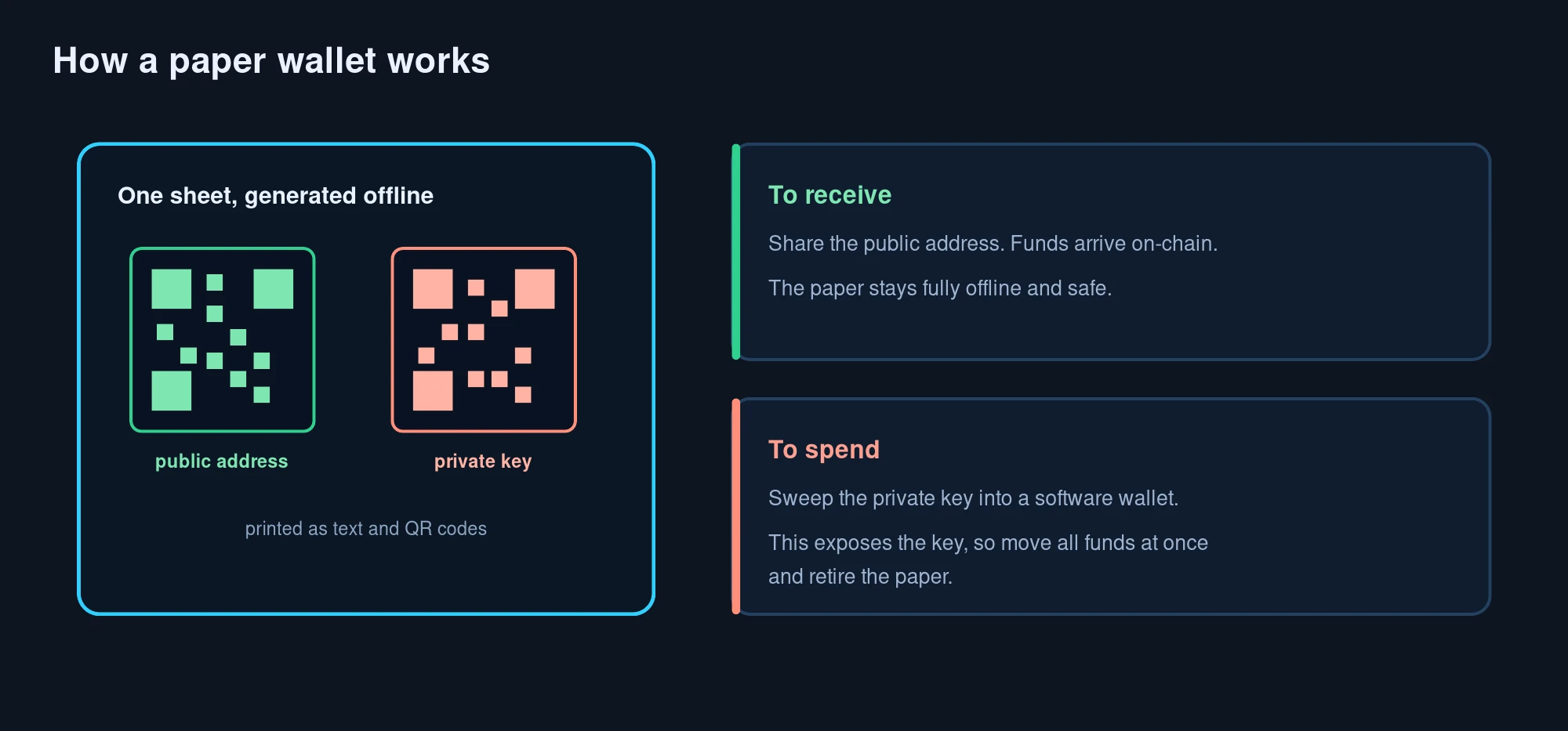
How a Paper Wallet Works
- To receive: you share the public address, or let someone scan its QR code, and funds arrive on-chain as normal.
- To store: you keep the paper somewhere physically safe. Nothing is online, so remote hackers cannot touch it.
- To spend: you import, or sweep, the private key into a software wallet. That wallet then signs a transaction and moves the funds.
The catch is in that last step. The moment you type or scan the private key into a connected device to spend, the key is exposed to that device and the paper stops being purely offline. Best practice was always to sweep the entire balance at once and then stop reusing that paper wallet.
Why People Used Them
Paper wallets became popular in the early Bitcoin years for one strong reason: a printout cannot be hacked over the internet. No exchange to get breached, no app to leak your keys, no malware that can reach a sheet of paper in a drawer. For holding coins you did not plan to move for years, that offline gap felt like the safest option available at the time.
The Real Risks
Paper Wallet vs the Modern Alternatives
Crypto storage moved on for good reasons. A cold wallet in hardware form keeps your private key inside a secure chip that never reveals it, even when you sign a transaction, which fixes the biggest weakness of paper. See the current options in Best Cold Wallets 2026.
Backups also improved. A seed phrase is a standardized, recoverable backup of an entire wallet, far more practical than a single fragile printout. And for software wallets, an encrypted keystore file protects the key with a password rather than leaving it in plain sight.
If You Still Want to Use One
- Generate it on an offline, clean device, ideally one that never reconnects to the internet, using trusted open-source tools.
- Never use a website that generates keys for you online.
- Make more than one copy and store them in separate safe places, protected from fire and water.
- Treat it as single-use: once you sweep the key to spend, move everything and retire that paper.
Key Takeaways
- A paper wallet is an offline printout of a wallet address and its private key, usually as QR codes.
- It is a form of cold storage that was popular early on because paper cannot be hacked online.
- Its weaknesses are real: physical damage, unsafe generation, key exposure when spending, and no built-in recovery.
- Hardware cold wallets and seed-phrase backups now do the same job far more safely.
- If you use one anyway, generate it offline, keep multiple copies, and treat it as single-use.
Paper wallets were a clever answer to a real problem at a time when there were few good options. The core instinct, keep your keys offline, is still exactly right. The method has simply been overtaken by hardware wallets and standardized backups that deliver the same offline safety without the fragility of a printed page.
This article is educational and is not financial advice.