What Is Azuki (ANIME)? Anime NFT Collection + Token Ecosystem Guide 2026
— By Whatsertrade in Tutorials
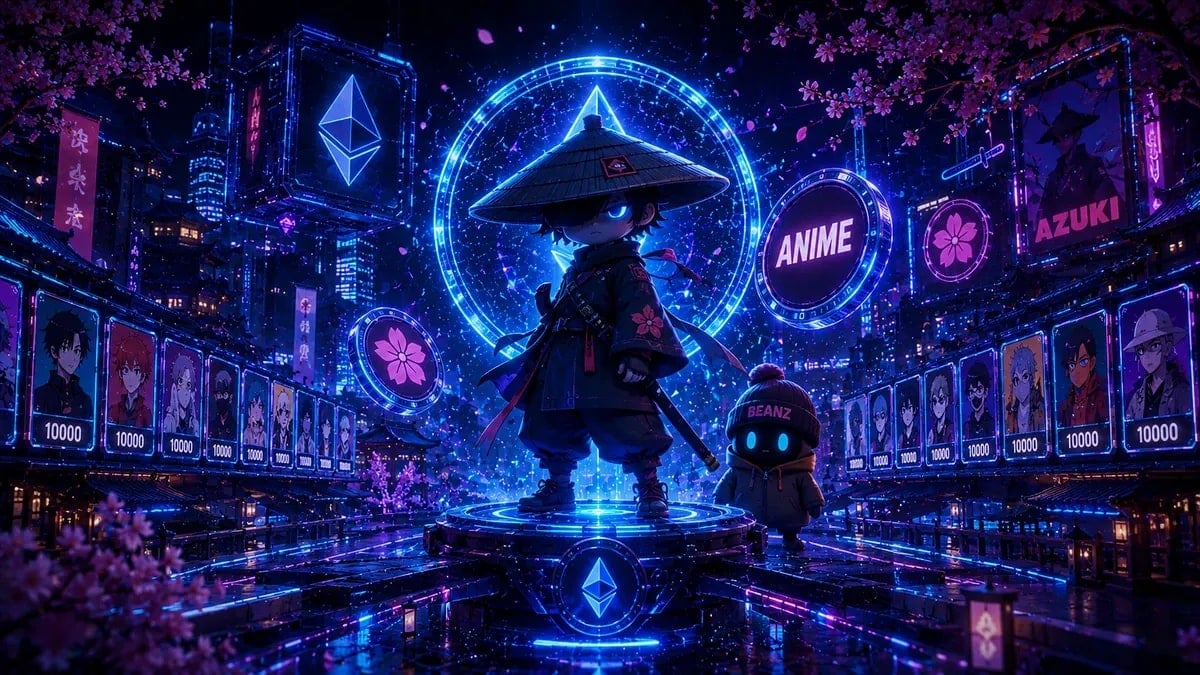
Azuki is a collection of ten thousand anime-styled profile picture NFTs minted on Ethereum on January 12, 2022 by Los Angeles studio Chiru Labs under the pseudonymous founder ZAGABOND. The ecosystem now includes the Beanz companion drop of 19,928 NFTs, the controversial Azuki Elementals collection from 2023, and AnimeCoin (ANIME) ERC-20 token launched January 23, 2025 on Ethereum and Arbitrum. Full 2026 guide: four rarity tiers (Human/Blue/Red/Spirit), 12 traits and 450 variations, The Garden community access, AnimeChain L3 and Anime.com platform, HYPE staker airdrop, ERC-721A innovation, and direct comparison vs BAYC, Pudgy Penguins, and Doodles.
What Is Azuki (ANIME)? Anime NFT Collection + Token Ecosystem Guide 2026
On January 12, 2022, a Los Angeles based studio called Chiru Labs minted ten thousand anime styled profile picture NFTs on Ethereum and sold out the entire collection in three minutes flat. The Dutch auction floor settled at roughly one ETH per token, the resulting secondary market detonated to a five figure floor within weeks, and a new visual language entered the non fungible token category. That collection was Azuki, and four years later it has grown into one of the most complete and most controversial digital culture brands in the entire NFT space, complete with a companion drop called Beanz, a follow up collection named Elementals, a custom Layer 3 blockchain called AnimeChain, and an ERC 20 token called AnimeCoin that launched on January 23, 2025.
Azuki did not arrive in a vacuum. It landed in the middle of the post Bored Ape Yacht Club PFP boom, when crypto Twitter was hungry for an aesthetic that did not look like another animal cartoon and when collectors with high cultural capital were specifically looking for a Japan inspired, anime native answer to BAYC. Azuki delivered exactly that, with a clean line work style, a unified urban skater meets samurai aesthetic, and a pseudonymous founder named ZAGABOND who positioned the project as the on chain home for the metaverse generation. Within months it had become a top five collection by trading volume, a fixture at NFT NYC, and a cultural reference point that brands as different as Nike, Bandai Namco, and Marvel later borrowed from.
This evergreen guide explains, in plain language, what Azuki is in 2026, where it came from, how the Beanz collection and the ANIME token fit into the broader ecosystem, what happened with the controversial Azuki Elementals drop in 2023, and what new collectors should know before clicking buy. We cover the rarity tiers, The Garden community access, the AnimeChain Layer 3 thesis, the HYPE staker airdrop, the ZAGABOND controversy, and direct comparisons against Bored Ape Yacht Club, Pudgy Penguins, and Doodles.
Featured Snippet
Azuki is a collection of ten thousand anime styled profile picture NFTs minted on Ethereum on January 12, 2022 by Chiru Labs under the pseudonymous founder ZAGABOND. The ecosystem expanded with Beanz, a companion drop of nineteen thousand nine hundred and twenty eight NFTs released in March 2022, the Azuki Elementals collection in June 2023, and the AnimeCoin token, ticker ANIME, an ERC 20 launched January 23, 2025 on Ethereum and Arbitrum. The project also runs a Layer 3 chain called AnimeChain and a content platform at Anime.com. Azuki holders gain access to The Garden, the project's gated community, and have received airdrops including ANIME for verified HYPE stakers.
Before we dive in, it is worth setting expectations. Azuki is, at the asset level, a profile picture NFT collection. Its value is driven by brand strength, community quality, derivative ecosystem activity, and reflexive collector behavior rather than by underlying cash flow. If you are new to the category, our explainer on what a non fungible token is and how NFTs work covers the framework. Azuki is unusual mainly because of its initial breakout speed, the depth of its derivative ecosystem, and the fact that the brand has now extended into a fungible token and a custom blockchain rather than staying inside the original PFP lane.
Azuki lives on Ethereum, the original home of the modern NFT market thanks to the ERC 721 standard. Our companion piece on how Ethereum works for beginners covers why CryptoPunks, BAYC, Pudgy Penguins, Doodles, and Azuki all launched on this chain. The companion ANIME token also touches Arbitrum, the leading Ethereum Layer 2 network, which matters for fees and bridging.

What Exactly Is Azuki as a Digital Asset
Strip away the brand story. As code, each Azuki is a token instance of an ERC 721 smart contract on Ethereum mainnet, with a fixed maximum supply of ten thousand tokens. ERC 721 is the original non fungible token specification on Ethereum and the dominant standard for profile picture collections. For a deeper dive, our breakdown of ERC 721, the NFT standard that powers most major collections covers the specifics. Each token is provably unique, transparently owned, transferable on any compatible marketplace, and permanently linked to a specific generative output.
The visual design is built from twelve trait categories and roughly four hundred and fifty individual variations. Categories include the type, which acts as the dominant rarity dimension, plus background, clothing, eyes, hair, hairstyle, neck, mouth, ear, and accessory layers. The rarest combinations command order of magnitude premiums in the secondary market. The system follows the generative PFP playbook pioneered by CryptoPunks and refined by Bored Ape Yacht Club, but the visual language is unmistakably anime, with strong line work, manga shading, and a unified urban Tokyo meets samurai mood board.
From a market structure perspective, Azuki trades primarily on OpenSea, Blur, Magic Eden, and a handful of NFT aggregators. Floor prices fluctuate with the broader NFT cycle, with historical highs during the early 2022 PFP mania and during the 2024 to 2025 cycle as the ecosystem expanded into AnimeChain and ANIME. Our walkthrough on how to use OpenSea to buy, sell, and verify NFT collections applies directly here. Verifying that a listing points at the real Azuki contract before signing any approval is non negotiable.
Chiru Labs and the Founder ZAGABOND
To understand Azuki the brand, you have to understand Chiru Labs and the pseudonymous founder ZAGABOND. Chiru Labs is the Los Angeles based studio that created Azuki, founded by a small team that included ZAGABOND alongside engineers, artists, and operators with prior technology and consumer brand experience. The studio focuses specifically on the intersection of anime aesthetics and crypto native culture, and Azuki was its debut project rather than a side bet.
ZAGABOND became publicly identified in May 2022 through a personal blog post disclosing prior work on several earlier NFT projects, some widely viewed as abandoned. That disclosure triggered a multi day controversy across crypto Twitter that came to be known as the ZAGABOND moment. The Azuki floor corrected sharply during the days following the post, and the community was forced to reckon with whether founder track record should be priced into a PFP collection at disclosure rather than launch.
By late 2022 and into 2023, ZAGABOND and Chiru Labs had largely rehabilitated the brand by shipping physical events, brand partnerships, and the Beanz drop. The episode is worth understanding because it shaped how Azuki operates today. The brand is unusually focused on real world delivery rather than promises, which is one reason it has survived multiple NFT cycle drawdowns intact.
January 12, 2022 and the Dutch Auction Launch
The Azuki mint is a piece of NFT history worth studying. Chiru Labs used a Dutch auction format, where price starts high and decreases over time, rather than the fixed price mint that had become standard by late 2021. The auction opened at three point four ETH per Azuki, decreased in scheduled steps, and cleared at roughly one ETH per token within minutes as demand absorbed the entire ten thousand supply. The mechanics were designed to be gas efficient and resistant to bot front running, and the technical execution became a reference point for later studio launches.
Chiru Labs also pioneered ERC 721A, an optimized variant of the standard ERC 721 implementation that significantly reduces the gas cost of minting multiple NFTs in a single transaction. The studio released ERC 721A as open source and it has since been adopted by dozens of other major NFT projects, giving Chiru Labs a meaningful place in the technical history of the category independent of market performance.
Within days of the mint, the Azuki floor climbed past two ETH, then past five ETH, and eventually peaked above thirty ETH per token during the early 2022 NFT bubble. The trajectory mirrored the broader PFP frenzy kicked off by CryptoPunks and BAYC but added a specifically anime aesthetic underrepresented in the leading collections, capturing a distinct collector segment waiting for clean Japanese inspired design.
The Four Rarity Tiers Inside the Collection
One of the more interesting design choices in Azuki is the four tier rarity structure built around the type trait. Every Azuki belongs to one of four type categories, which serve as the dominant rarity dimension and the primary driver of secondary market premiums. Understanding these tiers is essential for any collector considering a purchase, because the difference between a baseline Human Azuki and a Spirit Azuki can run into hundreds of ETH.
Human is the most common tier and represents the majority of the ten thousand supply. Human Azukis are the baseline characters and are the most visually accessible. They span every aesthetic variation across the twelve trait categories and form the floor of the collection. Most collectors who own an Azuki own a Human Azuki, and the social signaling of holding any Azuki, regardless of tier, remains intact at this level.
Blue Azukis are a rarer tier with blue skin tones and a distinct visual identity that sets them apart from the baseline Human tier. They command consistent premiums in the secondary market and are often associated with collectors who entered the project relatively early and chose to upgrade from a Human Azuki to a Blue.
Red Azukis are rarer still, with red skin tones and a stronger visual association with the project's samurai inspired aesthetic. The Red tier is small enough that individual Red Azukis often become recognizable across the community, and the tier as a whole commands a meaningful premium over Blue.
Spirit Azukis are the rarest tier, characterized by ghostly or supernatural design language that places them visually outside the standard urban character set. The Spirit tier is extremely small, and individual Spirit Azukis have historically traded for hundreds of ETH at peak market conditions. They are the closest analog inside Azuki to the apes with rare fur traits inside Bored Ape Yacht Club or the gold backed Pudgy Penguins inside that collection.
Beanz the Companion Drop With 19,928 NFTs
In March 2022, Chiru Labs delivered the first major ecosystem expansion with the Beanz airdrop. Every Azuki holder received Beanz NFTs directly into their wallet, with the total Beanz supply landing at nineteen thousand nine hundred and twenty eight tokens. The name is a direct reference to the red bean motif inside Azuki, where the Japanese word azuki literally refers to the red bean used in traditional Japanese sweets. Beanz are presented as companion characters with their own visual style, trait set, and market dynamics.
Beanz quickly developed an independent secondary market with its own floor price, rarity table, and collector base. Some collectors specialize in Beanz as a more affordable entry into the Azuki universe. Others view Beanz as a complement to a main Azuki holding. Either framing is supported by the design. Beanz are not formally required for Garden community access but are recognized as legitimate Azuki ecosystem assets across major venues.
Mechanically, the Beanz airdrop was an early example of a pattern that has since become standard across major NFT brands. Reward existing holders with adjacent free drops to deepen loyalty and expand the brand surface without diluting the original collection. BAYC used the same pattern with Mutant Apes and Bored Ape Kennel Club. Pudgy Penguins later applied similar mechanics with Lil Pudgys. Azuki was one of the cleanest early executions of the playbook.
The Garden and Community Access
Holding an Azuki, a Beanz, or both grants access to The Garden, the project's gated community ecosystem. The Garden is not a single Discord server. It is a constellation of community spaces, events, drops, and content channels that collectively form the social infrastructure of the brand. Token gated access means that ownership of the underlying NFT, verified on chain via wallet signature, is the membership credential.
The Garden has hosted in person events in Los Angeles, Tokyo, Hong Kong, and New York, with attendee lists drawn from verified holders. It has also been the conduit for surprise drops, streetwear collaborations, physical art shipments, and partnership announcements with brands ranging from anime studios to mainstream consumer companies. The community side of Azuki differentiates it from collections that exist mostly as JPEGs on a marketplace.
From an investor perspective, this matters because the long term value of any PFP collection depends heavily on whether the underlying community remains active. A collection with a dormant Discord and no real world activity drifts toward zero attention over multiple cycles regardless of how strong the original art was. Azuki has maintained an unusually active community for a four year old NFT brand, and that durability is one of the strongest arguments for continued relevance in 2026.
Azuki Elementals and the 2023 Controversy
In June 2023, Chiru Labs launched the Azuki Elementals collection, a drop of twenty thousand NFTs intended to expand the Azuki universe. The mint generated significant primary sales revenue, but the reaction from the existing holder base was immediately negative. The core complaint was that Elementals art was visually too similar to the original Azuki collection, diluting the visual exclusivity of existing tokens. The Azuki floor corrected sharply, and the episode became one of the most studied case studies of NFT brand mismanagement in the category's short history.
Chiru Labs responded over the following months with public communication, partial efforts to differentiate Elementals visually, and a long term pivot toward AnimeChain and the ANIME token thesis. The team acknowledged that the execution had hurt holders and committed to a direction less reliant on additional NFT drops and more focused on infrastructure, content, and a fungible token economy that could distribute value to existing holders.
The Azuki floor recovered through the 2024 to 2025 cycle as the ANIME narrative built momentum and AnimeChain came online, but Elementals remains a frequent reference point in discussions about supply expansion. For collectors evaluating Azuki today, the lesson is less about whether the team made a mistake and more about whether the response was structurally sound. Most observers conclude it was, and that the resulting pivot to ANIME and AnimeChain is more aligned with long term holder interests than additional PFP collections would have been.

AnimeCoin ANIME the ERC-20 Token Launched January 23 2025
On January 23, 2025, the Azuki ecosystem launched AnimeCoin, ticker ANIME, an ERC 20 fungible token deployed on Ethereum mainnet with a complementary deployment on Arbitrum. The launch represented the most significant strategic pivot in the project's history. Where Azuki had previously been a pure NFT collection with adjacent drops, ANIME introduced a fungible token economy that could distribute economic upside across a broader holder base than the ten thousand Azuki NFT holders alone.
If you are unfamiliar with the standard, our explainer on ERC 20, the fungible token standard that powers most Ethereum tokens covers the framework. ANIME behaves like any other ERC 20. It can be transferred, traded, bridged, staked, and integrated into DeFi applications. The Arbitrum deployment means smaller holders can transact without paying mainnet gas costs, essential for any token meant to power consumer scale activity.
ANIME trades on major DEXs including Uniswap, on Arbitrum L2 venues, and on a growing list of centralized exchanges that listed the token after launch. Liquidity is split across mainnet and Arbitrum, the standard pattern for dual chain deployments. Holders can monitor pairs and volume across both networks using our walkthrough on how to use DEXTools to monitor new pairs and verify token addresses.
AnimeChain the L3 and the Anime.com Platform
Alongside ANIME, the ecosystem developed AnimeChain, a custom Layer 3 settling on Arbitrum and ultimately on Ethereum. Layer 3 networks sit above L2s in the rollup hierarchy, inheriting security from Ethereum mainnet while specializing in throughput, low fees, and application specific features. AnimeChain is purpose built for anime and entertainment content, with native integration of the ANIME token, the Azuki and Beanz NFT collections, and the Anime.com platform.
Anime.com is the consumer facing platform where Azuki holders, ANIME token holders, and broader anime audiences converge. It hosts content, runs token gated experiences, lists events, and acts as the public face of the ecosystem for users who do not necessarily own an Azuki NFT. The thesis is that anime as a global content category is large enough to support a dedicated crypto native platform, with the Azuki brand as foundation rather than an isolated PFP collection.
For collectors and traders, the relevance is that AnimeChain and Anime.com create on chain demand surfaces for ANIME that did not previously exist. Token gated content, in platform payments, and AnimeChain native application activity all generate transaction volume the token captures. Whether this translates into durable token value over multiple cycles is the central open question of the ecosystem thesis as of 2026.
The HYPE Staker Airdrop and Token Distribution
One of the more interesting distribution choices around the ANIME token launch was the airdrop allocation directed at verified HYPE stakers. HYPE is the native token of the Hyperliquid decentralized perpetual exchange, and stakers during a defined snapshot window received an ANIME allocation at launch. The choice signaled that the Azuki team viewed Hyperliquid users as a sophisticated audience overlap that would engage with the broader anime ecosystem and contribute to early ANIME liquidity.
Airdrops to non holder communities are a recognizable pattern. They expand the holder base beyond the existing collection, bootstrap DEX pair liquidity, and create cross protocol relationships that can power future integrations. The HYPE staker airdrop is the most prominent example, but Azuki and Beanz holders also received dedicated allocations alongside treasury reserves and exchange liquidity provisions. The combined effect was a token launch with deliberately broad initial distribution rather than a concentrated single community allocation, which shapes governance, distribution risk, and community engagement durability going forward.
Azuki vs BAYC vs Pudgy Penguins vs Doodles
To understand where Azuki sits in the broader NFT ecosystem, it helps to compare it directly to three other major PFP collections that defined the 2021 to 2026 cycle. None of these comparisons are intended as price predictions. They simply help you place Azuki inside the right category.
Bored Ape Yacht Club is the elder of the modern PFP era, launched in April 2021 by Yuga Labs. BAYC has the largest holder base among premium collections, the deepest celebrity adoption, and the most extensive IP licensing program. It is closer to a quasi luxury good and an IP holding than a pure art collection. If you want the full background, our dedicated breakdown is in our Bored Ape Yacht Club complete NFT guide. Azuki, by contrast, is younger, more specifically aesthetic driven, and more concentrated in a particular cultural niche. The two collections occupy adjacent but distinct corners of the premium PFP category.
Pudgy Penguins is the post 2023 breakout, having rebuilt itself under new ownership into one of the most consumer accessible NFT brands, with physical toy distribution at major retailers and the PENGU token launched in late 2024. Our deeper coverage of that project is available in our Pudgy Penguins and PENGU token guide. Pudgy and Azuki are often discussed together because both have successfully bridged the NFT to fungible token transition. The brand positioning is very different, with Pudgy leaning into broad consumer friendliness and Azuki leaning into a more niche anime cultural identity.
Doodles is the third major comparable, launched in October 2021 with a pastel aesthetic and a focus on consumer brand partnerships including extensive musical and entertainment collaborations. Doodles has run a slower ecosystem expansion than Azuki, but the two projects share a focus on art quality and cultural positioning. Doodles holders and Azuki holders often have meaningful overlap in interests and collecting behavior, and both projects are recognized as some of the most coherent design forward NFT brands of the cycle.

Azuki Ecosystem Timeline From Mint to AnimeChain
Chiru Labs deploys the Azuki ERC 721 contract on Ethereum mainnet and runs a Dutch auction mint. All ten thousand Azuki NFTs sell out within minutes at a clearing price of approximately one ETH per token.
Azuki floor price climbs past five ETH per token. The collection enters the top five NFT collections by trading volume and establishes the anime PFP category at scale.
Chiru Labs delivers the Beanz airdrop. Every Azuki holder receives Beanz NFTs, with the total Beanz supply landing at nineteen thousand nine hundred and twenty eight tokens. Beanz develops an independent secondary market.
ZAGABOND publishes a personal blog post disclosing prior NFT projects. The community responds with a multi day controversy and Azuki floor price corrects sharply before partially recovering.
Azuki runs physical events in Los Angeles, Tokyo, and Hong Kong. The brand expands into streetwear collaborations, partnerships with anime studios, and consumer goods. The Garden community ecosystem becomes the central social layer of the project.
Azuki Elementals collection mints twenty thousand additional NFTs. Community pushback over visual similarity to the original collection triggers a sharp Azuki floor correction and forces Chiru Labs to publicly reset its long term strategy.
Chiru Labs publicly announces AnimeChain, the ANIME token plan, and the Anime.com platform vision. Holder communication shifts toward infrastructure and a fungible token economy as the next chapter of the ecosystem.
AnimeCoin, ticker ANIME, launches as an ERC 20 token on Ethereum mainnet with a complementary Arbitrum deployment. Distribution includes Azuki holders, Beanz holders, HYPE stakers, and treasury allocations for ecosystem development.
AnimeChain Layer 3 comes online. Anime.com platform expands with token gated content and community experiences. Azuki floor price stabilizes alongside the broader NFT cycle, with the ecosystem positioning itself as one of the most complete crypto native anime platforms in the market.
How the Azuki Ecosystem Actually Works in 2026
The Azuki ecosystem in 2026 has become substantially more complex than a single NFT collection. There are now multiple on chain assets, multiple chains, and multiple consumer interfaces sharing a single underlying brand. Understanding how each piece interlocks is essential for any collector or token holder weighing exposure.
At the asset layer, the ecosystem includes the original ten thousand Azuki NFTs, the nineteen thousand nine hundred and twenty eight Beanz NFTs, the Azuki Elementals collection, and the ANIME ERC 20 deployed on both Ethereum mainnet and Arbitrum. Each asset has its own contract, market structure, and holder base, but they share the Azuki brand and Chiru Labs studio. At the infrastructure layer, AnimeChain is a Layer 3 settling on Arbitrum, optimized for anime and entertainment content workflows rather than as a general purpose chain competing with Solana or BNB Chain. At the consumer layer, Anime.com aggregates content, events, community experiences, and token gated drops. Together with The Garden community spaces, Anime.com forms the social and consumer surface of the ecosystem.
Layer 1 Assets
Ten thousand Azuki NFTs, nineteen thousand nine hundred and twenty eight Beanz NFTs, and Azuki Elementals all live on Ethereum as ERC 721 contracts secured by the base layer.
Layer 2 Token
ANIME is deployed as an ERC 20 on Ethereum and on Arbitrum, enabling low cost trading and DeFi composability while preserving Ethereum settlement security.
Layer 3 Chain
AnimeChain is a purpose built Layer 3 settling on Arbitrum, optimized for anime content, ANIME native payments, and consumer scale activity inside Anime.com.
Real Risks Investors Should Take Seriously
Azuki is interesting precisely because the brand is unusually well executed for an NFT project, but the underlying assets still carry the standard risk profile of the NFT category, plus several risks specific to the Azuki ecosystem expansion. Investors should understand each of these before sizing any position.
The first risk is NFT cycle exposure. Azuki, Beanz, and Elementals all trade in markets that have historically been cyclical, with multi year drawdowns and aggressive recoveries. Any holder of Azuki ecosystem NFTs is implicitly long the broader PFP category cycle, and isolating Azuki specific outcomes from category wide outcomes is difficult. The 2022 to 2023 NFT bear market wiped out significant value across nearly every collection, including Azuki.
The second risk is brand fatigue and supply expansion. The Elementals episode demonstrated that adding NFT supply to an established collection can hurt floor prices if execution is not carefully managed. Any future expansions, additional drops, or aesthetic extensions to the Azuki universe carry the same risk. Investors should evaluate any new supply announcements carefully against the Elementals precedent.
The third risk is ANIME token specific. As a relatively new ERC 20 launched in January 2025, the ANIME token has limited price history compared to the underlying Azuki NFTs. Token economics, the ongoing relationship between ANIME and the NFT collections, the AnimeChain demand surface, and broader fungible token market conditions all influence ANIME value in ways that are still being discovered. Holders should treat ANIME as a separate risk position from the NFT collections rather than as an automatic extension.
The fourth risk is operational. NFT and token holders are heavy users of wallets, browser extensions, marketplaces, and bridges, which makes them prime targets for phishing, fake airdrops, and address poisoning attacks. Our guide on how to avoid crypto address poisoning scams is required reading for anyone actively trading Azuki, Beanz, or ANIME from a hot wallet. Hardware wallet usage for any meaningful position is strongly recommended.
Azuki Pros and Cons at a Glance
PROS
One of the strongest art directions and brand identities in the entire NFT category, with a distinctive anime aesthetic that has remained relevant across multiple cycles.
Active four year track record of physical events, community delivery, and brand partnerships that few NFT collections have matched.
Multi asset ecosystem spanning Azuki NFTs, Beanz NFTs, the ANIME ERC 20 token, AnimeChain, and the Anime.com platform.
ERC 721A contract innovation released as open source has shaped the entire NFT category technical landscape.
Clear rarity structure with four well defined tiers and a stable collector culture inside The Garden community.
CONS
NFT cycle exposure remains the dominant risk for the collection, with historical drawdowns capable of erasing multiple years of gains.
Elementals controversy demonstrated that supply expansion can damage floor prices, and any future drops carry the same risk.
ANIME token is relatively new and has limited price history, with token economics still being discovered by the market.
ZAGABOND founder controversy from 2022, although largely rehabilitated, remains a reputation question for some collectors.
Operational risks including phishing, fake mint sites, address poisoning, and impostor contracts are persistent for any NFT holder.
Best Practices For Anyone Entering the Azuki Ecosystem
If, after weighing the brand history and the risks, you decide to allocate capital to Azuki, Beanz, or ANIME, a few discipline rules separate sustainable participation from emotional buying. None of this is investment advice. It is operational hygiene.
Verify every contract address before signing any approval. Imposter Azuki and Beanz contracts have circulated on every major NFT marketplace, and copy paste mistakes are common. Always reference the official contract addresses listed on the Azuki project site, on OpenSea verified collection pages, and on at least one major analytics dashboard before approving any transaction. The cost of a single wrong approval can be the full value of your wallet.
Use a dedicated hot wallet for active trading and a hardware wallet for size positions. NFT holders accumulate signature approvals across many marketplaces and contracts, and a breach of any one of those should not put your long term collection at risk. Cold storage remains the right home for any Azuki, Beanz, or ANIME position you do not plan to actively trade.
Size positions assuming meaningful drawdowns are possible. Even the highest quality NFT collections, including Azuki, have experienced multi year drawdowns of seventy percent or more from local highs. If you would not be comfortable with the dollar value of your Azuki holding falling significantly in a broader NFT market correction, you have overallocated. The same applies to ANIME token positions, which can move with both crypto wide cycles and NFT specific cycles.
Stay aware of correlation across the NFT category. When BAYC, Pudgy Penguins, Doodles, and the broader top fifty collections weaken, Azuki typically weakens with them. The same holds in rallies. ANIME also moves with broader Ethereum and Arbitrum trends in addition to Azuki specific catalysts. Engaging with The Garden community gives you qualitative information no analytics dashboard can replicate. Holders who participate in events generally have a better feel for the health of the brand than those who treat the NFT purely as a financial position.
Frequently Asked Questions About Azuki ANIME and Beanz
1. What is Azuki in one sentence?
Azuki is a collection of ten thousand anime styled profile picture NFTs minted on Ethereum on January 12, 2022 by the Los Angeles based studio Chiru Labs under the pseudonymous founder ZAGABOND.
2. Who created Azuki?
Azuki was created by Chiru Labs, a Los Angeles based studio, with a pseudonymous founder known as ZAGABOND. The team was publicly identified in May 2022, which triggered a multi day community controversy that the brand later recovered from through consistent shipping of physical events, partnerships, and ecosystem expansions.
3. What are the four Azuki rarity tiers?
The four rarity tiers are Human, Blue, Red, and Spirit, defined by the type trait inside the collection. Human is the most common, Blue is rarer with blue skin tones, Red is rarer still with red skin tones, and Spirit is the rarest tier with ghostly or supernatural design language. Spirit Azukis have historically traded for hundreds of ETH at peak conditions.
4. What are Beanz NFTs and how many exist?
Beanz are a companion NFT collection to Azuki released in March 2022 as an airdrop to Azuki holders. The total Beanz supply is nineteen thousand nine hundred and twenty eight tokens. The name refers to the red bean motif inside the Azuki universe, where the Japanese word azuki literally means red bean. Beanz develop an independent secondary market alongside the main Azuki collection.
5. What is the ANIME token?
AnimeCoin, ticker ANIME, is an ERC 20 fungible token launched on January 23, 2025 on Ethereum mainnet with a complementary deployment on Arbitrum. ANIME is the native economic asset of the broader Azuki ecosystem, including AnimeChain and the Anime.com platform, and was distributed via airdrop to Azuki holders, Beanz holders, HYPE stakers, and other allocations.
6. What is AnimeChain?
AnimeChain is a custom Layer 3 blockchain that settles on top of Arbitrum and ultimately on Ethereum. It is purpose built for anime and entertainment content workflows, with native integration of the ANIME token, the Azuki and Beanz NFT collections, and the broader Anime.com consumer platform.
7. What happened with Azuki Elementals?
Azuki Elementals was a collection of twenty thousand additional NFTs launched in June 2023. The community pushed back over visual similarity to the original Azuki collection, the Azuki floor price corrected sharply, and the episode forced Chiru Labs to publicly reset the long term strategy toward infrastructure and the ANIME token rather than further NFT supply expansion.
8. Who is ZAGABOND?
ZAGABOND is the pseudonym of one of the co founders of Azuki and Chiru Labs. He became publicly identified in May 2022 through a personal blog post disclosing prior involvement in earlier NFT projects, some of which were viewed as abandoned. The disclosure triggered a multi day community controversy that the brand later recovered from through consistent shipping.
9. How does Azuki compare to Bored Ape Yacht Club?
Bored Ape Yacht Club is the elder of the modern PFP era, with the largest premium NFT holder base, the deepest celebrity adoption, and the most extensive IP licensing. Azuki is younger, more aesthetic driven, and more concentrated in an anime cultural niche. Both occupy adjacent corners of the premium PFP category but appeal to overlapping but distinct collector segments.
10. Where can I buy Azuki NFTs or the ANIME token?
Azuki NFTs and Beanz NFTs trade primarily on OpenSea, Blur, Magic Eden, and major NFT aggregators on Ethereum. The ANIME token trades on Uniswap and other decentralized exchanges on Ethereum mainnet and Arbitrum, plus a growing list of centralized exchanges. Always verify the official contract addresses before signing any approval or swap.
11. What are the main risks of owning Azuki or ANIME?
The main risks include NFT cycle exposure with historical drawdowns of seventy percent or more, brand fatigue and supply expansion risk demonstrated by the Elementals episode, ANIME token specific risks given its relatively recent launch, and operational risks including phishing, fake mint sites, address poisoning, and impostor contracts.
12. Is Azuki a good investment in 2026?
Azuki is one of the most established premium NFT collections in the category, with a four year track record, an active community, and an expanding ecosystem that now includes the ANIME token and AnimeChain. Whether it suits any specific collector or investor depends on risk tolerance, time horizon, position sizing, and broader portfolio context. This guide is informational and not financial advice.
Final Thoughts On Azuki Heading Into The Rest Of The Cycle
Azuki is one of the most complete and most instructive NFT brands of the modern crypto era. Its origin story is a textbook execution of a Dutch auction, a strong aesthetic differentiator, and a fast initial breakout. Its middle story includes both a serious controversy in the ZAGABOND disclosure and a major mistake in the Elementals drop, neither of which destroyed the brand because Chiru Labs responded with shipping rather than excuses. Its current story, anchored in the ANIME token, AnimeChain, and Anime.com, represents one of the most ambitious attempts in the entire NFT category to translate a profile picture collection into a durable consumer platform.
For new collectors and token holders approaching the ecosystem in 2026, the right frame is neither cynicism nor mythology. Azuki is a premium NFT collection with a strong art direction, an active community, a four year delivery track record, and an expanding ecosystem that now includes a fungible token, a custom Layer 3 chain, and a consumer facing platform. The collection carries real risks, including NFT cycle exposure, supply expansion sensitivity demonstrated by Elementals, ANIME token specific risk, and operational risks common to every NFT holder. Treated as a thoughtful allocation inside a broader digital asset portfolio with clear sizing rules and disciplined custody practices, Azuki and ANIME can be coherent positions. Treated as a guaranteed multiplier, they are a fast path to a painful lesson. Do the homework, verify contracts, evaluate the community on its own merits, and remember that what makes Azuki interesting is not the price chart. It is the fact that a small studio in Los Angeles has, against significant odds and through several near disasters, built one of the most complete crypto native anime brands the industry has produced so far.
Related Guides
- What Are Pudgy Penguins (PENGU)? NFT Collection + Token Guide 2026
- What Is Milady (CULT)? Remilia NFT + Cult Coin Ecosystem Guide 2026
- The Open League (TOL): TON Ecosystem Program Guide
- What Is MyShell (SHELL)? The Decentralized AI Agent Ecosystem Explained in 2026
- What Is Cosmos (ATOM): Complete IBC Ecosystem Guide (2026)