What Is the Supertrend Indicator in Crypto Trading? 2026 Guide
— By Tony Rabbit in Tutorials
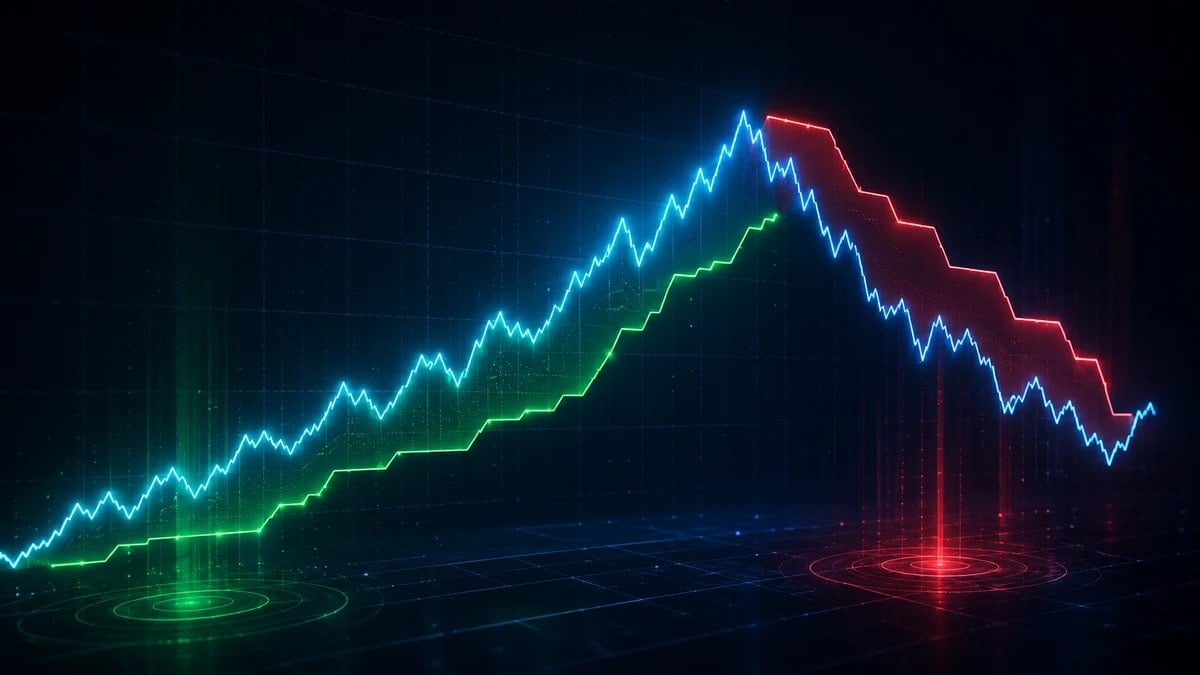
Learn how the Supertrend indicator works in crypto trading, how it uses ATR and a multiplier, and how to read its flips for trend direction, stops, and timing.
The Supertrend indicator is one of the most popular tools for traders who want a clean, visual read on market direction. Instead of cluttering your chart with multiple lines and oscillators, it plots a single line that hugs price and tells you, at a glance, whether the market is trending up or down. That simplicity is exactly why it has become a staple among crypto traders working across fast moving assets.
In this 2026 guide we break down what the Supertrend indicator is, how it is built on the Average True Range, how to read its color flips, and how to use it for confirming trends, setting trailing stops, and timing entries and exits. We also cover its main weakness so you know when to trust it and when to be careful.
What Is the Supertrend Indicator?
The Supertrend is a trend following indicator built on top of the Average True Range, or ATR, which is a measure of volatility. It plots a single line that follows price action on the chart. The line does not predict where price will go. Instead, it reacts to recent price movement and volatility to show you the direction the market is currently leaning.
The key idea is positioning. When the Supertrend line sits below price, and is often colored green, the trend is read as up. When the line flips above price and turns red, the trend is read as down. Because everything is condensed into one line with two states, the indicator is easy to interpret even in a glance, which is part of why beginners and experienced traders alike keep it on their charts.

How the Supertrend Indicator Works
Under the hood, the Supertrend uses the ATR to gauge how much an asset typically moves over a chosen period. It then builds upper and lower bands around price using that volatility reading multiplied by a factor. From those bands it derives the single visible line you see on the chart. As volatility expands, the bands widen and the line gives price more room. As volatility contracts, the bands tighten and the line tracks price more closely.
The ATR Foundation
The Average True Range captures the size of recent price swings. A volatile asset produces a larger ATR, and a calmer asset produces a smaller one. By anchoring the indicator to ATR, the Supertrend adapts to the asset and the moment rather than using a fixed distance from price. This adaptive quality is what makes it useful across different coins and timeframes without constant retuning.
The Trend Flip
The most important event on the chart is the flip. The flip happens when price closes through the line. If price has been trending up with the line below it, and then a candle closes below the line, the indicator flips: the line jumps above price and switches to red, signaling a change to a downtrend. The reverse happens when price closes back above a red line, flipping it green. Because the flip is tied to a candle close rather than a brief intrabar spike, it filters out some of the noise that catches traders off guard.
Default Settings and the Multiplier
The Supertrend has two core inputs: the ATR period and the multiplier. The default settings are commonly an ATR period of 10 and a multiplier of 3. These defaults are a balanced starting point, but understanding how each input behaves lets you adapt the tool to your style.
The multiplier is the dial that controls sensitivity. A higher multiplier pushes the bands further from price, which gives fewer and slower signals because price has to move more before a flip occurs. A lower multiplier pulls the bands closer to price, which produces more signals that are faster but also noisier. Swing traders who want to ride longer moves often raise the multiplier, while shorter term traders who want quicker reactions may lower it. The ATR period works similarly: a longer period smooths the line and a shorter period makes it more reactive.

How to Use the Supertrend in Crypto Trading
There are three common ways traders put the Supertrend to work, and they often combine all three on the same chart.
Confirming Trend Direction
The most basic use is direction confirmation. A green line below price tells you the bias is bullish, and a red line above price tells you the bias is bearish. Many traders use this as a simple filter, only looking for long setups while the line is green and only looking for short setups while it is red. This keeps you trading in the direction of the prevailing move rather than fighting it.
Providing a Trailing Stop
Because the line follows price at a volatility based distance, it doubles as a natural trailing stop. In an uptrend, the green line rises beneath price and can mark where you would exit if momentum breaks. As long as price stays above the line, the trend is intact, and when price closes through it you have a clear, predefined exit. This removes a lot of guesswork from managing an open position.
Timing Entries and Exits
The flips themselves can act as entry and exit triggers. A flip from red to green can signal the start of an upward move worth entering, while a flip from green to red can signal an exit or even a short. Traders monitoring tokens on charting platforms such as DEXTools often watch for these flips on higher timeframes to avoid reacting to every minor wiggle. The cleaner the timeframe, the more reliable the flip tends to be.
Limitations and How to Manage Them
No indicator is perfect, and the Supertrend has a clear weakness: it lags and it produces whipsaws in sideways or choppy markets. Because it is a trend following tool, it shines when there is an actual trend. When price chops in a range, the line can flip back and forth repeatedly, handing you a string of false signals and small losses that add up quickly.
The practical fix is to never rely on the Supertrend alone. Combine it with momentum tools like the RSI to confirm that a move has real strength behind it, or use higher timeframe context to make sure you are trading with the larger trend rather than against it. If the higher timeframe is ranging, treat flips on lower timeframes with extra caution. Above all, always manage risk with position sizing and stops, because even a good signal can fail. This is educational information, not financial advice, and the indicator offers no price predictions.
Conclusion
The Supertrend indicator earns its popularity by turning volatility and trend into a single, readable line. Built on the ATR and tuned with a multiplier, it tells you direction through its position and color, flips on a decisive candle close, and serves equally well for confirming trends, trailing stops, and timing trades. Its main drawback is whipsaws in flat markets, so pair it with a momentum tool and higher timeframe context, and keep disciplined risk management at the center of every decision. Used that way, the Supertrend is a dependable companion for navigating crypto trends.
Beyond the Flip: Supertrend's Nuances in Volatile Markets
While the Supertrend indicator's core strength lies in its clear visual signals for trend direction, its application in the highly volatile crypto markets demands a more nuanced understanding. A simple "flip" from green to red, or vice versa, might suggest an immediate reversal, but experienced traders recognize that false signals, especially during periods of consolidation or whipsaw action, are common. The indicator's reliance on Average True Range (ATR) means its sensitivity to price movements is dynamic, adjusting to market conditions. However, this adaptability can also be a double-edged sword, as rapid increases in volatility can lead to wider bands and potentially delayed entry or exit signals.
Consider the psychological impact of a Supertrend flip. A sudden change in color can trigger emotional responses, leading to premature actions. Instead of reacting impulsively, it's crucial to contextualize the signal within the broader market structure. Is the flip occurring at a significant support or resistance level? Is it confirmed by other indicators, such as volume or momentum oscillators? A lone Supertrend flip, particularly on lower timeframes, should be treated with caution, serving as an alert rather than a definitive command.
Integrating Supertrend with Confirmation Strategies
- Volume Confirmation: A Supertrend flip accompanied by a significant increase in trading volume lends greater credibility to the signal, suggesting strong conviction behind the price movement.
- Higher Timeframe Alignment: Always check the Supertrend direction on a higher timeframe (e.g., daily if trading hourly). A bullish flip on a lower timeframe against a bearish higher timeframe Supertrend suggests a counter-trend move, which carries higher risk.
- Support and Resistance: Evaluate if a Supertrend flip occurs at established support or resistance zones. A bearish flip breaking below a major support or a bullish flip breaking above a major resistance is a stronger signal.
- Candlestick Patterns: Combine Supertrend signals with classic candlestick patterns. A bullish Supertrend flip confirmed by a strong bullish engulfing pattern or a hammer at support is more robust.
- Divergence Analysis: Look for divergences between price action and momentum oscillators (e.g., RSI, MACD) around Supertrend flips. A hidden bullish divergence preceding a Supertrend buy signal, for instance, can strengthen the conviction.
Related Guides
- What Is the ADX Indicator in Crypto Trading? 2026 Guide
- What Is VWAP in Crypto? Complete Indicator Guide 2026
- What Is Wash Trading in Crypto? Beginner Guide (2026)
- Wash Trading in Crypto: Red Flags Explained
- What Is Trading Volume in Crypto? How to Read It (2026)
- What Is the Parabolic SAR Indicator in Crypto Trading? (2026
- What Is Williams %R in Crypto Trading? Indicator Guide (2026
Frequently Asked Questions
What is the Supertrend indicator?
The Supertrend is a trend-following indicator plotted on the price chart that signals the prevailing trend direction. It typically appears below price in an uptrend and above price in a downtrend.
How does the Supertrend indicator work?
It uses Average True Range to measure volatility and applies a multiplier to set bands around price. When price crosses these bands, the indicator flips to indicate a change in trend direction.
What do the ATR and multiplier settings do in Supertrend?
The ATR period controls how volatility is measured and the multiplier controls how far the bands sit from price. Higher values make the indicator less sensitive and slower to flip, while lower values make it more reactive.
Is the Supertrend indicator good for crypto trading?
It can help identify trend direction and potential stop levels, but it tends to perform poorly in choppy, sideways markets where it may flip frequently. Many traders combine it with other tools for confirmation.