How to Spot When a Token Thesis Has Expired
— By Whatsertrade in Tutorials
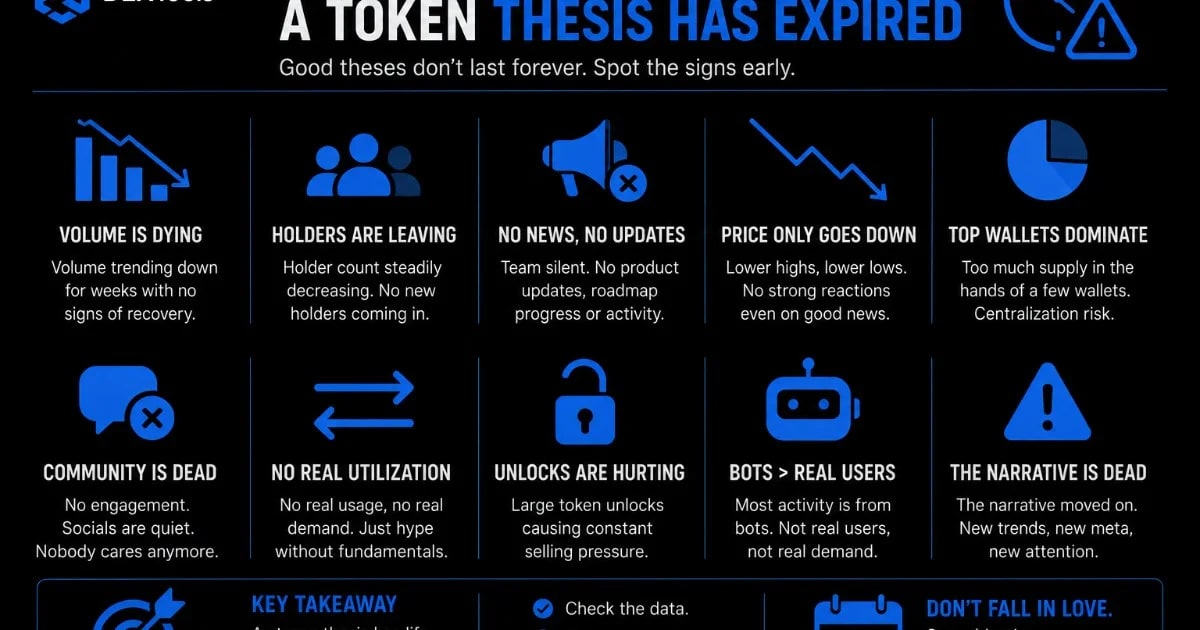
Learn how to identify when a crypto token thesis has expired using DEXTools data, including liquidity, volume, holders, narrative strength, and chart structure.
Every token trade starts with a thesis. Maybe the token is part of a strong narrative. Maybe liquidity is improving. Maybe volume is growing. Maybe the chart is showing strength.
But a thesis can expire.
Key Takeaways
A token that made sense yesterday may no longer make sense today. The market may change, liquidity may fade, volume may disappear, or the narrative may move somewhere else.
Using DEXTools, traders can identify when a token thesis is no longer valid.
What Is a Token Thesis?
A token thesis is the reason you are watching or trading a token.
Examples:
“This token belongs to a growing narrative.”
“Liquidity is improving and buyers are active.”
“The chart is consolidating after a strong move.”
“Holders are growing while sell pressure declines.”
A good thesis is specific. A weak thesis sounds like hope.
Why Token Theses Expire
Crypto moves quickly. A thesis can expire because:
Volume fades.
Liquidity decreases.
Holder growth stalls.
Large wallets start selling.
The chart breaks structure.
The narrative loses attention.
A stronger competitor appears.
When the original reason for the trade disappears, the thesis has expired.
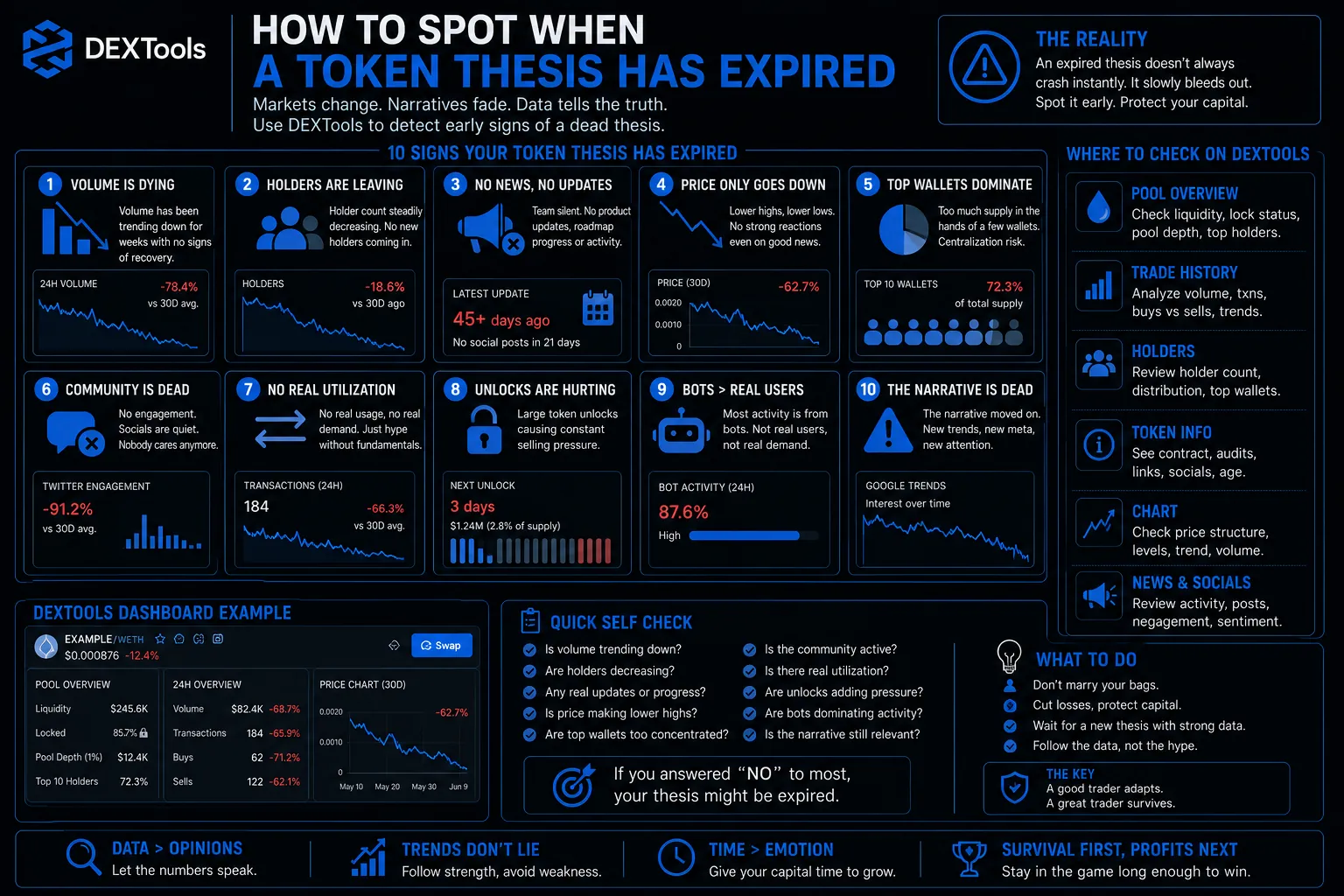
Sign 1: Volume No Longer Supports the Idea
If your thesis depends on growing attention, volume should support it.
If volume fades for a long period, the market may no longer care.
Ask:
Is volume still active?
Has activity declined?
Are buyers still entering?
Did volume disappear after the first pump?
A thesis based on momentum cannot survive without activity.
Sign 2: Liquidity Weakens
Liquidity is a major part of thesis health.
If liquidity drops, exit risk increases. If liquidity becomes too thin, the setup may no longer be valid.
Ask:
Has liquidity declined?
Is the pool less stable?
Does liquidity still support the current valuation?
If liquidity was part of your thesis and it weakens, you need to reassess.
Sign 3: Holder Growth Stalls
Holder growth can show whether participation is expanding. If holder growth stops while price weakens, the token may be losing attention.
Ask:
Are new holders still entering?
Are top holders selling?
Is distribution improving or worsening?
If holder growth was part of the thesis and it no longer supports the setup, the thesis may be expired.
Sign 4: The Chart Breaks Structure
A chart does not need to move up forever, but it should respect the structure that supported your thesis.
Warning signs include:
Failed support.
Lower highs.
Sharp selloffs.
No recovery after volume spikes.
Repeated failed breakouts.
If the chart no longer matches your original idea, do not force the thesis.
Sign 5: The Narrative Moves On
Narratives can shift quickly. If a token depends heavily on a narrative and that narrative fades, the thesis may weaken.
Ask:
Is the market still paying attention?
Are similar tokens performing better?
Is the token still relevant to the narrative?
Is social attention supported by data?
A narrative thesis needs ongoing confirmation.
How to Update Your Decision
When a thesis weakens, choose one action:
Refresh: The thesis is still valid but needs updated conditions.
Downgrade: The token remains watchable but no longer high priority.
Exit or avoid: The original reason is gone.
The worst choice is to keep believing in an old thesis without new evidence.
Final Thoughts
A token thesis is not permanent. It should be tested and updated as market data changes.
DEXTools helps traders track whether liquidity, volume, holders, chart structure, and narrative strength still support the original idea.
When the data changes, the thesis should change too.
Good traders are not loyal to old ideas. They are loyal to better evidence.
The Attention Decay Curve: How to Know When a Trending Token Is Losing Power When DEXTools Signals Disagree: How to Make Sense of Conflicting Token Data Liquidity to Market Cap Ratio: Spotting Risky Tokens Holder Churn Rate: Why Growing Holder Count Can Still Be Bearish