The Second Pump: How to Spot Tokens That Recover After the First Dump
— By Whatsertrade in Tutorials
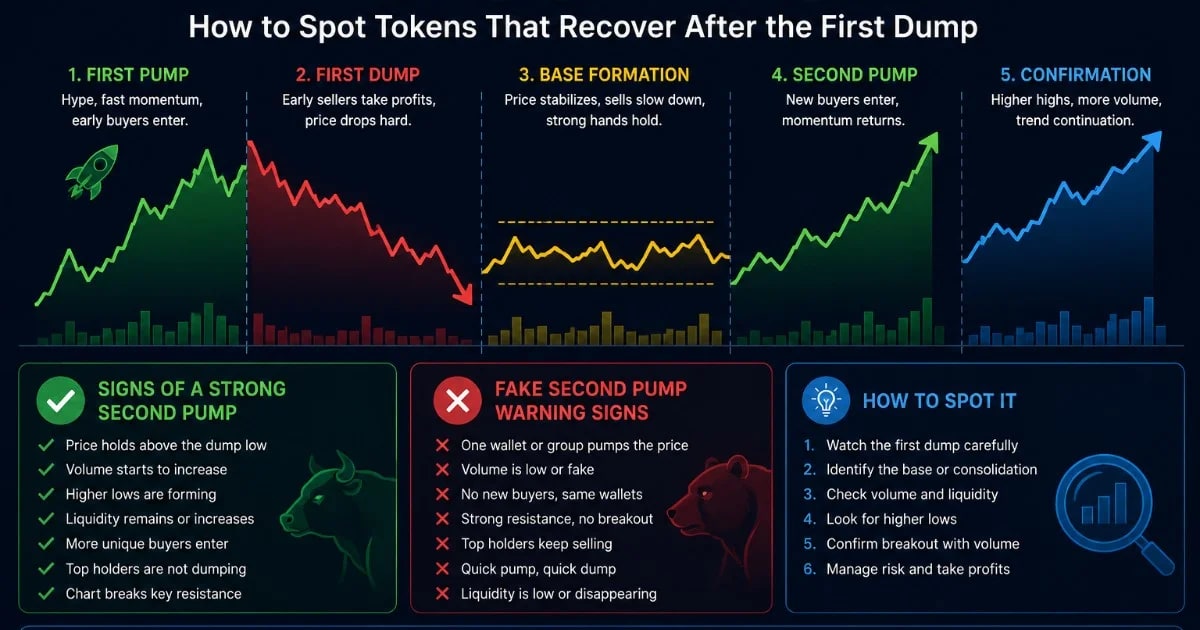
Learn how to analyze token behavior after initial sell-offs and spot potential second pumps for better trading opportunities.
Many traders focus on the first pump of a new token. The first green candles are exciting, fast, and full of emotion. But the first pump is often the most dangerous phase because early buyers, snipers, and insiders may sell into new demand.
The second pump can be more interesting.
A token that dumps after launch and then recovers may reveal stronger market structure. It may show that buyers are willing to return, liquidity is still present, and the project has more than one wave of attention.
The challenge is knowing which second pumps are real and which are only another trap.
Why the First Dump Matters
The first major dump is not always a death sentence. In many new tokens, early volatility is normal. Snipers may exit, launch buyers may take profit, and weak hands may leave.
What matters is how the token reacts after the dump.
A weak token usually keeps falling after the first major selloff. Volume dries up, buyers disappear, and liquidity may be removed. A stronger token may stabilize, form a base, and attract new buyers at lower levels.
The first dump reveals who is willing to stay.
What a Healthy Recovery Looks Like
A healthy second pump usually starts with stabilization. The token stops making lower lows, sell pressure slows, and buyers begin entering again.
Positive recovery signs include:
- Volume returns after the dump
- Liquidity remains stable
- Holders do not collapse
- New buyers enter gradually
- The chart forms a base
- The second pump has broader participation
- Large wallets stop selling aggressively
A real second pump should not depend on one wallet or one influencer. It should show renewed market interest.
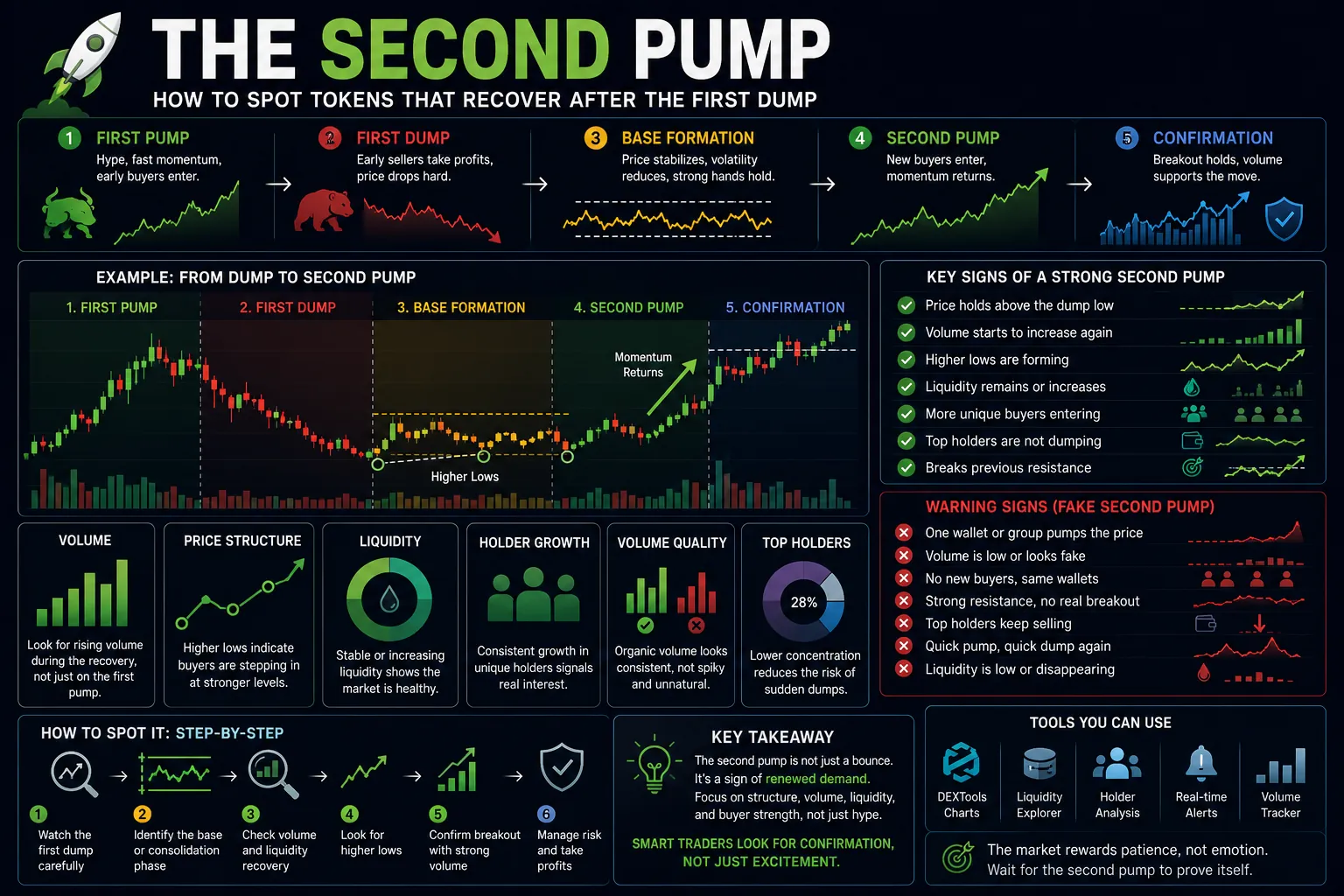
What a Fake Second Pump Looks Like
Some second pumps are only temporary liquidity traps. They may be created by a few wallets trying to attract exit liquidity.
Warning signs include:
- One or two wallets driving the recovery
- Weak liquidity despite rising price
- Repeated sell pressure after each green candle
- No holder growth
- Volume spikes without real follow through
- Social hype increases but buyers remain limited
If the second pump looks forced, traders should be careful. A recovery without real demand can fail quickly.
Why Liquidity Is Critical
Liquidity is one of the most important signals during a second pump. If liquidity stays stable or increases after the first dump, that can support a healthier recovery.
If liquidity decreases while price rises, the move may be fragile. A token can pump again on thin liquidity, but it can also collapse just as fast.
Traders should compare the second pump with the first pump. If the second move has better liquidity, more buyers, and less concentration, it may be stronger than the launch move.
How to Analyze the Second Pump
A practical checklist includes:
- Did price hold above the post dump low?
- Is volume returning naturally?
- Are more wallets buying?
- Is liquidity still present?
- Are top holders selling less?
- Is the second pump slower and more stable?
- Does the chart show higher lows?
The best second pumps often look less explosive than the first. They build structure instead of relying only on hype.
Final Thoughts
The first pump gets attention, but the second pump can reveal conviction.
A token that survives the first dump and attracts new buyers may have stronger potential than one that only moves once. Still, traders need to separate real recovery from artificial activity.
The second pump is not a guarantee. It is a signal to investigate deeper.
The First Red Day: What a Token’s First Major Selloff Reveals The First 72 Hours of a Token Launch: How to Spot Real Survival Signals After the Hype Fake Volume vs Real Demand: How to Spot Artificial Momentum in DeFi Trading Exit Liquidity Mapping: Who Might Sell Into You Before You Buy?