What Is Unlocked Liquidity in Crypto? Guide (2026)
— By Tony Rabbit in Tutorials
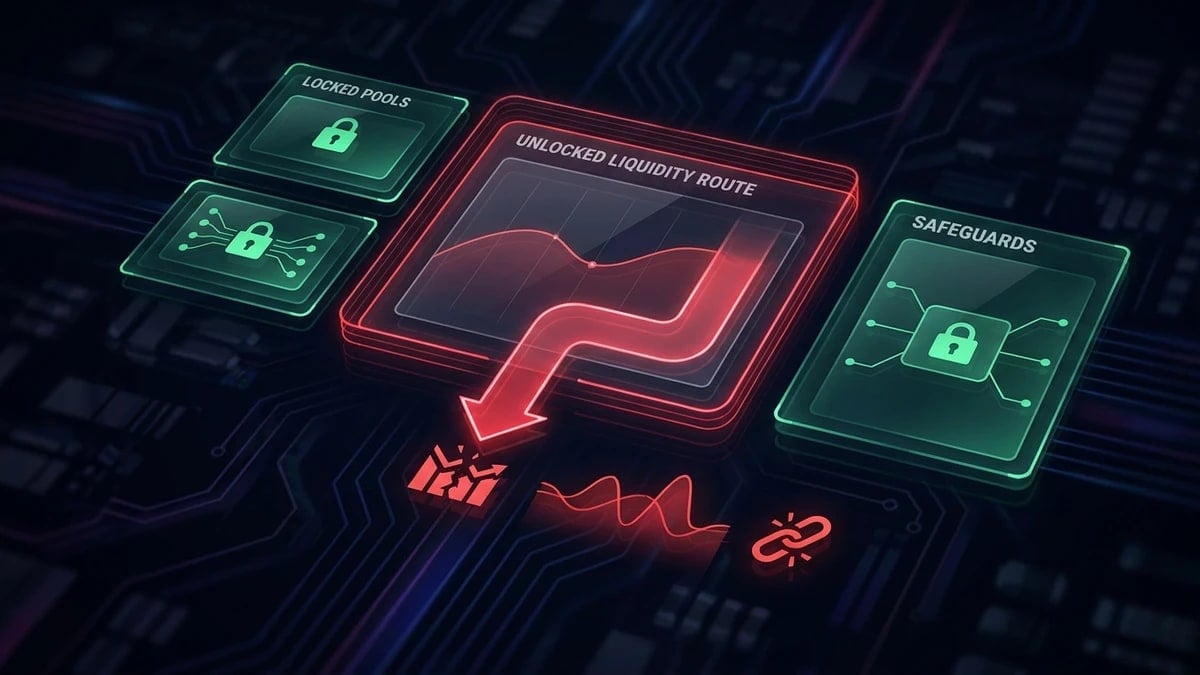
Learn what unlocked liquidity in crypto really means, why it matters for trust and exits, and how to read it before you buy a token in 2026.
When traders hear the phrase unlocked liquidity, they usually think of one thing: rug risk. That instinct is not wrong, but it is incomplete. Unlocked liquidity is not automatic proof of fraud. What it does mean is that the market depth supporting a token may still be under someone’s active control.
Intent check: This page is about the absence of an LP lock and the risk that creates. If you need the LP-locking tool itself, read What Is a Liquidity Locker in Crypto?. If you need token-supply locks rather than liquidity locks, read What Is a Token Locker in Crypto?
That control matters a lot. A token can look strong on the chart while its real trading conditions remain fragile. If the LP position is still movable, removable, or concentrated in the hands of the team or a small insider group, the token carries a structural risk that ordinary price action may not show clearly until it is too late.
This guide explains what unlocked liquidity in crypto actually means, how it differs from locked or burned liquidity, when unlocked liquidity is especially dangerous, and how traders should read it before buying a token.
Quick take
- Unlocked liquidity means the LP position can still be moved, removed, or controlled by the relevant holder.
- That does not automatically prove a rug, but it does raise the trust threshold sharply.
- Liquidity quality matters because weak or removable depth can make even a strong chart hard to exit.
- Always read unlocked liquidity together with holder concentration, deployer history, and sellability.
What unlocked liquidity means in crypto
Liquidity is what lets buyers and sellers trade without the price snapping violently on every order. On decentralized markets, that liquidity usually sits in an LP position or pool structure. When traders say liquidity is unlocked, they usually mean the party controlling that LP position can still change or remove it.
That risk is structural, not emotional. The issue is not only whether someone intends to do harm. The issue is that they can. For new tokens, that possibility alone changes the trust profile meaningfully.
Unlocked vs locked vs burned liquidity
Why unlocked liquidity matters more than traders think
Many traders look at market cap first and liquidity second. On small or fresh tokens, that order is backwards. Market cap is often a narrative number. Liquidity is what determines whether you can actually enter and exit with acceptable damage.
Why unlocked liquidity is a serious signal
Why unlocked liquidity is not the same as guaranteed fraud
Some traders overcorrect and treat unlocked liquidity as instant proof of a scam. That is too simple. There are cases where liquidity remains unlocked during early launch stages, treasury management, or intentional flexibility. The problem is not the existence of flexibility alone. The problem is the combination of flexibility with low transparency and other trust issues.
In other words, unlocked liquidity should usually raise caution, not replace analysis. It becomes much more dangerous when paired with weak holder distribution, suspicious deployer history, sell restrictions, or live admin powers.
Unlocked liquidity becomes much more dangerous when paired with these signals
- ✘ Concentrated top holders who can dump into already fragile depth.
- ✘ A weak launch profile or suspicious deployer behavior. See deployer wallet analysis and recycled deployer patterns.
- ✘ Sell restrictions, taxes, or honeypot-like behavior that make exits harder. Pair it with sellability checks.
- ✘ Misleading marketing that claims safety without giving clear LP evidence.
How to read unlocked liquidity before buying
The goal is not only to ask whether liquidity is locked. The goal is to understand who controls it, how much depth is real, and how the rest of the token structure interacts with that control.
A practical unlocked-liquidity workflow
- ✔ Identify where the LP position sits and whether the controlling wallet is known, trusted, or opaque.
- ✔ Measure liquidity depth relative to market cap, not just in isolation.
- ✔ Check whether the token has other risk signals such as bad taxes, weird sell behavior, or insider-heavy holders.
- ✔ Look for evidence of a real lock, burn, or escrow rather than trusting the marketing line.
- ✔ Size smaller or skip entirely if unlocked liquidity exists together with multiple other red flags.
Unlocked liquidity vs weak liquidity
These are related but not identical. A token can have weak liquidity even if the LP is locked. A token can also have decent liquidity that is still unlocked. The strongest risk usually comes when both are true: the depth is poor and the holder still controls it.
That is why traders should separate liquidity quality from liquidity control. Both matter. One tells you about trading conditions now. The other tells you about how much those conditions can change unexpectedly.
Final takeaway
Unlocked liquidity in crypto does not automatically mean scam, but it absolutely means additional trust risk. If the party behind the token still controls the LP position, public traders are relying on promises more than protections.
The practical rule is simple: treat unlocked liquidity as a reason to slow down, inspect deeper, and size more carefully. The chart can recover from hype. It usually does not recover well from a liquidity structure that lets the wrong person move the market whenever they want.
Related reads on DEXTools
FAQ
What is unlocked liquidity in crypto?
Unlocked liquidity means the liquidity supporting a token can potentially be removed by whoever controls the LP position. That matters because it increases the risk of slippage shocks, trust problems, or outright liquidity withdrawal.
Does unlocked liquidity always mean a rug pull?
No. Unlocked liquidity is not automatic proof of a scam. But it is a material trust risk, especially for new speculative tokens, because the team or LP holder may retain the ability to remove depth quickly.
What is the difference between unlocked, locked, and burned liquidity?
Unlocked liquidity can still be moved or removed. Locked liquidity is held under a time-based lock or escrow mechanism. Burned liquidity usually means the LP position was sent to an irrecoverable address, though traders should still verify what was actually burned.
Why should traders care about unlocked liquidity before buying?
Because even a fast-rising chart can become very hard to exit if the market depth is removed or sharply reduced. Liquidity quality often matters more than headline market cap during early trading.
Disclaimer: This content is for informational purposes only and does not constitute financial advice. Crypto investments carry risks, including loss of capital.
Related Guides
- What Is a Renounced Contract in Crypto? Risks, Myths and What It Really Proves (2026)
- MEV Risks for Crypto Traders: How to Reduce Losses
- Chain Rotation: How Traders Detect Liquidity Moving Between Ecosystems
- How to Farm on PancakeSwap: Liquidity, CAKE Rewards and LP Risks (2026)
- Exit Liquidity Signals: Spot Late Entry Risks
Frequently Asked Questions
What is unlocked liquidity in crypto?
Unlocked liquidity means the funds in a token's liquidity pool are not secured by a time lock or contract and can be removed by whoever controls them. This gives the controlling party the ability to withdraw liquidity at any time.
Why is unlocked liquidity risky?
If liquidity is unlocked, the controlling wallet can pull it suddenly, leaving holders unable to sell in what is commonly called a rug pull. This makes unlocked liquidity one of the more serious red flags when evaluating a token.
What is the difference between locked and unlocked liquidity?
Locked liquidity is secured for a set period so it cannot be withdrawn early, while unlocked liquidity can be removed at will. Locked liquidity offers more reassurance, though the lock duration and terms still matter.
How do I check if a token's liquidity is locked?
Token analytics tools and block explorers can show whether liquidity is locked, by whom, and for how long. Verifying this before buying is a basic safety step, since unlocked liquidity raises the risk of a sudden exit by insiders.