The First 100 Wallets: What Early Holders Reveal About a Token Launch
— By Whatsertrade in Tutorials

Discover how the first 100 wallets can indicate the strength and risks of a token launch, revealing insights that may not be visible at first glance.
The first 100 wallets in a token launch can reveal more than many traders realize. Before social hype becomes loud and before the chart has enough history, early wallet behavior can show whether a launch is organic, concentrated, bot dominated, or designed for quick exits.
A token may look strong because price is rising, but if the first wallets are controlled by a small group, snipers, or repeated patterns, the launch may carry higher risk. Understanding early holders helps traders look beyond the first green candles.
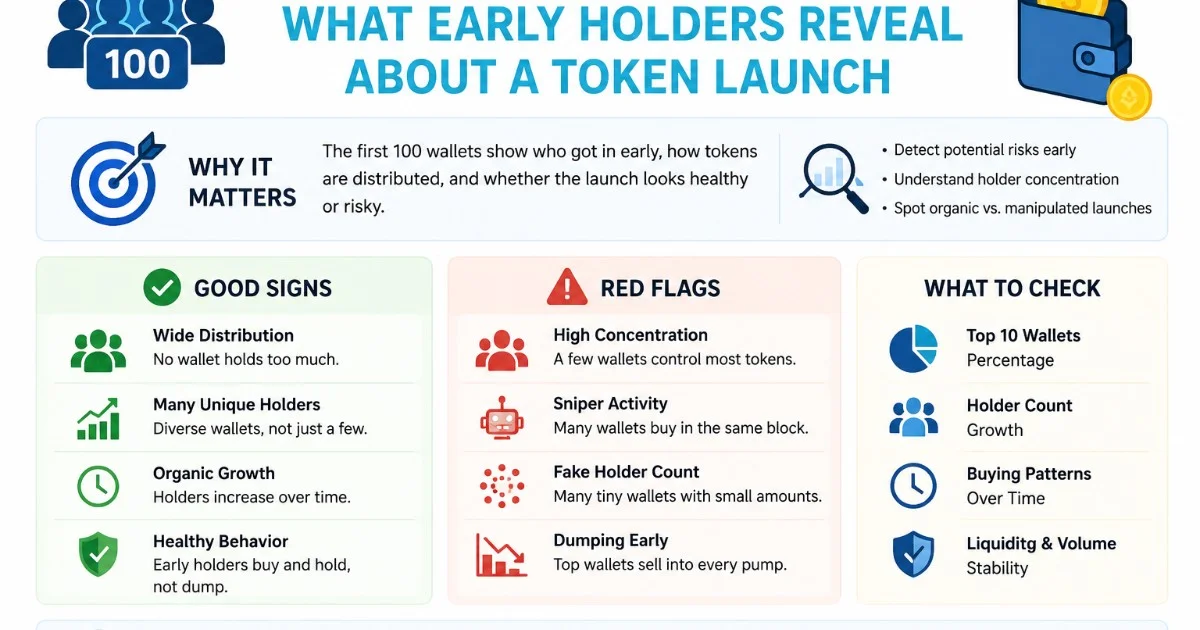
Why the First 100 Wallets Matter
Early wallets are the first real footprint of a token. They show who entered first, how supply was distributed, and whether demand came from many independent buyers or a small group of coordinated wallets.
A healthy launch usually shows gradual distribution, diverse wallet sizes, and continued buyer interest after the first few minutes. A weaker launch may show extreme concentration, repeated wallet behavior, or many small wallets created only to make holder count look better.
Signs of a Healthy Early Holder Base
- Balanced wallet distribution
- No single wallet holding too much supply
- Multiple real buyers entering over time
- Liquidity staying stable after early buys
- No immediate dumping from top wallets
- Holder growth matching volume growth
The goal is not perfection. The goal is to see whether early ownership looks natural.
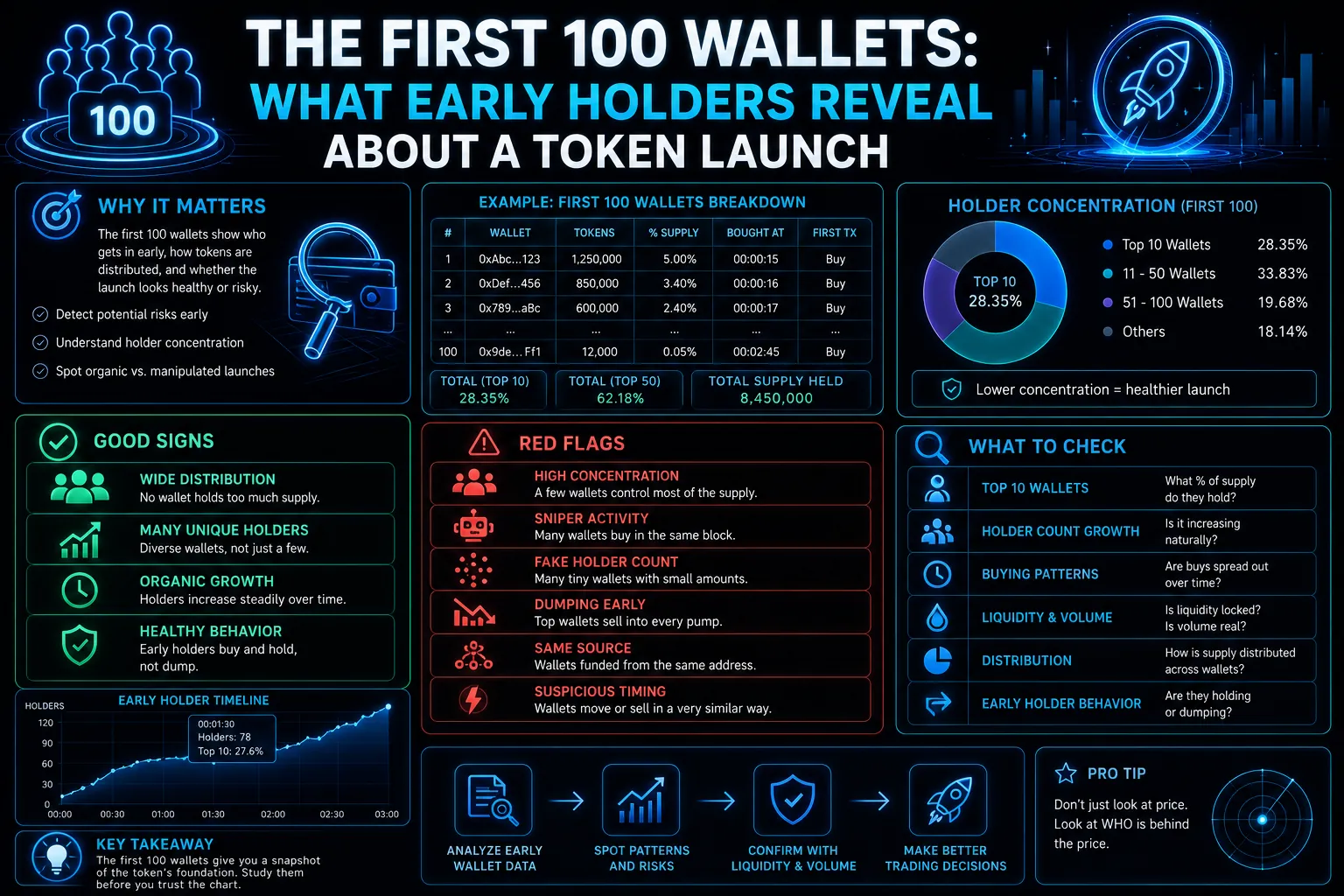
Red Flags in the First 100 Wallets
Warning signs include:
- Top wallets holding a large percentage of supply
- Many wallets buying at the exact same time
- Tiny dust balances across many addresses
- Early wallets selling into every pump
- Wallets funded from the same source
- Holder count rising without real volume
These patterns can suggest coordinated activity or weak market structure.
How Traders Can Use This Signal
The first 100 wallets should be analyzed with liquidity, volume, chart structure, and contract risk. Holder data alone is not enough, but it can confirm or challenge what the chart appears to show.
If price is rising and early wallets are well distributed, the launch may deserve more attention. If price is rising but ownership is heavily concentrated, traders should be cautious.
Final Thoughts
The first 100 wallets are like the launch DNA of a token. They reveal whether early demand is broad, organic, and sustainable, or whether the token may be controlled by a small group.
Before trusting the chart, traders should study who got in first.
Fake Holders vs Real Buyers: How Wallet Count Can Mislead Traders Holder Inflation: Why More Wallets Does Not Always Mean More Believers The Wallet Age Signal: What Fresh Wallets vs Old Wallets Reveal About a Token Healthy vs Unstable Token Launch Patterns: Key Insights