The “If I Had No Position” Test for Token Decisions
— By Whatsertrade in Tutorials
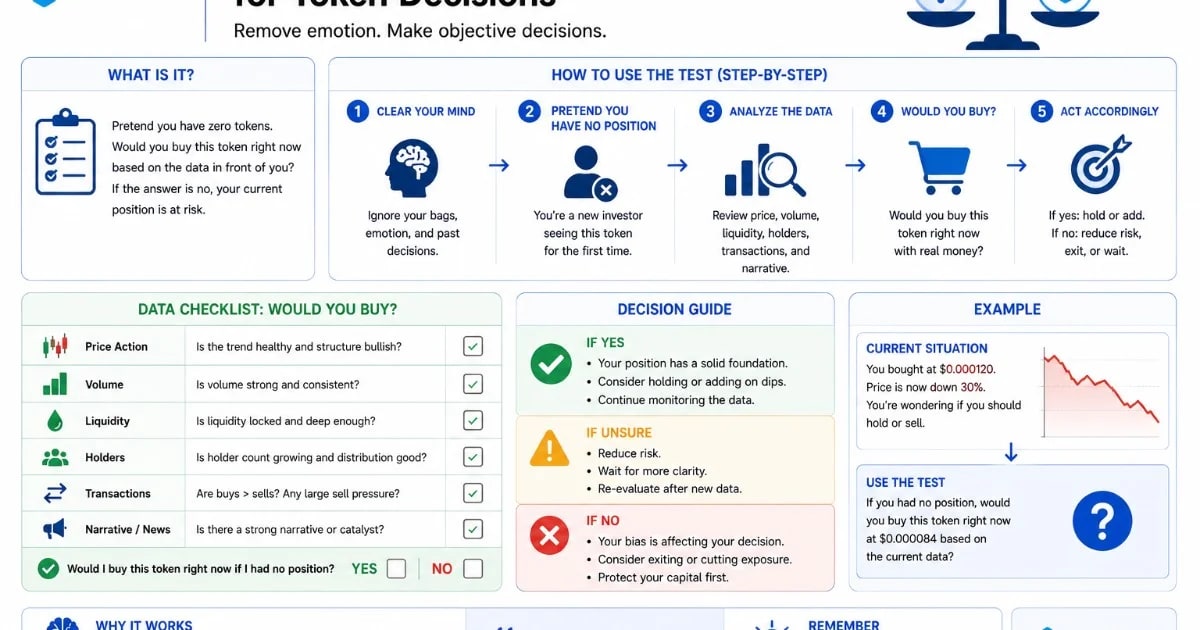
Learn how to use the If I Had No Position test with DEXTools to reassess token decisions objectively and reduce emotional bias.
Once traders hold a token, their thinking changes. They may defend the position, ignore warning signs, and search for reasons to stay. The same data they would reject before entering can suddenly look acceptable after they are already involved.
The “If I Had No Position” test helps traders regain objectivity.
The question is simple:
“If I had no position right now, would I still choose this token?”
Using DEXTools, traders can answer that question with data instead of emotion.
Why Positions Create Bias
Holding a token can create emotional attachment.
Traders may think:
“I do not want to sell too early.”
“It will recover.”
“The chart still looks okay.”
“I already waited this long.”
“I do not want to admit I was wrong.”
This can lead to poor decisions.
The No Position test removes the past from the decision. It focuses only on what the data says now.
Step 1: Ignore Your Entry Price
Your entry price can distort your thinking.
Instead of asking whether you are in profit or loss, ask:
Would this token be attractive today?
Does the current data support a new entry?
Would I choose this over other opportunities?
If the answer is no, the position may need review.
Step 2: Recheck Liquidity
Liquidity can change after you enter.
Ask:
Is liquidity still stable?
Has liquidity weakened?
Can I still exit safely?
Does liquidity support current trading activity?
If liquidity no longer supports the setup, your original thesis may have changed.
Step 3: Recheck Volume and Transactions
Market activity can also change.
Ask:
Is volume still active?
Are buyers still entering?
Are sellers increasing?
Are large wallets selling?
Is transaction quality improving or worsening?
If activity has faded, the position may no longer deserve the same confidence.
Step 4: Recheck Holders
Holder behavior can reveal whether participation remains healthy.
Ask:
Are holders still growing?
Are top wallets too concentrated?
Are large wallets accumulating or distributing?
Is holder growth meaningful?
If holders weaken while you are still emotionally attached, the No Position test can help you see clearly.
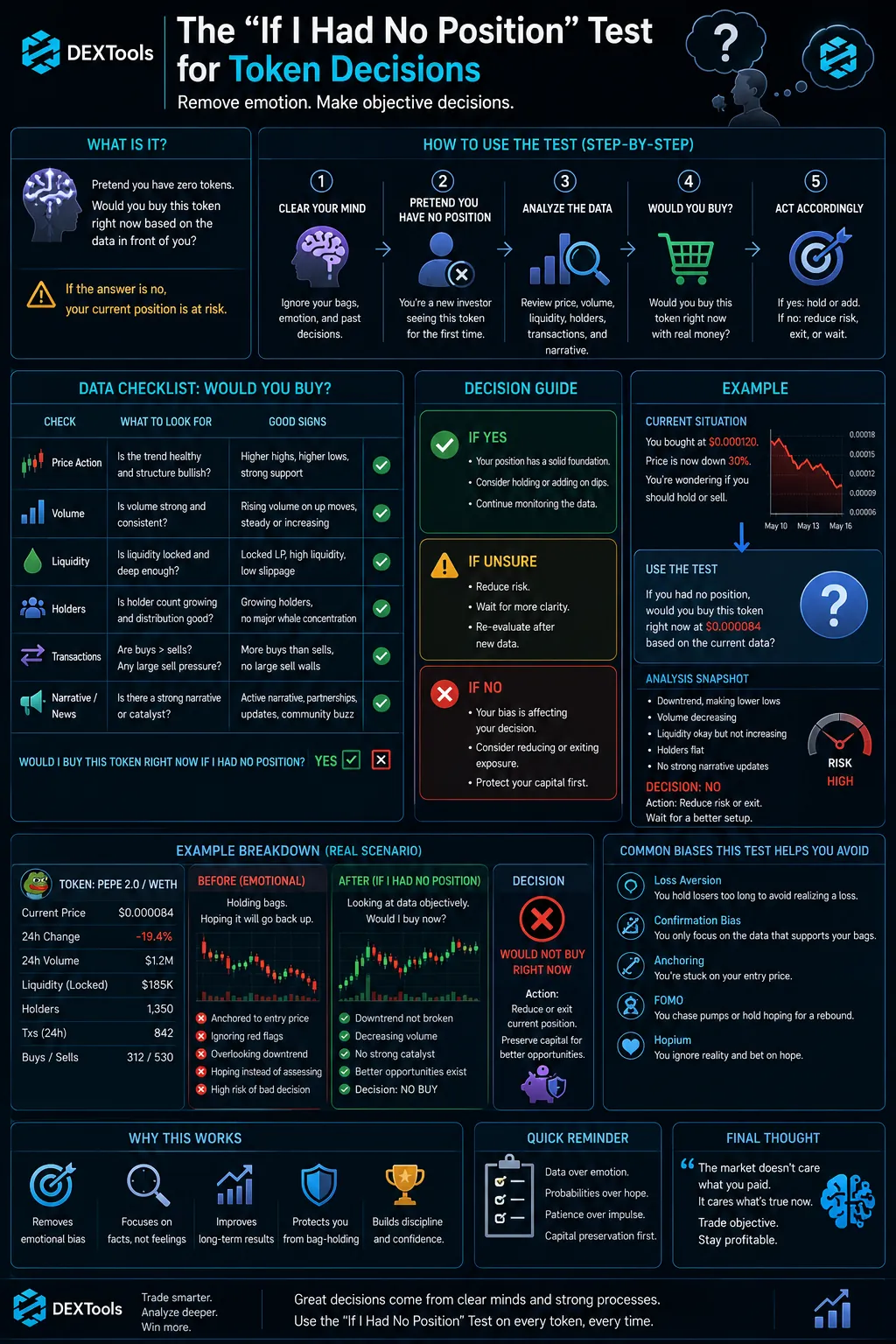
Step 5: Recheck the Chart
Now look at the chart.
Ask:
Is the structure still valid?
Has support failed?
Is the chart making lower highs?
Is the token overextended?
Would I buy this chart today?
The final question is the most important.
Step 6: Make a Fresh Decision
After the review, choose one:
Hold with confidence.
Reduce risk.
Wait with clear conditions.
Exit or avoid.
The decision should be based on current data, not old hopes.
Final Thoughts
The “If I Had No Position” test helps traders separate current evidence from emotional attachment.
DEXTools makes this test practical by giving access to liquidity, volume, transactions, holders, charts, and risk signals.
A good trader does not defend old decisions forever. A good trader updates decisions when the data changes.
The DEXTools Bias Audit: Check Your Thinking Before the Chart Exit Liquidity Mapping: Who Might Sell Into You Before You Buy? The Liquidity Decay Curve: How Token Markets Lose Depth Before They Lose Price Fake Market Cap vs Real Exit Liquidity: Why the Number Can Mislead Traders