Same Token, Different Price: Why Cross-Chain Liquidity Creates Gaps
— By Whatsertrade in Tutorials

Discover how fragmented liquidity across chains causes token price differences and learn strategies to navigate these market gaps effectively.
A token can exist on several chains at the same time. It may trade on Ethereum, Base, BNB Chain, Arbitrum, Solana, or other networks. Many traders assume the price should be the same everywhere.
In reality, the same token can trade at different prices across chains.
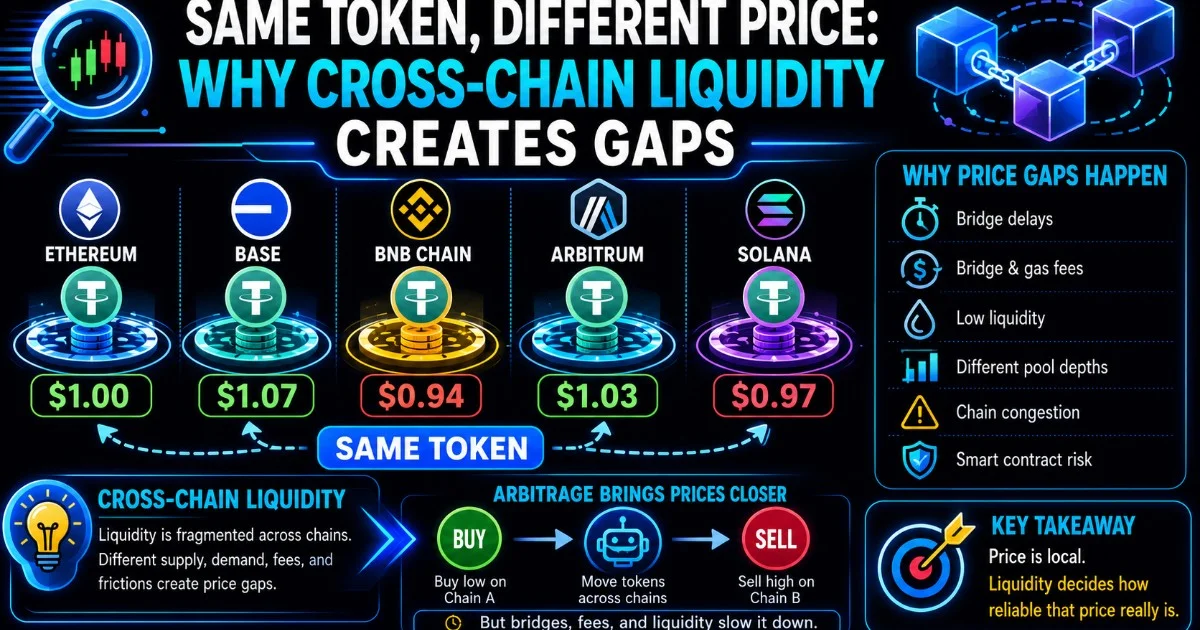
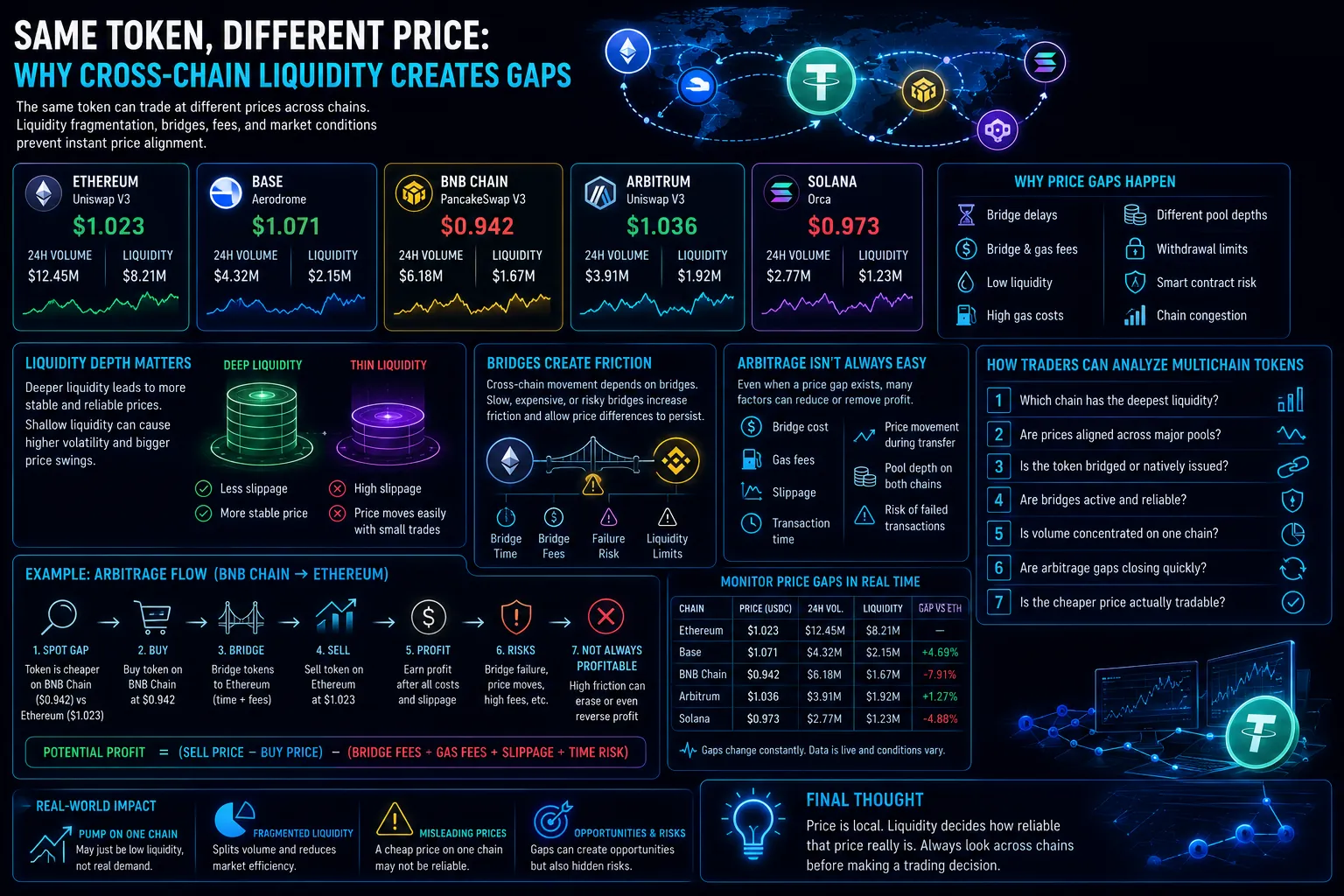
These price gaps happen because liquidity is fragmented. Each chain has its own pools, traders, bridges, fees, and market conditions. When liquidity does not move efficiently, prices can separate.
Understanding cross-chain liquidity helps traders avoid confusion and spot potential risks.
Why Price Gaps Happen
Price gaps happen when supply and demand differ across chains. If buyers are more active on one chain, the price may rise there. If sellers dominate another chain, the price may fall.
Arbitrage traders usually help close these gaps. They buy where the token is cheaper and sell where it is more expensive. But arbitrage is not always instant.
Several factors can slow it down:
- Bridge delays
- Bridge fees
- Low liquidity
- High gas costs
- Different pool depths
- Withdrawal limits
- Smart contract risk
- Chain congestion
When these frictions are high, price gaps can last longer.
Liquidity Depth Matters
A token may have deep liquidity on one chain and thin liquidity on another. The chain with deeper liquidity often shows a more reliable price. The chain with weaker liquidity can move sharply with smaller trades.
This can make a token look like it is pumping on one chain while staying flat on another.
Traders should always check where the main liquidity is located.
Bridges Create Friction
Cross-chain movement depends on bridges. If moving a token between chains is slow, expensive, or risky, price differences can persist.
A bridge issue can also create temporary panic. If traders cannot move tokens efficiently, one chain may disconnect from the broader market.
This is especially important for multichain tokens with smaller liquidity pools.
Arbitrage Is Not Always Easy
In theory, price gaps create arbitrage opportunities. In practice, arbitrage requires speed, liquidity, and execution.
A trader must consider:
- Bridge cost
- Gas fees
- Slippage
- Transaction time
- Price movement during transfer
- Pool depth on both chains
- Risk of failed transactions
A visible price gap does not always mean easy profit.
How Traders Can Analyze Multichain Tokens
Before trading a multichain token, traders should ask:
- Which chain has the deepest liquidity?
- Are prices aligned across major pools?
- Is the token bridged or natively issued?
- Are bridges active and reliable?
- Is volume concentrated on one chain?
- Are arbitrage gaps closing quickly?
- Is the cheaper price actually tradable?
These questions help traders avoid relying on a misleading price.
Final Thoughts
The same token can have different prices across chains because liquidity is not always unified. Each chain has its own market conditions, and cross-chain movement introduces friction.
For traders, the lesson is simple: do not analyze a multichain token from one pool only.
Price is local. Liquidity decides how reliable that price really is.
Arbitrage Delay: Why Same Token Price Gaps Stay Open Longer Than Traders Expect Bridge Inflows vs Local DEX Volume: Does Capital Stay on the Chain? How to Choose the Right Pool When a Token Trades on Multiple DEXs The Liquidity Decay Curve: How Token Markets Lose Depth Before They Lose Price